



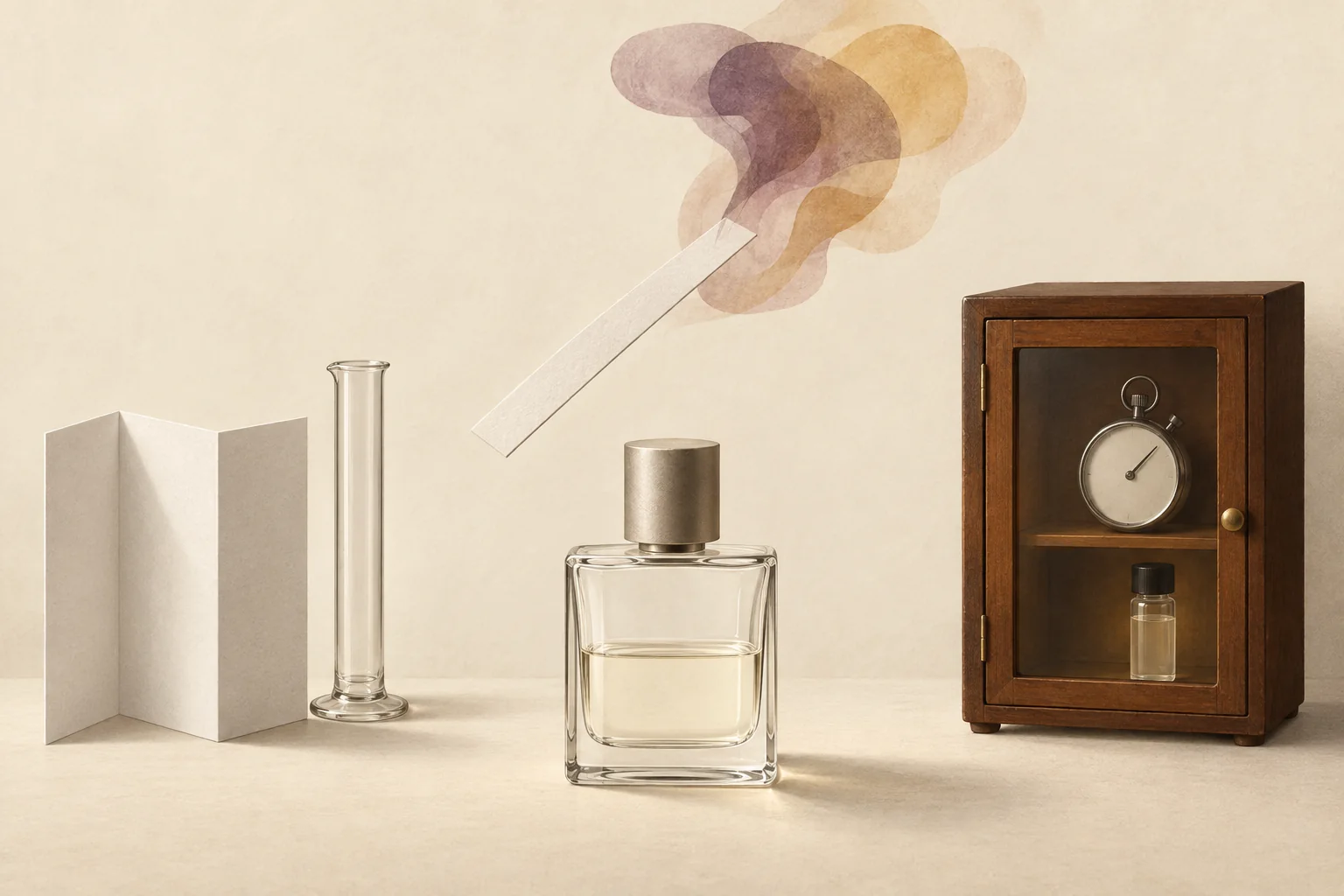
A fragrance influencer brief should separate verified product facts, brand-provided scent notes, the creator's own impressions and claims that need evidence. Give creators the first two as reference material. Ask them to supply their own sensory language after trying the fragrance. Hold performance, safety and health claims for review before they enter a script.
The labels below are a recommended editorial workflow. The regulatory examples use United States FTC and FDA guidance. Campaigns in other markets need local review, and paid distribution needs a separate platform check.
Give each statement an owner and a source
Use four labels in the working brief. They are internal editing labels, not required wording for the finished video.
| Label | What belongs here | What the reviewer checks |
|---|---|---|
| Product fact | Bottle size, named variant, format and manufacturer directions | Current packaging or manufacturer specification for that exact product |
| Brand note | The brand's published description of the scent | Attribution to the brand and wording faithful to its description |
| Creator impression | What the creator smells, likes or associates with the fragrance | The creator tried it and confirms the description is their own |
| Evidence required | Duration, comparative performance, safety or health statements | Evidence for the exact claim, plus qualified review where needed |
A brand note can be accurately attributed without becoming a fact about what everyone will smell. If a hypothetical brand lists pear and cedar notes, the creator can identify those as the brand's description. They do not have to say that they personally detect both.
Keep ingredients in the product-fact category. Do not turn a pear note into a claim that the formula contains pear extract. Ask the manufacturer for the relevant ingredient documentation before making a composition claim.
For US endorsements, the FTC's current endorsement FAQ says opinions must be honest and cannot communicate claims the marketer could not legally make. It also addresses prewritten posts: the resulting endorsement must still reflect the endorser's truthful experience.
Ask questions that leave the answer open
Send the product information before filming, but do not send a required first-person scent verdict. Ask the creator:
- What do you notice when you first smell it?
- Does your description change later? If you did not check later, say so.
- Which words would you use without looking at our note list?
- Is there a brand-listed note you do not pick up?
- What do you like or dislike about it?
Record whether the impression came from a blotter or from use according to the product's directions. Keep that context in the draft when it matters. A blotter impression should not become a story about wearing the fragrance all evening.
Modash's beauty collaboration guide recommends giving creators room for their own creative style. For fragrance, that freedom includes vocabulary and disagreement. A creator may describe a scent as powdery when the brand's copy emphasizes fruit. Check that they have the intended product rather than rewriting their perception.
The FTC's influencer disclosure guide also says creators cannot describe an experience with a product they have not tried. If the sample arrives too late, change the content to a clearly framed product introduction or move the deadline. Do not script a wear experience to fill the gap.
A completed hypothetical brief
This example describes an unnamed, fictional fragrance. Its specifications, scent notes and creator response are hypothetical. None is evidence for a real product.
Assignment. Make a short sponsored video introducing the fragrance and describing your own first impression. The brand pays for the video and supplies the bottle. A favorable opinion is not a condition of approval.
| Brief field | Hypothetical instruction |
|---|---|
| Product fact | The supplied manufacturer sheet identifies a 30 ml eau de parfum. Show the matching bottle. |
| Brand note | The fictional product page lists pear, iris and cedar. Introduce these as the brand's listed notes if you mention them. |
| Creator impression | Choose your own descriptors after trying it. You may omit notes you cannot detect. |
| Observation scope | Describe what you experienced during this session. Do not imply a full-day wear test. |
| Claims on hold | No approved evidence is supplied for lasting time, therapeutic effects, comparative strength or suitability for sensitive skin. Leave those claims out. |
| Disclosure | Identify the paid relationship clearly in the video. Use the platform's applicable commercial-content tools as well. |
| Approval boundary | The brand checks product identity, sourced facts, disclosure and unsupported claims. The creator confirms every first-person statement. |
A hypothetical creator response might be: "The brand lists pear, iris and cedar. To me, the opening smells more powdery than fruity. I haven't checked how it wears through the day."
That response keeps the two descriptions separate and states the limit of the observation. A real creator should use it only if it describes their experience. It is an example of the distinction, not a line to assign unchanged.
For the wider deliverable and revision process, use a creator brief that leaves room for judgment.
Do not use personal wording to hide a product claim
Adding "for me" does not settle every evidence question. The FTC FAQ explains that an endorsement showing exceptional results may imply results consumers can generally expect. Review the message viewers will take from the whole ad.
Treat these hypothetical lines differently:
| Draft line | Recommended decision |
|---|---|
| "It reminds me of a wooden dressing table." | Keep if it is the creator's genuine association. |
| "Everyone will smell the pear first." | Remove the universal prediction. Ask for the creator's own impression. |
| "It lasts all day on everyone." | Hold for substantiation and review. Do not replace it with an invented personal wear story. |
| "The natural ingredients make it safe for sensitive skin." | Hold the safety claim. A scent description cannot support it. |
| "This helps you sleep and treats anxiety." | Stop the cosmetic campaign copy and request qualified regulatory review. |
The last two rows have a specific US basis. FDA's aromatherapy guidance explains that plant-derived ingredients are not automatically safe. It also identifies sleep and anxiety-treatment claims as drug claims. FDA considers the marketing context when assessing intended use.
Do not soften an unreviewed treatment claim into another health promise. Remove it until a qualified reviewer assesses the product and proposed use. For that broader boundary, see cosmetic versus treatment language in creator briefs.
Review the finished edit, including reuse
Read the voiceover, captions, on-screen text and destination page together. Check that editing has not removed the words identifying a brand note or narrowed observation. Keep the creator's confirmation beside the final version.
For paid TikTok use, TikTok's misleading-content advertising policy prohibits exaggerated product effects and inconsistent ad and landing-page information. Treat that as an additional advertising review, not permission to reuse any organic post unchanged.
Include disclosure in the content itself. The FTC guidance warns against relying on a platform tool alone or burying a video disclosure in its description. Match the disclosure to the actual relationship, including payment when the creator receives both payment and a bottle.
Before sending your next fragrance brief, label every proposed sentence. Attach the source for each product fact, identify each brand note, leave sensory answers to the creator, and remove evidence-required lines that nobody can support.