



Before a creator accepts a collaboration, share any product constraint that could change their decision, prevent them from testing it, or make the planned recommendation misleading. Cover where buyers can get it, who qualifies for the offer, what it works with, and which claims the evidence supports. Put the decisive limits in the offer itself, with a dated attachment for the details.
A creator should be able to decline because their setup is incompatible before you reserve stock or agree on a filming date. The attachment below gives you a format for that conversation.
Decide which limits belong in the offer
Use this test for every restriction: would learning it later change the creator's acceptance, demonstration, or audience recommendation? If yes, raise it before agreement.
| Area | Facts to share | Decision it changes |
|---|---|---|
| Availability | Sale and shipping regions, available variants, preorder status, expected supply dates | Can viewers buy the item shown? |
| Eligibility | Account, age or membership requirements; new-customer restrictions on an offer | Can the intended buyer use the product or promotion? |
| Compatibility | Supported models, versions, dimensions, materials and required accessories | Can the creator test it in their own setup? |
| Use conditions | Setup steps, environment, maintenance and manufacturer warnings | Is the planned demonstration suitable? |
| Ongoing costs | Required subscription, paid feature access, replacement supplies | Does the offer describe the commitment? |
| Claim limits | Supported performance claims, test conditions and unverified benefits | What can the creator accurately recommend? |
This is an editorial workflow recommendation. It is not a regulator-prescribed attachment format or a complete contract.
Pull each fact from the current product manual, compatibility list, offer terms or evidence file. Name the product version and the person responsible for confirming it. A campaign manager's recollection is a poor basis for a compatibility promise.
Treat unknowns as open questions. If the product team has not confirmed a device model, say so and pause any demonstration that depends on it. Do not turn an untested combination into either a promise that it works or a claim that it cannot work.
Separate product facts from the creator's opinion
A facts sheet can define supported uses. It cannot establish that a creator liked the product or had a particular experience.
For endorsements affecting U.S. consumers, the FTC's influencer guidance says creators cannot describe an experience with a product they have not tried. They also cannot invent claims requiring evidence the advertiser lacks. A supplied claim list therefore needs supporting evidence and room for the creator's own assessment.
For UK advertising within the CAP Code's scope, rules 3.7, 3.9 and 3.10 address documentary substantiation, significant limitations and clear qualifications. A qualification cannot contradict the claim it accompanies. The same section addresses exaggerated capabilities and product availability.
Operationally, this means rewriting an overbroad promise before it enters the offer. A small compatibility note will not repair a headline promising universal compatibility.
Modash's article on expensive-product campaigns describes giving creators product information before filming and access to product managers for technical questions. Use that practical approach for restricted products at any price. Keep factual corrections separate from pressure to deliver a favorable opinion.
A worked offer attachment
The following attachment is hypothetical. The product, dimensions, market restrictions and offer terms are invented to demonstrate the format. They describe no real lamp and are not installation or safety instructions.
Hypothetical attachment: desk-mounted task light
Product scope. This offer covers the clamp-mounted task light in graphite. The supplied unit matches the retail model. A freestanding base is outside this offer.
| Field | Information supplied before acceptance |
|---|---|
| Availability | The graphite model is available for orders shipping within the contiguous United States. Other markets and colors are outside this campaign. |
| Offer eligibility | The audience discount applies to a first order of this model. Existing customers and accessory-only orders do not qualify. |
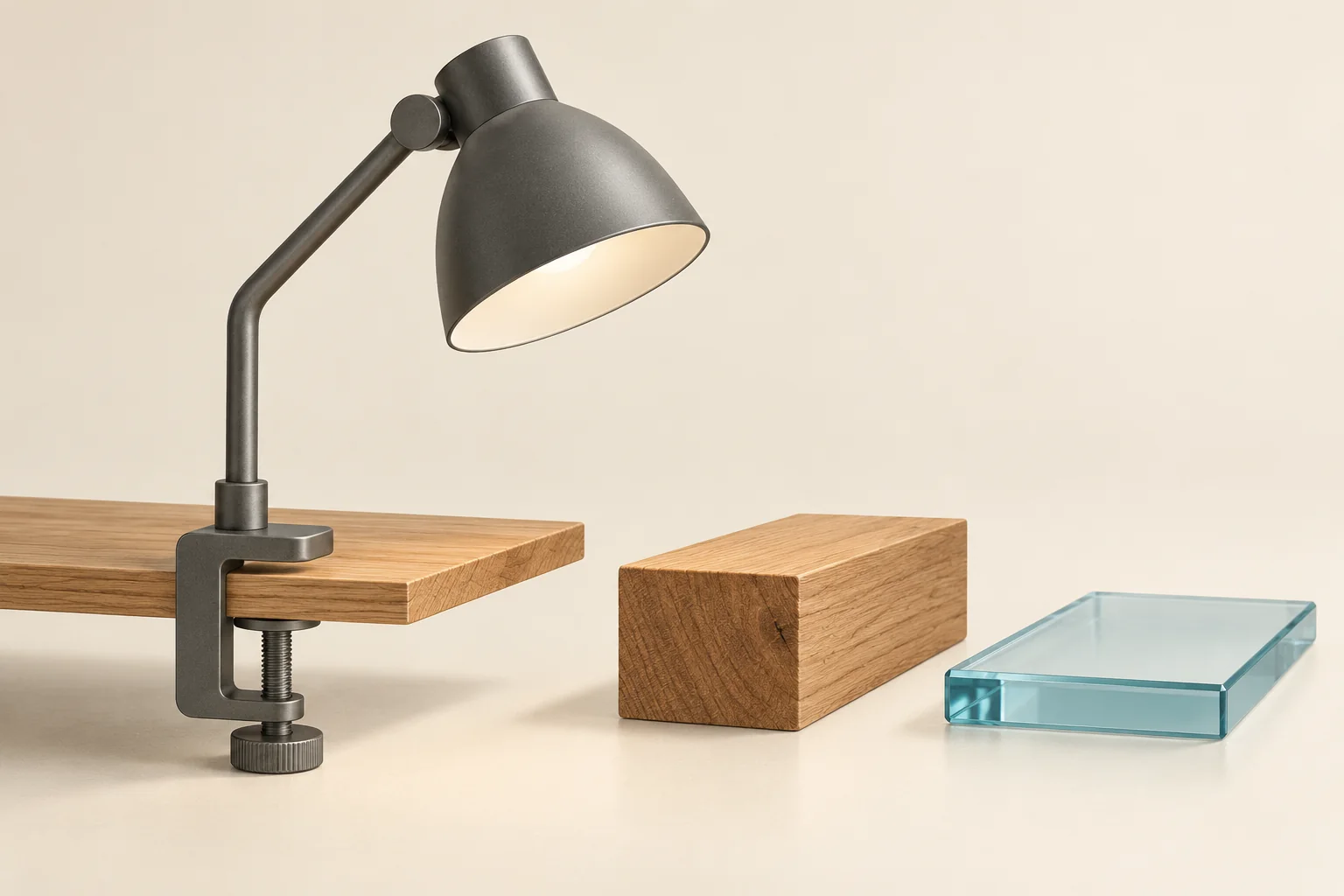
| Supported setup | The clamp is specified for flat, solid-wood desktop edges between 15 and 40 mm thick, with 60 mm of clear space underneath. |
| Exclusions | Glass, hollow-core and rounded desk edges are outside the supported setup. Do not plan a demonstration on those surfaces. |
| Included equipment | The clamp, lamp and power adapter come in the box. No subscription or separate accessory is required for the demonstrated controls. |
| Claim boundary | Product documentation supports describing the adjustable arm and three brightness settings. The campaign has no evidence for claims about preventing headaches, improving eyesight or increasing productivity. |
| Testing before filming | Confirm the desk material, thickness and underside clearance before shipment. After setup, report any mismatch before filming the agreed demonstration. |
| If the fit is wrong | Pause the collaboration discussion. The campaign manager will discuss a different scope or ending the proposal before either party books production. |
| Fact owner | The product support lead confirms compatibility questions. The campaign manager sends any revised attachment and asks the creator to confirm the change. |
A short, hypothetical offer summary could read:
Before you decide, this lamp needs a flat, solid-wood desk edge within the dimensions in the attachment. We are promoting the graphite model to buyers in the contiguous United States, with a first-order-only discount. Please check whether those limits fit your desk and the audience you would address. We can pause the proposal if they do not.
Notice that the summary includes the restrictions most likely to change acceptance. The attachment supplies measurements and details. Neither document asks the creator to promise a positive result.
Ask for a specific compatibility answer
Replace a vague request to confirm receipt with questions the creator can answer:
- Does your intended setup meet the listed requirements?
- Can you test the retail version before discussing your experience?
- Does the audience you plan to address fit the purchase and offer restrictions?
- Does any planned scene or claim depend on something we have not confirmed?
Record the answer against the attachment version. An acknowledgment that the creator received a document does not establish product fit.
If the setup is incompatible, change the proposed product or scope before agreeing on deliverables. If the uncertainty affects whether the product should be promoted at all, use the product-readiness decision guide. Once the constraints are settled, move them into a creator brief with separate fixed facts and creative choices.
Carry the limits into the published recommendation
The private attachment helps the creator decide. Relevant audience-facing limits still need to travel with the claims they qualify. In the hypothetical lamp campaign, a demonstration on one suitable desk should not become a promise that the lamp fits every desk.
Keep sponsorship disclosure as a separate check. The FTC guidance calls for disclosure of material brand relationships, including free products, alongside the endorsement where people can notice it. Listing compatibility restrictions does not disclose that relationship. Platform-specific requirements also need their own review.
Before sending your next offer, ask the product owner to check the attachment. Highlight every unresolved restriction, remove any promise that depends on it, and send the decisive limits before asking the creator to accept.