



Find creators already using your product by reviewing the original posts behind public mentions, then recording what each post proves. Look for identifiable products, firsthand use, and an explanation of how the creator obtained them. Keep commercial relationships in a separate field. A tag, repost, or discount code alone does not establish that someone owns or uses your product.
Your first output should be a review queue with evidence and unanswered questions. Calling everyone in a mention search a "brand fan" hides the work still needed to distinguish a user, an interested observer, and a promoter.
Gather candidates without deciding they are customers
Start with your brand handle, brand-name variants, and distinctive product names. Use the public search routes available to you, or a discovery tool you already have. Open each promising result at its original source before classifying it.
Modash's mention-search article describes searches by account mention, caption hashtag, and keyword. Those inputs help find people discussing something relevant. The match itself does not answer whether the person bought, borrowed, received, or even handled the product.
Keep the collection step bounded. For example, review one product line within a stated date range. Record that range rather than presenting your queue as every creator who has ever used the brand. If irrelevant matches dominate, use brand-listening query exclusions to improve the candidate pool before reviewing more posts.
Ask four separate questions about each post
Avoid a single "authentic fan" score. It would combine facts that can point in different directions. A paid affiliate can be a longstanding user. Someone who bought a product can dislike it.
| Question | Evidence to record | What remains uncertain |
|---|---|---|
| Who made this content? | Original account and post; repost label or credited source | Whether the sharing account uses the product |
| Is this the right product? | Visible model, packaging, or a specific spoken or written identification | A similar-looking object may be a different product |
| What use is shown or described? | Demonstration, personal routine, setup details, or a firsthand account | Possession in a post does not establish ownership or continued use |
| What relationship is disclosed? | Purchase statement, gift, loan, affiliate disclosure, or partnership label | An absent disclosure leaves the relationship unresolved |
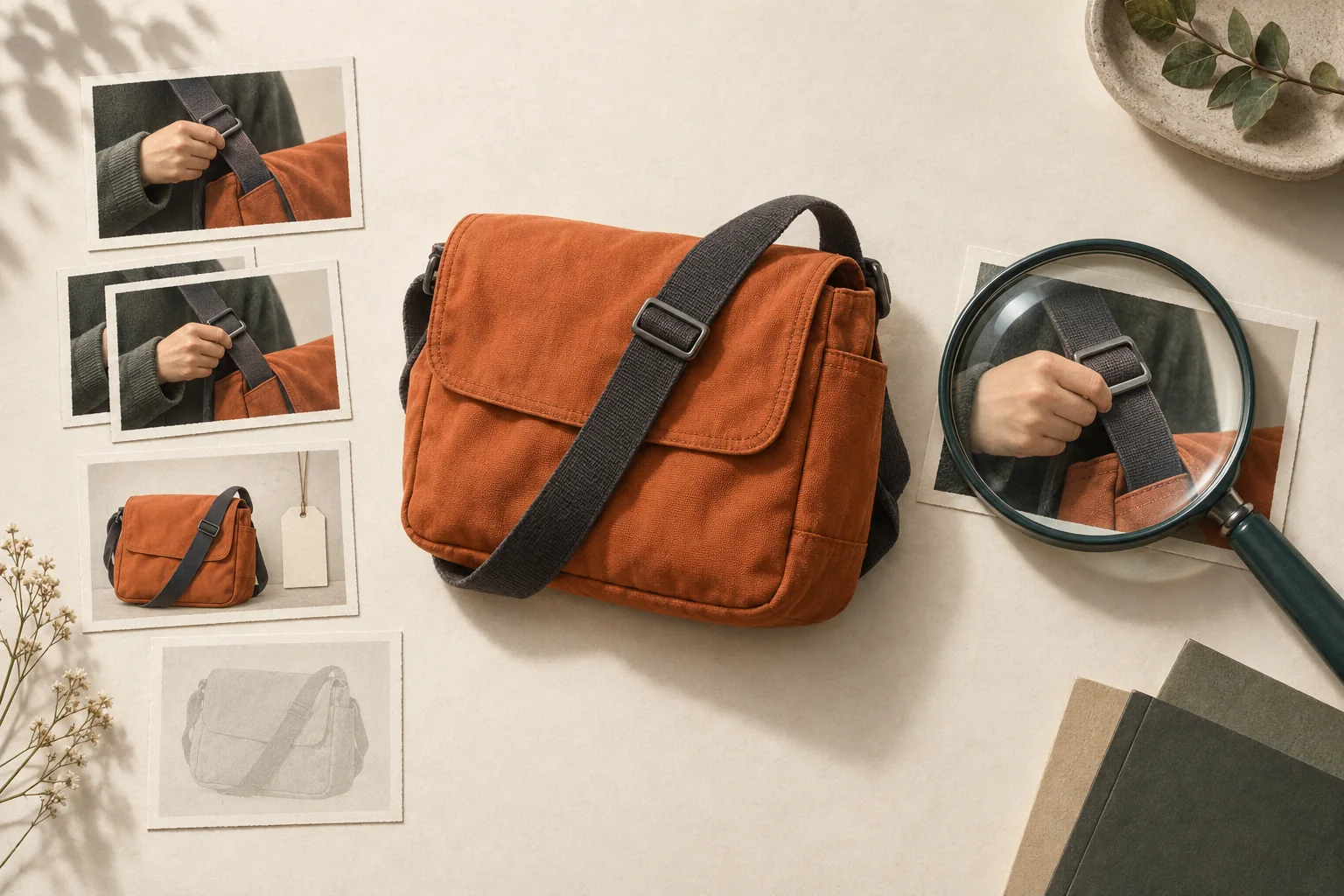
These are recommended review fields, not a platform certification system. Record a narrow observation such as "video shows the creator adjusting this model's strap." Keep the broader interpretation, "likely regular user," in a different field.
Trace reposts to their source
On TikTok, a repost shares existing content. TikTok's help page explains that the feed labels reposts with the sharing person's profile photo and nickname. Public-account reposts can also appear on the person's profile.
That makes the author check necessary. A product demonstration encountered through one account may belong to another creator. Link the original post, identify its author, and review that author's evidence. Keep the sharing account as an interested observer unless it adds its own firsthand account.
If the source is deleted or inaccessible, mark the item "source unavailable." Do not promote a cropped copy into verified evidence because the original cannot be checked. For a larger queue, separate duplicate posts from distinct discussion so repeated copies do not look like repeated use.
Separate use from ownership
A clear demonstration supports a claim that the creator handled or used the product in that content. It may involve a borrowed item, shop display, loan, or gift. A statement that the creator bought it supports "self-reported purchase." Neither observation alone proves long-term use.
Look for another independent post that adds context: a later routine, a repair question, or a follow-up about a specific limitation. Do not count the same clip cross-posted twice as two use occasions. Repeated use can strengthen your working assessment, while ownership may remain unknown.
Read promotions without treating them as disqualifying
Record an affiliate disclosure as a commercial connection. Record a code without an explanation as "discount code present; arrangement unknown." The code alone does not establish commission terms or use.
TikTok's commercial-content guidance distinguishes its own-business "Promotional content" label from "Paid partnership" for branded content on behalf of another business. Its guidance covers third-party promotion for payment or other incentives. A partnership label therefore does not tell you the exact compensation arrangement.
For endorsements affecting U.S. consumers, FTC staff guidance includes free and discounted products among material connections. It also notes that tags can be endorsements. These disclosure rules do not turn a tag into evidence of ownership.
The same guidance says someone with no brand relationship need not declare its absence when discussing a purchased product they like. For your review, "no disclosure seen" should remain an observation. It cannot settle whether a commercial relationship exists. This is a screening workflow, not a legal determination about a creator's compliance.
Build a queue that tells the next reviewer what to do
Use one creator record with linked post evidence. Give each unresolved question an owner and next action. A compact record can contain:
- Creator profile and original post URLs.
- Post date, review date, and product identification.
- Firsthand-use observation, separated from your interpretation.
- Acquisition status: self-reported purchase, gift, loan, or unknown.
- Commercial status: disclosed relationship, unclear promotion, or none observed.
- Current use and sentiment: confirmed by creator, inferred from public content, or unknown.
- Decision: ask one question, consider for shortlist, hold, or remove.
Use "remove" for a wrong product or irrelevant account. Use "hold" when evidence is inaccessible or too ambiguous. A negative review can still establish product experience; route a service complaint to the appropriate team before considering recruitment.
The following queue is hypothetical. The people and observations are invented to show how the method works.
| Candidate | Public observation | Queue decision | Verification step |
|---|---|---|---|
| Creator A | Original demonstration and a later maintenance post; says they purchased it | Consider for shortlist | Ask whether they still use that model |
| Creator B | Reposts another person's demonstration | Hold as interested observer | Review the original author; seek B's own use evidence |
| Creator C | Demonstrates the product and discloses affiliate earnings | Consider as user with commercial connection | Confirm current use and existing relationship |
| Creator D | Tags the brand in a wishlist; no product shown | Hold as prospective user | Do not describe them as an existing customer |
These decisions deliberately avoid follower counts and audience estimates. Establishing product experience comes before assessing whether the creator fits a campaign. Use the creator-shortlist decision process for that later assessment.
Ask only the question the evidence leaves open
An initial message can acknowledge a specific public post without overstating your conclusion:
We saw your post about adjusting the strap on our commuter bag. Are you still using that model? If you are open to discussing a collaboration, could you also tell us whether it was purchased, gifted, or borrowed, and whether you have a current commercial relationship with us?
Treat a reply as creator-confirmed information and record its date. Do not call it an independently verified purchase. For initial screening, avoid requesting receipts or unrelated personal details when a direct answer is enough to decide the next step.
Choose one product and review a manageable batch of original mentions. Before contacting anyone, make sure every shortlisted creator has a linked use observation and a clearly stated relationship status, even when that status is "unknown."