




Start with the reasons one creator fits your brief, then search for candidates who preserve those reasons while changing a useful part of the mix. Keep content similarity, audience evidence, and commercial fit in separate columns. An influencer lookalike search should give you candidates to compare; its ranking cannot establish that each candidate brings new people to your campaign.
Two creators can make similar videos for different viewers. Two visually different creators can reach some of the same people. Matching audience age or country also does not establish that those people are the same individuals. Your shortlist needs an explicit reason for each addition, plus a record of what you still cannot verify.
Decide what the seed must pass on
A seed is the creator you use as a starting point. Write down why you chose them before you search their handle.
Separate requirements into three groups:
- Keep: the customer problem, product use case, required language, and ability to explain the product.
- Vary: the setting, depth of explanation, format, or adjacent subject area you want another creator to cover.
- Confirm: audience market, availability, fee, deliverables, and any relevant category commitments.
These are recommended selection rules, not platform requirements. If you have not defined the customer problem yet, turn it into creator search terms before choosing a seed.
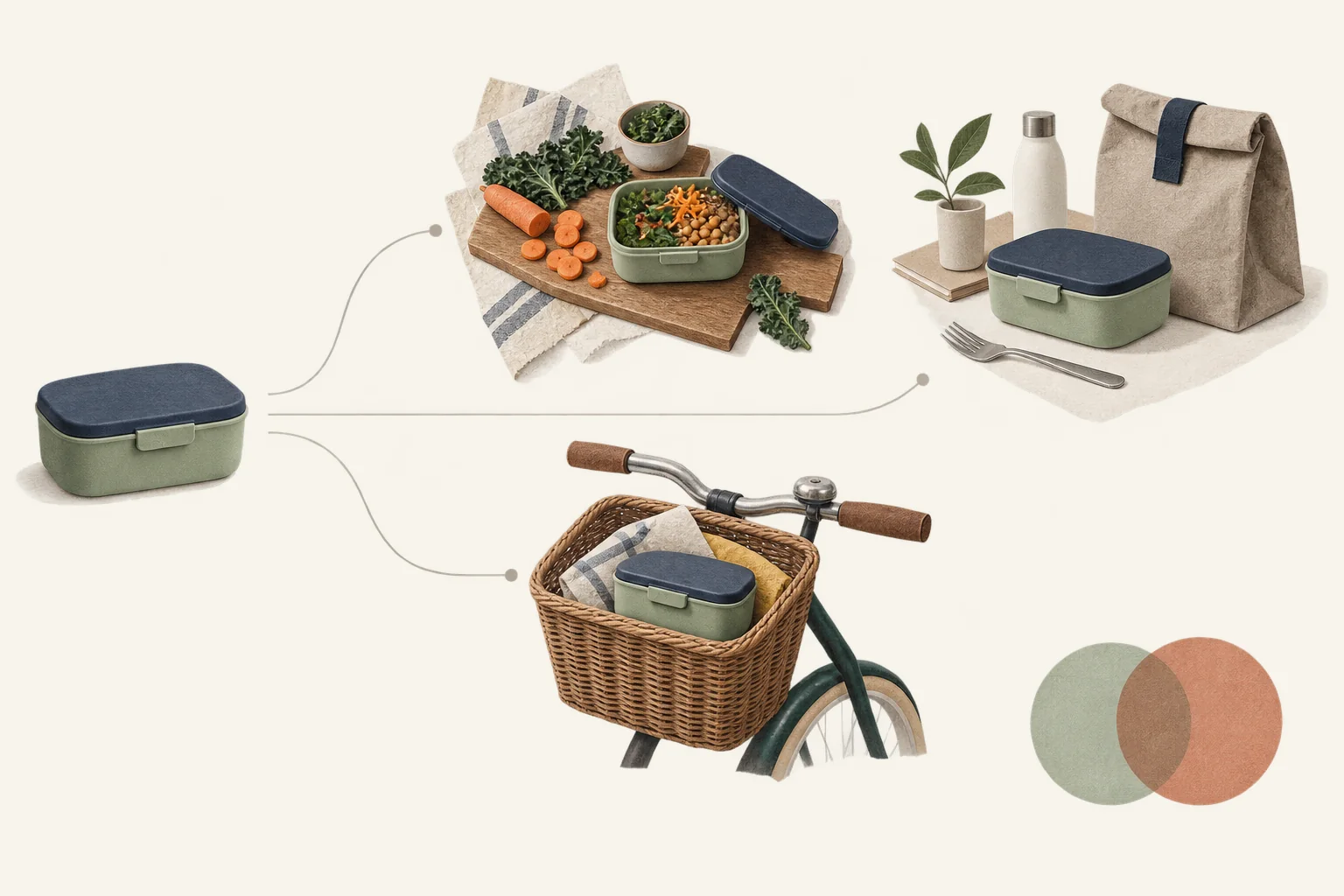
For a hypothetical reusable lunch-container campaign, the seed might show weekday meal preparation in a home kitchen. The reason to keep that creator is their clear demonstration of food storage. Their kitchen color scheme and editing style need not become requirements for everyone else.
Check the seed's recent work. A creator's reputation or biography can point toward a topic that their current posts rarely address. Modash's lookalike-search guide distinguishes topic-based matches from audience-demographic matches and recommends choosing seeds whose content covers the intended subject. That distinction is useful even when you use a different discovery method.
Use a comparison grid that requires variation
Write the variation requirement before inspecting recommendations. Otherwise, the first few results can quietly define what you consider a good match.
Here is a hypothetical comparison. All profiles, observations, and decisions below are illustrative. None describes a real creator or measured audience.
The brief requires English-language demonstrations of packing a reusable container for an everyday meal. The proposed roster should cover home preparation, workplace use, and commuting. Each addition must contribute a distinct use setting or an unanswered product question.
| Profile | Content match | Useful difference | Audience evidence | Commercial check | Decision |
|---|---|---|---|---|---|
| Seed | Shows batch cooking and storage | Home preparation | Current report requested | Confirm deliverables | Starting point |
| Candidate A | Shows similar meal-prep routines | Another home kitchen only | Not supplied | Fee unknown | Reserve |
| Candidate B | Shows packed office lunches | Workplace reheating and carrying | Current report requested | Confirm filming access | Investigate |
| Candidate C | Covers cycling to work | Packing and transporting lunch | Not supplied | Confirm demonstration interest | Investigate |
| Candidate D | Posts styled restaurant meals | Different visual style | Not supplied | No container demonstration found | Exclude for this brief |
Candidate A could be suitable. It adds little to the use-case coverage this brief asks for, so it stays in reserve. Candidate C needs more checking because commuting content alone does not establish an ability to explain food storage. Candidate D's visual difference cannot compensate for the missing product use case.
Keep two separate notes for each surviving candidate:
- Coverage added: the setting or buyer question they would cover.
- New audience evidence: what supports reaching different people, or "unknown" when you lack evidence.
The grid expands the creative range of the roster. It does not prove that the selected creators have separate audiences.
Read the audience field before comparing the number
Ask shortlisted creators for relevant native analytics, with the report name and date range visible. Request aggregate reports rather than individual audience records. Compare the same metric across candidates wherever possible.
YouTube's Audience documentation shows why labels matter. Its top-geographies report describes watch time by geography. Its age report describes which age ranges contribute most to watch time. Neither should be relabeled as a percentage of followers in your grid.
The same documentation describes a report showing other channels that viewers consistently watched during the past 28 days. If a creator shares it, that report can flag a connection worth investigating. It does not supply a pairwise duplication percentage in the documented description. YouTube also warns that some audience data may be limited.
TikTok Studio's official guide separates viewer demographics from follower demographics. A follower report and a viewer report describe different populations. Keep their labels intact rather than treating both as one interchangeable audience profile.
Record the evidence in three forms:
| Evidence type | Example | How to use it |
|---|---|---|
| Observed | A reviewed video demonstrates workplace lunch packing | Supports the content-fit decision |
| Reported or estimated | A creator shares a platform audience report | Record platform, metric, period, and any limits |
| Unavailable | No evidence of shared viewers between two creators | Keep duplication unknown |
A native report can itself contain estimated metrics. "Creator supplied" identifies where you got it; it does not make every field an exact count. If you use a third-party estimate, read that provider's methodology before relying on it. This workflow does not assign an overlap score from profile appearance, comments, or demographic resemblance.
For decisions about adding audience sizes or interpreting a provider's overlap percentage, use the separate guide to reading audience-overlap estimates. Here, the decision is which candidates deserve further review.
Run a second search that changes one dimension
Keep the first seed for topic similarity. Then run another search around the missing use case.
In the lunch-container example, the next search could focus on office lunch routines. A further search could focus on commuting with packed food. Keep the product demonstration requirement fixed while changing the context. This gives you a reason to inspect candidates beyond the seed's closest stylistic matches.
Review each candidate with the same questions:
- Does their recent content show the required product use or a credible route to demonstrating it?
- What does this candidate add to the brief that the seed already cannot cover?
- Which audience conclusions come from evidence, and which remain assumptions?
- Can they accept the requested work within the budget and schedule?
Treat the last question as a separate commercial check. A suitable topic and audience do not confirm availability or willingness to make the requested content. Record "pending confirmation" until the creator responds. If audience information remains missing, evaluate that gap explicitly rather than assigning a favorable score.
Before your next lookalike search, write one sentence completing this brief: "Keep the seed's ability to demonstrate this use case, and find a creator who adds this setting or buyer question." Put that sentence above the comparison grid. Use it to decide which recommendations move forward.