




Micro vs. macro influencers for seeding: build a testable portfolio
Follower count alone does not choose the right tier. Allocate by job, compare evidence, and rebalance from observed outcomes.
The micro-versus-macro debate becomes useful only when it is translated into campaign jobs. A larger audience may buy concentrated reach; several smaller creators may buy more creative variations and niche coverage. Neither tier guarantees trust, sales, or efficiency.

What the evidence does—and does not—say
The 2024 meta-analysis synthesized 1,531 effect sizes from 251 papers. It found that post, follower, and influencer characteristics all matter, while the effects vary by platform and product context. It also notes mixed prior findings for follower count. That is strong evidence against treating audience size as a universal proxy for campaign performance.
The operational question is not “Which tier wins?” It is “Which combination gives this campaign the evidence and outcomes it needs?”
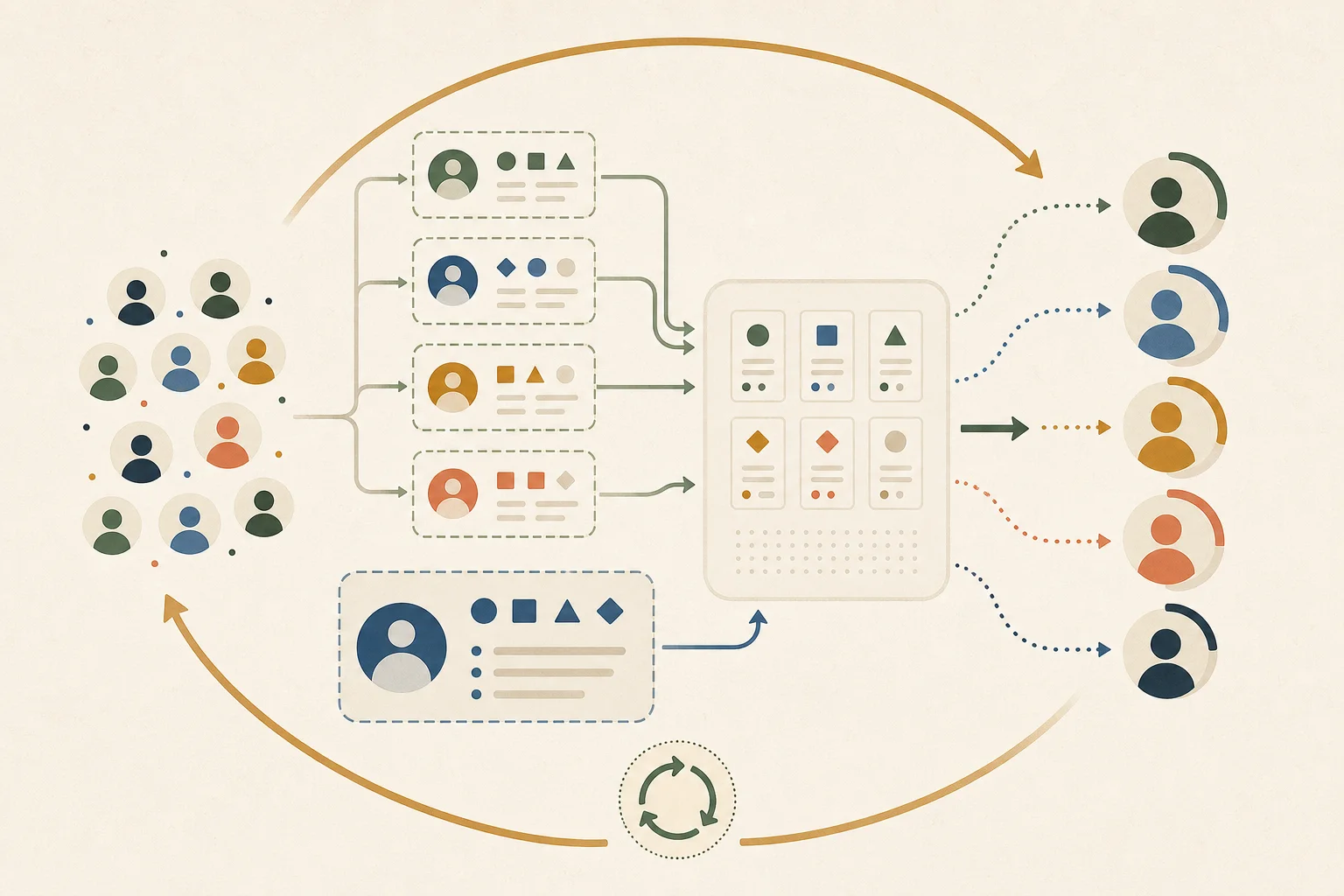
For awareness, a larger creator can concentrate distribution and simplify coordination. For learning, several smaller creators can expose a brief to more voices, communities, and creative executions. Those are portfolio properties, not promises about individual creators.
Design a tiered test portfolio
- Name the job: separate awareness, qualified traffic, content production, sales, and market learning instead of collapsing them into “performance.”
- Define comparable cells: hold the product, brief, usage rights, timing, market, and measurement window as constant as practical.
- Price the full unit: include product, fee, shipping, management time, revision work, paid usage, and the cost of non-delivery.
- Set minimum evidence: decide which delivery, content-quality, audience, and outcome fields must exist before comparing cells.
Measure and rebalance
Report denominators and missing data. Cost per delivered asset is not cost per qualified visit; views are not sales; a creator who never posts is part of the cell outcome. Compare like metrics over the same window, and keep platform-reported, link, code, and commerce evidence separate.
- Keep the next-round rule explicit: expand a cell only after it meets the campaign's primary outcome and minimum quality constraints.
- Retain a learning allocation for new creators or formats so the portfolio does not overfit one successful round.
- Revisit the conclusion when the product, market, brief, platform, or rights package changes; the winning unit is contextual.
Sources and review notes
- Influencer marketing effectiveness: A meta-analytic review — Journal of the Academy of Marketing Science
- Disclosures 101 for Social Media Influencers — U.S. Federal Trade Commission
- What is considered branded content — Instagram Help Centre