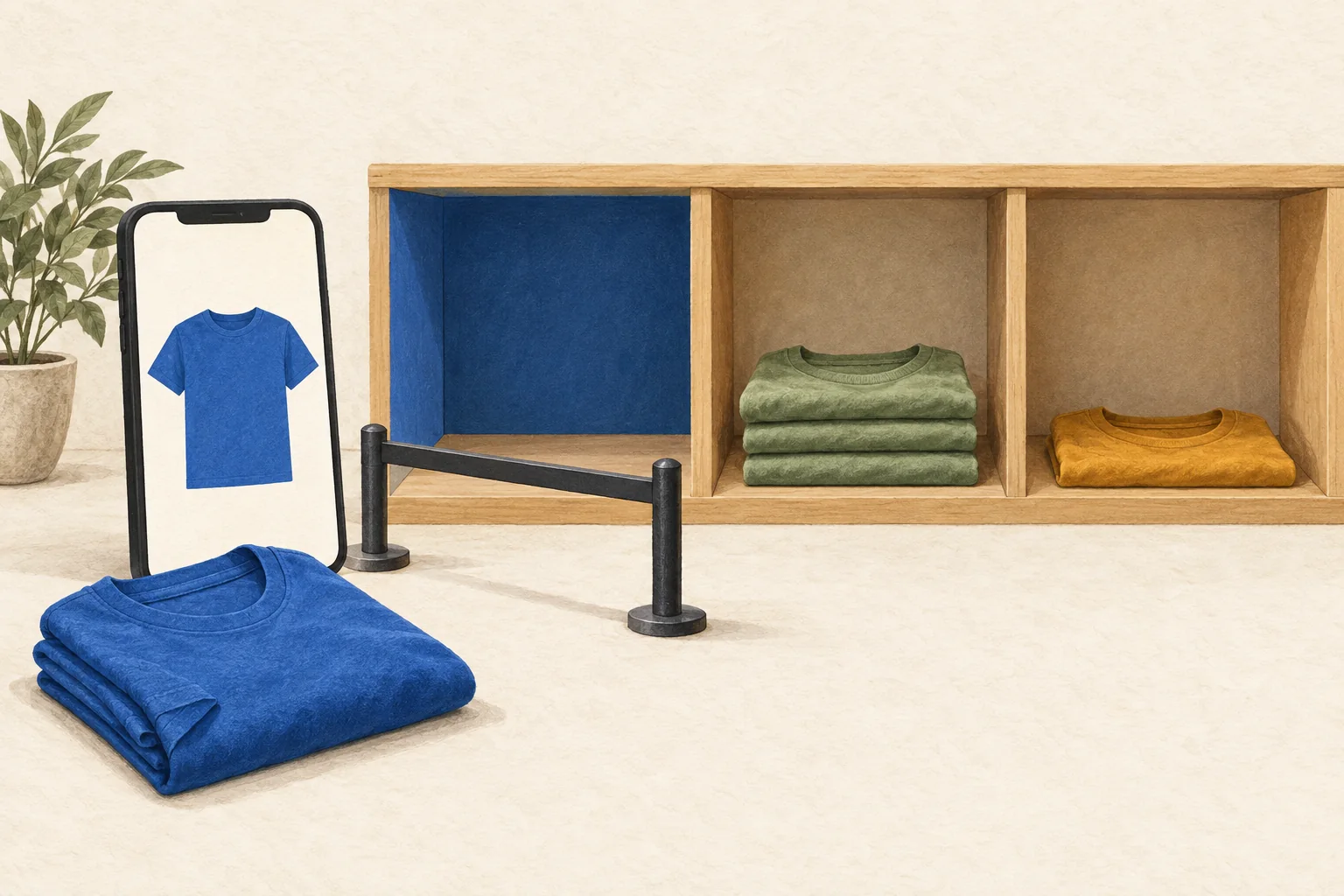





Use TikTok Shop when your seller entity and creators qualify in the target market, your exact products are permitted, and your team can fulfill orders at a margin worth testing. Put the program on hold when a required approval, operating process or cost remains unknown. Decline it for a prohibited product or an operating model you cannot make viable. A large TikTok audience cannot resolve those problems.
This assessment uses United States business-entity and Shop policies read on September 30, 2026. It does not establish eligibility in other markets or cross-border programs. For another country, repeat the assessment with that market's registration, category and fulfillment documents before committing creator spend.
Make one decision per product and market
A brand-wide yes hides differences between products. A stocked accessory and a made-to-order item can need different shipping plans. A product allowed on your own website may face different marketplace restrictions.
Open one assessment for a named SKU, seller entity, buyer market and creator group. Record the policy URL and review date beside each answer. Use these recommended decision rules:
| Decision | Evidence required | Spending decision |
|---|---|---|
| Go | Eligibility and product permission confirmed; operations ready; economics and reporting defined | Fund a limited pilot |
| Hold | A material fact or fix remains unresolved, with an owner and review date | Fund the missing check, not creator launch commitments |
| Decline | Product prohibited, no valid selling route, or costs cannot meet your commercial requirement | Stop this product-market proposal |
Do not average these checks into a score. A shipping strength cannot compensate for a prohibited product. An unknown approval stays unknown until someone obtains evidence.
Confirm the selling route before choosing creators
For the US corporation or partnership route, TikTok's registration guide requires a primary business address in the United States. It also requests business and bank information, an EIN, beneficial-owner details and representative information, with document verification.
That is one registration route. It does not establish that every foreign company can use it, or that acceptance in one country grants access elsewhere.
Ask the person responsible for the seller account to record:
- The target buyer country and exact seller registration route.
- The legal entity that will sell, receive payments and handle customer issues.
- Whether verification has finished, and which requested documents remain outstanding.
- Whether the proposed creators can use the relevant Shop affiliate features in that market.
- Which account-specific restrictions or approvals could prevent this SKU from launching.
Check creator access separately from seller access. Do not use a follower count from an old article as proof that a creator can join your proposed workflow. Ask each pilot creator to confirm access through their current account, without sharing login credentials.
If the team has only established that TikTok itself is available in the country, mark Shop eligibility as unresolved. Do the same when a cross-border route is assumed rather than documented.
Check the exact product, including its claims
The US Prohibited Products Policy lists banned categories and points to additional category requirements. It prohibits alcoholic beverages, for example. A wine brand should decline a US Shop proposal for its wine rather than spend money recruiting affiliates for that listing.
Review the SKU's ingredients or materials, intended use, packaging, listing copy and planned creator claims. TikTok's policy explains that claims can affect how a product is classified. A category label alone does not settle eligibility.
Use three separate findings:
- Prohibited. Stop this listing proposal.
- Potentially permitted with requirements. Identify the applicable category rules and obtain the required approval or documents before launch.
- Unresolved. Name the precise question, such as whether a material, claim or product variant changes the category.
Do not describe a product as approved because another seller appears to sell something similar. For regulated products, send the unresolved classification or claim to the person responsible for product compliance. This is an operating check, not a legal opinion.
Content needs its own review. TikTok requires the content disclosure setting for promotional content. For endorsements affecting US consumers, the FTC's disclosure guidance addresses financial and free-product relationships. It says video disclosures belong in the video and livestream disclosures should repeat periodically. Do not assume the platform label alone settles the disclosure obligation.
Test the shipping promise against warehouse reality
TikTok's US Fulfillment Policy, dated September 28, 2026, requires regular orders to reach In Transit within two business days of Awaiting Shipment. Its regular-order delivery deadline is six business days from Awaiting Shipment. Business days exclude weekends and US federal holidays.
Those are regular-order rules. Made-to-order, pre-order and other order types have separate conditions. Check the row that applies to your listing rather than treating a longer handling time as automatically available.
Printing a label alone does not establish dispatch. The policy normally uses a carrier scan; eligible manifest or in-app scans can also qualify under its conditions. Ask your fulfillment owner to show how the chosen process produces the required event.
Before a creator launch, agree who will:
- Reserve sellable stock after samples and existing customer orders.
- Reconcile inventory when other channels sell the same SKU.
- Arrange carrier handover and investigate missing scans.
- Handle damaged orders, customer messages, cancellations and returns.
- Pause promotion when stock or dispatch capacity falls short.
Use the Shop stock check to turn the inventory question into a pre-promotion check. If nobody owns the pause decision, keep the program on hold.
Calculate what remains after the sale
Later's brand guide recommends considering margins and fulfillment alongside creator activity. Apply that recommendation using your account's current charges and your own costs. A blog's fee estimate cannot establish your settlement economics.
Calculate expected contribution from retained sales after product cost, seller-funded discounts, applicable platform charges, creator commission, fulfillment and expected return costs. Then deduct samples, fixed creator fees, paid promotion and program labor at the pilot level. Keep temporary subsidies separate so the decision shows what happens when they end.
For a worked cost model, use the contribution-margin affiliate guide. Set a minimum contribution requirement before recruiting. If the offer only works with an unconfirmed subsidy, record that dependency as a hold.
Agree what the pilot report will mean
TikTok's Shop Analytics guide defines GMV to include canceled and refunded orders. It directs commission-related analysis to Affiliate Center and advertising metrics to Shop Ads. A GMV screenshot therefore cannot establish retained revenue or profit.
Before spending, assign a finance or operations owner to reconcile the pilot's orders with cancellations, refunds, commissions and costs. Record the report name, date range, time zone and metric definition. Keep orders from the pilot together when reviewing later returns; subtracting this week's refunds from this week's sales can mix different order groups.
Require a report that answers:
- What sold, through which creators and content?
- What remained after cancellations and refunds?
- What contribution remained after variable and fixed pilot costs?
- Which orders missed the fulfillment requirement?
- Which results still await settlement or a return decision?
Run the affiliate-order test before launch to check whether the intended purchase path produces usable records. Treat attributed sales as an accounting observation. Establishing additional sales caused by the program needs a separate comparison design.
A hypothetical decision with an explicit unknown
Consider a US business proposing a stocked fabric travel pouch. The following findings are illustrative, not a claim that this product or seller has TikTok approval.
| Check | Hypothetical finding | Decision effect |
|---|---|---|
| Seller and creator access | Business verification complete; pilot creators confirm access | Pass |
| Product | Category requirements reviewed; listing cleared | Pass |
| Operations | Warehouse cannot yet confirm a qualifying dispatch event within the regular-order deadline | Hold |
| Economics | Cost model meets the team's minimum contribution requirement | Pass |
| Reporting | Order reconciliation owner assigned | Pass |
The overall decision is hold. The warehouse owner must confirm a compliant dispatch process before the team books creator publication dates. If that process works, the team can approve a bounded pilot. If it cannot work within the budget, decline this operating plan.
Start your own assessment with the SKU, market, seller route and unresolved questions. Give each unknown an owner and a review date. Authorize creator spend only after the facts support a go decision.