




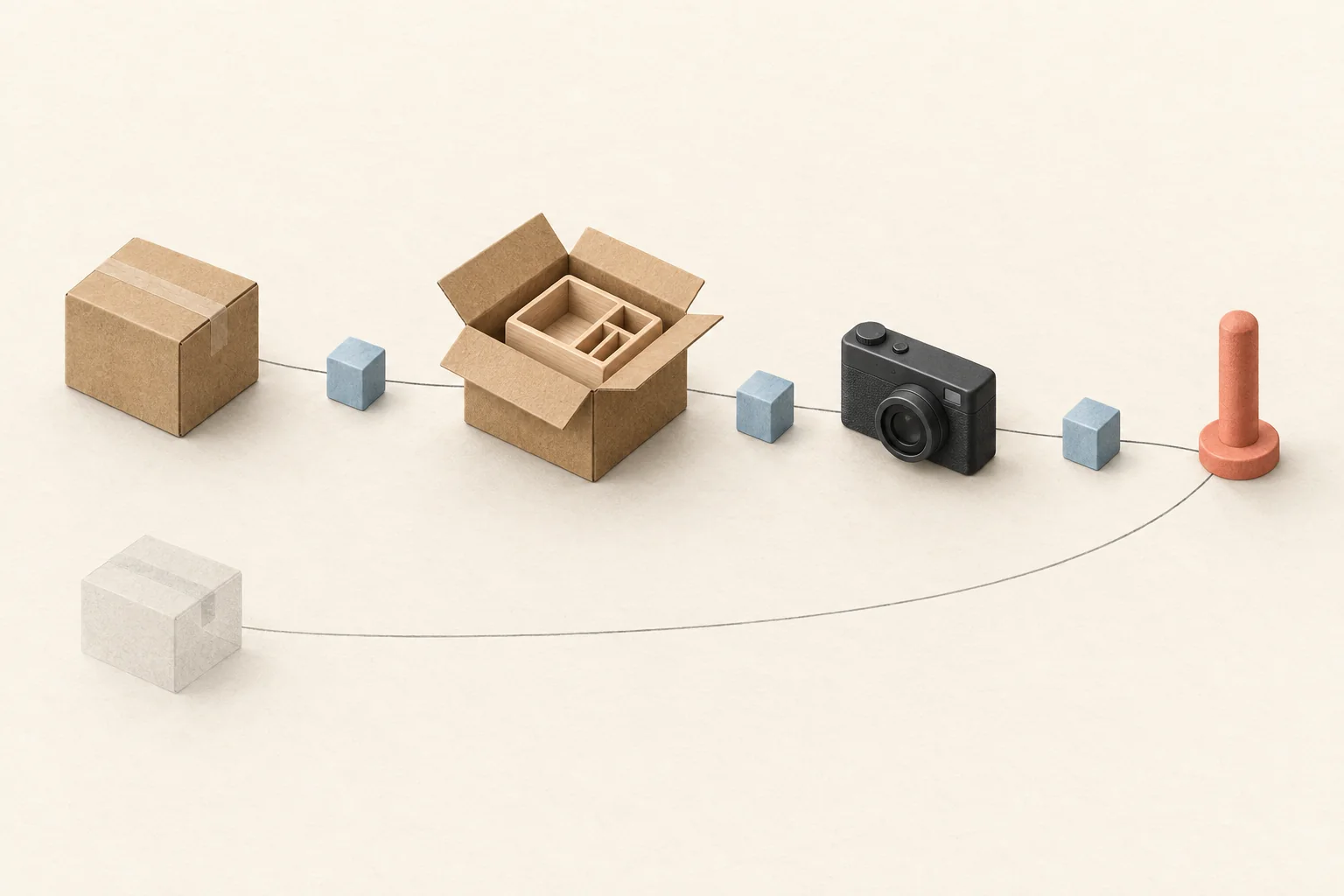
Plan creator shipments by subtracting product-use time, any agreed content work, transit allowance, and warehouse preparation from your launch date. Then compare that schedule with the date your stock will be ready to pack. There is no single number of weeks that fits every launch. For no-obligation gifts, the calendar can target delivery before launch; it cannot promise a launch-day post.
Decide what needs to happen by launch
Write one outcome at the top of the shipment plan. For example, "Creators have the product in hand before launch" is a delivery target. "Three agreed videos go live on launch day" is a content commitment with extra dependencies.
Keep those two groups separate:
- No-obligation seeding. Plan for receipt and optional product use. Leave brand approval and a required posting date out of the schedule.
- Agreed content. Include the creator's production time and any agreed review round. Confirm that the creator can meet the proposed dates before treating them as committed.
If the launch requires scheduled posts, resolve that scope before sending a gift. Use the guide to moving a gifted creator into a paid partnership to structure that decision.
This distinction also protects the product-use window. For endorsements affecting U.S. consumers, the FTC's influencer guidance says creators cannot describe an experience with a product they have not tried. An earlier shipping label does not create more experience with the product.
Build the schedule backward
Use separate allowances for each step. The method below is a planning recommendation, not a carrier standard.
| Allowance | What to enter | Who confirms it |
|---|---|---|
| Product use | Time the creator needs to try the item for the planned content | Creator |
| Content work | Filming, editing and scheduling, if agreed | Creator |
| Brand review | Only the review rounds agreed in advance | Campaign owner |
| Transit | Current estimate for that service and destination | Fulfillment owner |
| Delivery buffer | Extra time for uncertainty beyond the transit estimate | Campaign owner |
| Packing | Time to pick, check, pack and hand parcels to the carrier | Warehouse owner |
| Outreach | Time to invite creators and confirm participation before packing | Campaign owner |
Calculate the latest acceptable receipt date first. Subtract product use, content work and brand review from launch day. Next subtract transit and the delivery buffer to find the carrier handoff date. Subtract packing to find when stock must be ready. Start outreach early enough to have confirmed recipients before that packing date.
Check the units. A creator may count calendar days while a warehouse uses working days. Put real dates beside every interval and account for each team's closures and the carrier's operating calendar. Do not subtract a mixture of business days and calendar days as if they were equal.
A hypothetical backward-planning calendar
Suppose a brand launches a desk organizer on day 0. This example covers domestic parcels and creators who have separately agreed to make launch-day content. All durations are hypothetical calendar-day allowances, not benchmarks or carrier promises.
The team allows seven days for product use, four for content work and two for review. It budgets five days for transit, three extra days for delivery uncertainty, two for packing and ten for outreach.
| Deadline | Calculation | Required condition |
|---|---|---|
| Day 0 | Launch | Agreed content ready to publish |
| Day -2 | 0 minus 2 review days | Draft ready for the agreed review |
| Day -6 | -2 minus 4 production days | Creator can start production |
| Day -13 | -6 minus 7 use days | Product received |
| Day -21 | -13 minus 5 transit days and 3 buffer days | Carrier handoff complete |
| Day -23 | -21 minus 2 packing days | Stock and packing materials ready |
| Day -33 | -23 minus 10 outreach days | Invitations begin |
Under these assumptions, planning starts at least 33 days before launch and carrier handoff happens 21 days before it. A creator who needs longer to evaluate the item changes the answer. So does a warehouse that cannot pack the batch in two days.
For the no-obligation group, remove mandatory production and review stages. You may still aim for receipt seven days before launch to leave room for use. Record any later mention as voluntary, whenever it occurs.
The three-day buffer in this example covers limited delivery slippage. It does not assume enough time for a replacement parcel. If replacement before launch matters, calculate that route separately, including the time to identify a problem, pack again and deliver again.
Use a transit estimate with its limits
The USPS Ground Advantage page gives an expected delivery range of two to five days. Its footnote also identifies destinations and contents that may receive slower service. That is a reason to check the actual shipment, rather than apply one range to every recipient.
Keep three separate entries in your plan:
- The carrier's current estimate for the route and service.
- The date and assumptions behind that estimate.
- Your additional buffer and the problem it is meant to absorb.
Use past shipments on comparable routes to inform the buffer when you have them. When you do not, label it as a planning assumption. A buffer buys time; it does not guarantee delivery.
Keep cross-border shipments outside the domestic example. Build a separate schedule after checking current carrier and destination customs guidance for those shipments. This calendar makes no claim about duty amounts, clearance times or restricted goods.
Test the schedule against stock readiness
Ask the warehouse for the date it can pack the actual seeding units. A production forecast or incoming purchase order is not confirmation that those units are ready.
In the example, stock must be ready by day -23. If the warehouse instead confirms day -18, the plan has a five-day shortfall. Record that gap before committing to creator dates. The inventory reservation guide covers setting aside the units the shipment plan depends on.
Choose a response that addresses the missing time:
- Use a smaller first batch if packing capacity is the constraint.
- Compare a different carrier service if transit is the constraint.
- Move agreed content later if the creator needs the full use and production windows.
- Move the seeding batch after launch if stock cannot support the original plan.
Do not silently take the missing days from the creator. Modash's product-launch article describes how late delivery compresses content deadlines and recommends communicating production delays. Tell affected creators what changed and ask them to confirm revised dates.
Set a decision date before the buffer runs out
Assign one owner to review readiness before packing and delivery progress after handoff. Use shipment tracking milestones to distinguish a planned shipment from one the carrier has received.
For U.S.-facing endorsements, send disclosure guidance with the product information. The FTC says gifted products can require disclosure, and the disclosure should be hard to miss alongside the endorsement. Do this before content production rather than adding it during a last-minute review.
Before invitations go out, write down the latest stock-ready date, carrier handoff date and acceptable receipt date. Ask the warehouse and participating creators to confirm their parts. If any date fails, revise the launch content plan before spending the buffer.