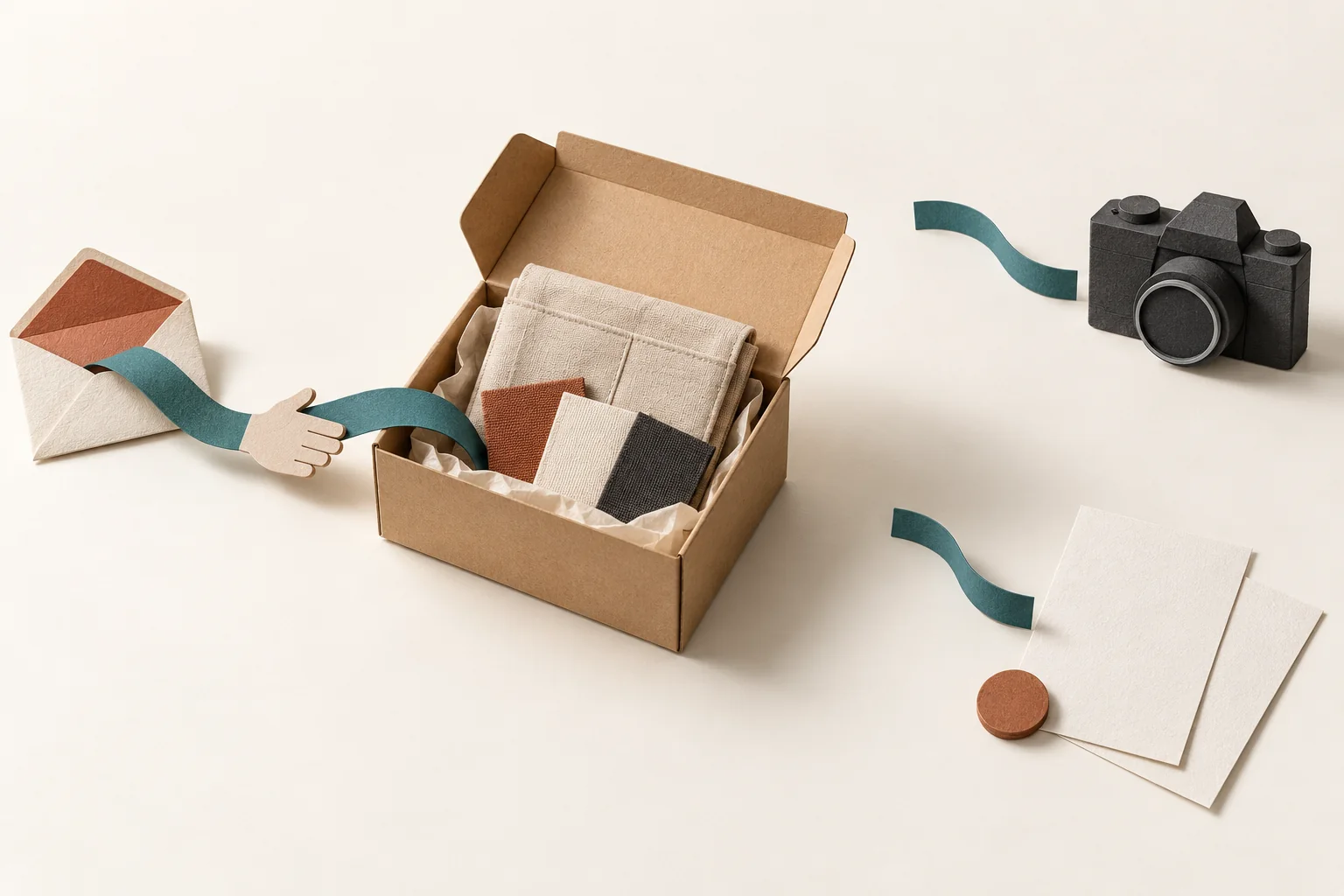




Send the smallest set that lets the creator use a product they want, with everything needed to try it properly. Start with one main product. Add a companion only when it serves a clear use, then price the packed shipment before approving it. An influencer seeding kit does not need to represent your full range.
This guide assumes the creator has agreed to receive a gift with no posting obligation. If you need a scheduled deliverable, settle those expectations before choosing the contents. Use the guide to building a seeding program with clear expectations for that decision.
Give the kit one job
Write one sentence about what the recipient should be able to do with the gift. For a textile accessories brand, that might be: carry their everyday items in the tote they selected. It should be possible to complete that sentence without mentioning an unboxing video.
The sentence gives you a reason to include or remove each item:
- The tote lets the creator try the product you want feedback on.
- A small pouch may help organize the things they carry.
- A second tote in another color repeats the same trial.
- A display box adds presentation, but does not help them use the tote.
These are editorial selection rules, not proven predictors of posts or sales. Modash's gifting article discusses offering a curated choice within a catalog. That is a useful starting point when the full range is unaffordable. Its advice does not establish how much any individual creator will post.
Offer a few approved combinations and let the creator choose. Include the option to decline. If the campaign must center on a particular product, offer available variants of that product rather than implying the entire catalog is available.
Use a matrix before you pack
Start with stop conditions. A product cannot earn its way into the kit through a high marketing score if the creator does not want it, the variant is unavailable, or fulfillment has not cleared the shipment.
Use this selection matrix for each candidate product. The decisions are recommendations for your team, not carrier rules.
| Test | Include | Ask or hold | Remove |
|---|---|---|---|
| Creator preference | Creator selected the item or variant | Preference is unknown | Creator declined it |
| Use | Helps complete the kit's stated job | Use depends on another item | Unrelated extra |
| Completeness | Recipient can use it as supplied | A necessary part is missing | Trial would require an unagreed purchase |
| Inventory | Selected variant can be allocated | Stock is uncertain | Only an unwanted substitute remains |
| Packing | Fulfillment has approved the packed format | Protection or route needs review | No approved shipping plan |
| Budget | Fits the shipment allowance | Cost needs a quote | Displaces a necessary item or protection |
A hold means pause and resolve the missing fact. It does not mean silently choose another color or omit a required part. For the preference step, use collecting sizes and preferences before packing a kit.
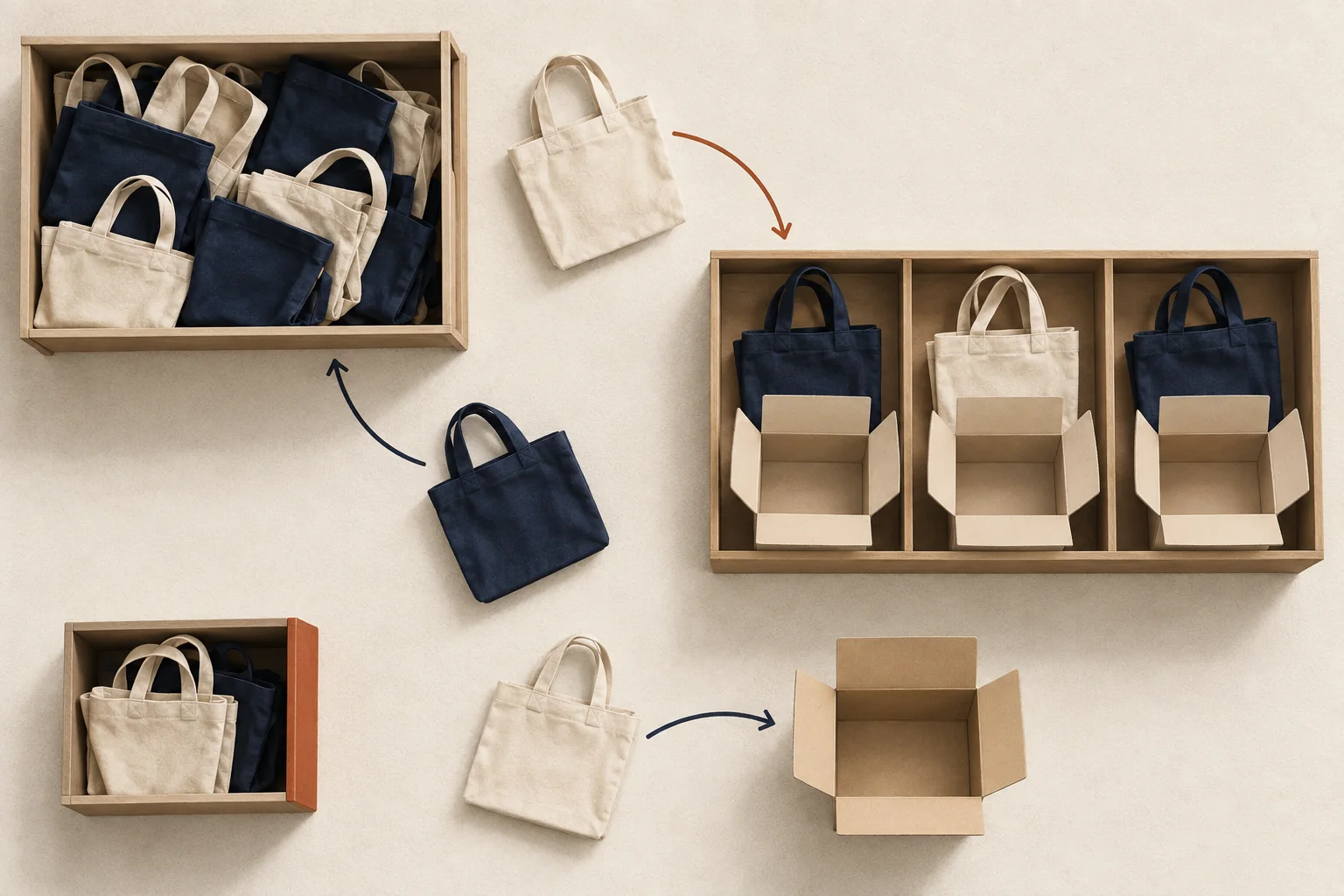
Once products pass these tests, rank them by their contribution to the kit's job. Choose the main product first. A necessary companion comes next. Optional accessories compete for the money left over. Decorative extras come last.
For a hypothetical tote trial, the creator-selected tote passes. A pouch goes on the optional list if the creator wants it. A duplicate tote comes out unless comparing the variants is the agreed purpose. A presentation box must justify its own cost after the products and protective packaging fit.
Three bills of materials for the same catalog
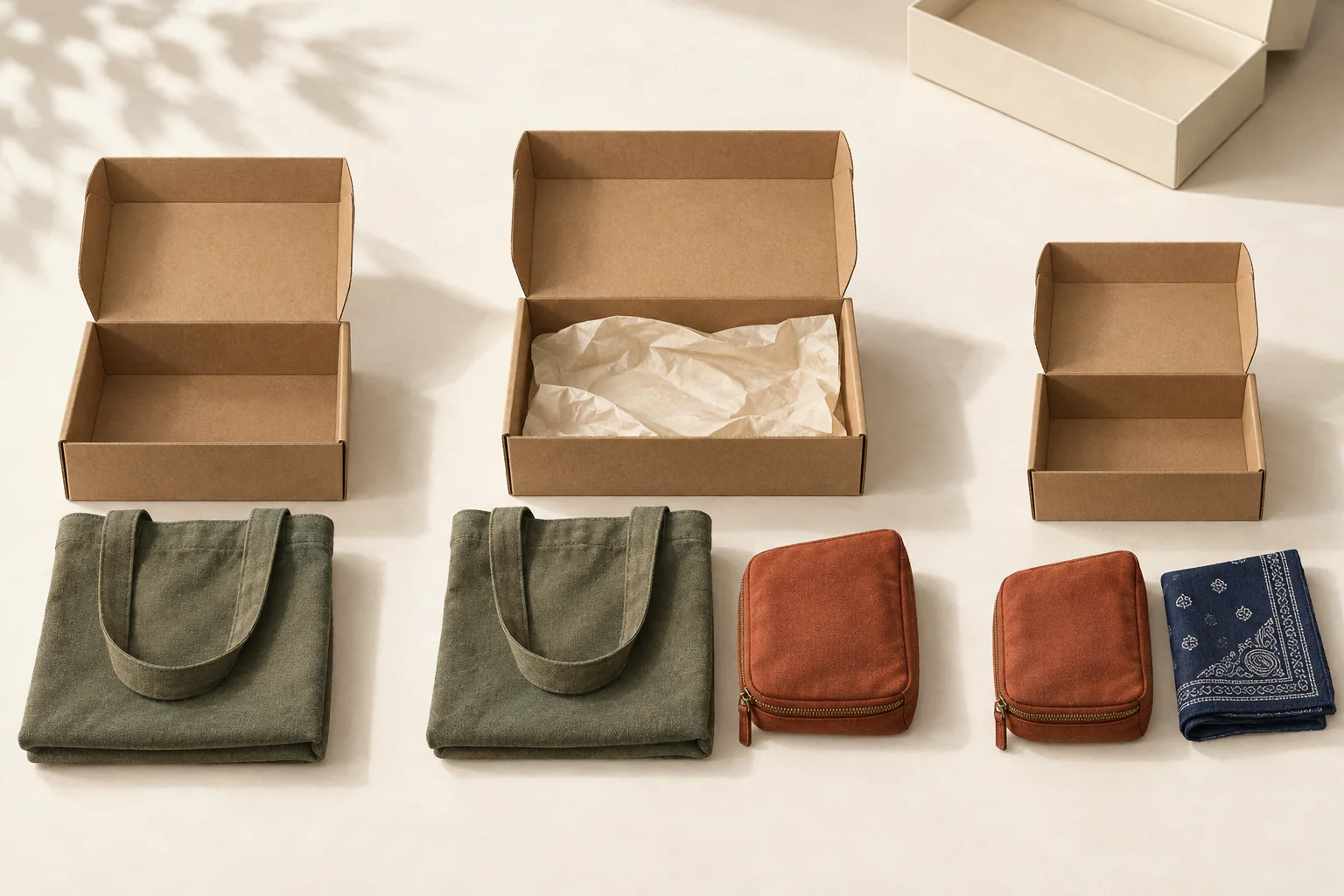
The following options are hypothetical. All amounts are invented US-dollar planning costs, not retail prices, carrier quotes, or market benchmarks. Each column describes one domestic kit for an ordinary textile-accessories catalog. Packaging suitability still needs fulfillment approval.
| Bill-of-materials line | A: Tote trial | B: Carrying set | C: Small-accessory trial |
|---|---|---|---|
| Tote, one selected color | 1 at $12 | 1 at $12 | None |
| Zipped pouch | None | 1 at $5 | 1 at $5 |
| Bandana | None | None | 1 at $3 |
| Protective packing materials | $2 | $3 | $2 |
| Product information card | $0.50 | $0.50 | $0.50 |
| Materials subtotal | $14.50 | $20.50 | $10.50 |
| Assumed packing labor | $2 | $2.50 | $2 |
| Assumed shipping | $7 | $8 | $6 |
| Planned shipment total | $23.50 | $31 | $18.50 |
The formula is product cost + packing materials + card + packing labor + shipping. These totals exclude campaign overhead and any replacement reserve. Use the full seeding-batch cost calculation before setting the final batch budget.
Choose A for a tote trial. It lets the recipient try the main product without sending the whole collection. With a hypothetical $25 shipment allowance, it leaves $1.50 before the excluded costs. That narrow margin may require a higher allowance or fewer recipients once you price the batch.
Choose B for a requested combination. The pouch has a reason to be there if the creator wants to use it inside the tote. At $31, this option exceeds the same $25 allowance by $6. Do not fund it by removing necessary protection. Approve a separate allowance or offer A.
Choose C for accessory interest. It fits someone who wants the pouch and bandana rather than the tote. Its lower cost does not make it a valid substitute for a tote-focused campaign. The creator's preference and the campaign's purpose must both fit.
A uniform spending ceiling does not require identical contents. It does require a clear rule for approving exceptions.
Separate protection from presentation
Treat packaging as two decisions. First, determine what will protect the contents. Then decide whether extra presentation serves a purpose worth its cost.
UPS's US packaging guidance recommends a rigid box within its weight limit and appropriate cushioning. Follow the guidance for your chosen carrier and product. An attractive outer box does not establish that the packing is suitable.
For the hypothetical textile kits, make one fully packed sample of each approved option. Have fulfillment review it, then record its materials, packed dimensions, weight, labor, and shipment quote. Use those figures in place of the table's assumptions. This comparison can reveal whether a seemingly minor extra changes the approved packing plan.
Keep a decorative sleeve, ribbon, or nested box only if you can explain what it contributes. A product launch built around a reusable presentation case may justify one. A routine product trial needs a separate reason. Do not assume more packaging earns a mention, and do not cut protective materials to afford decoration.
Include useful information without assigning a post
Keep the information card focused on the selected products. Identify the variant, point to the manufacturer's product instructions, and give the creator a contact for a missing or damaged item. Avoid claims about a product that your team cannot support.
For endorsements affecting US consumers, a free gift can create a connection that needs disclosure. The FTC's disclosure guidance says this can apply even when the brand did not ask for a mention. A no-obligation gift does not remove that issue. Point creators to the guidance if they choose to share their experience; platform labeling requirements need their own review.
Before releasing inventory, write down the kit's job, the creator's selected items, the packed cost, and the person approving it. Remove any optional item whose purpose you cannot explain. Then send the approved list to fulfillment, so the chosen kit is the kit that leaves the warehouse.