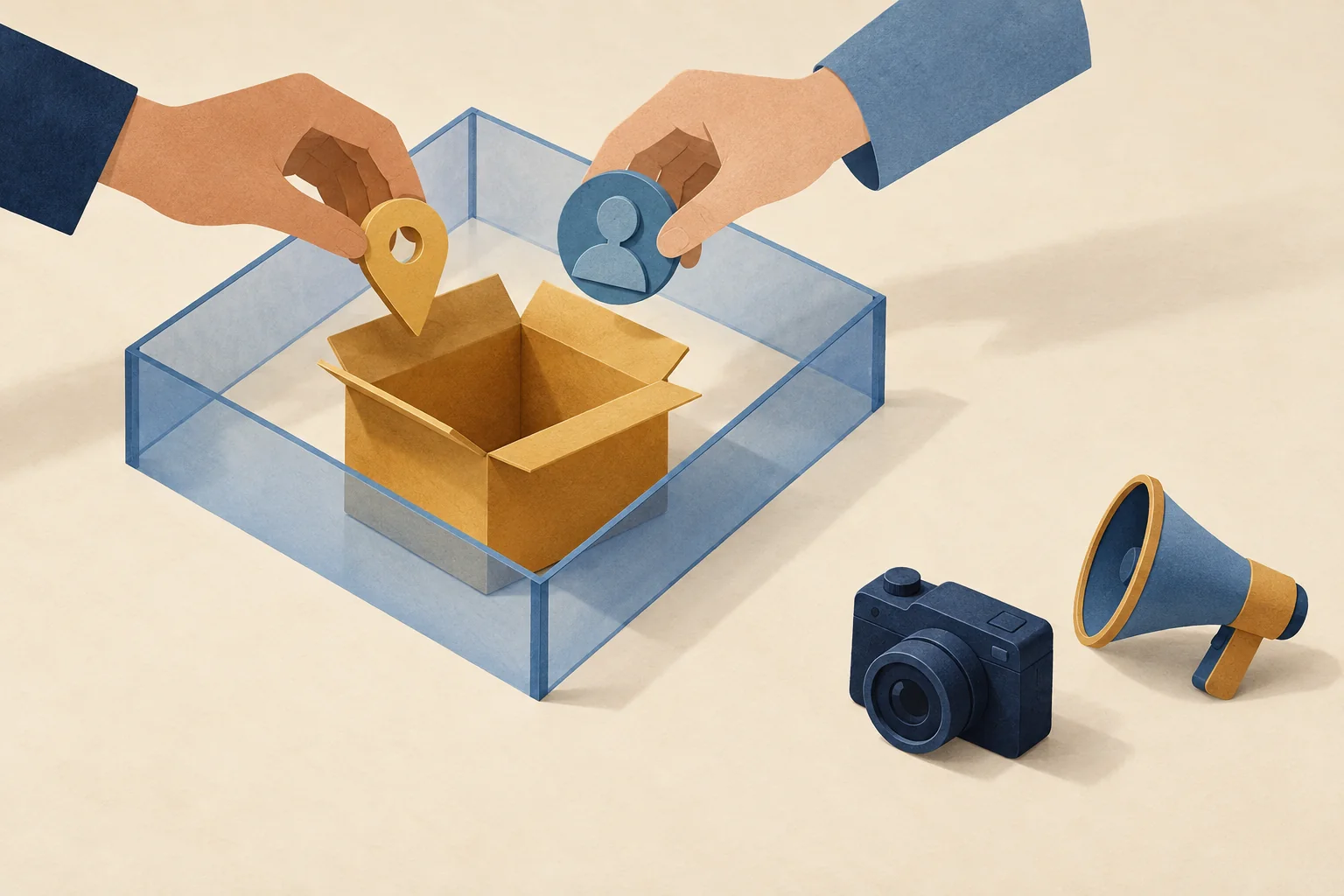




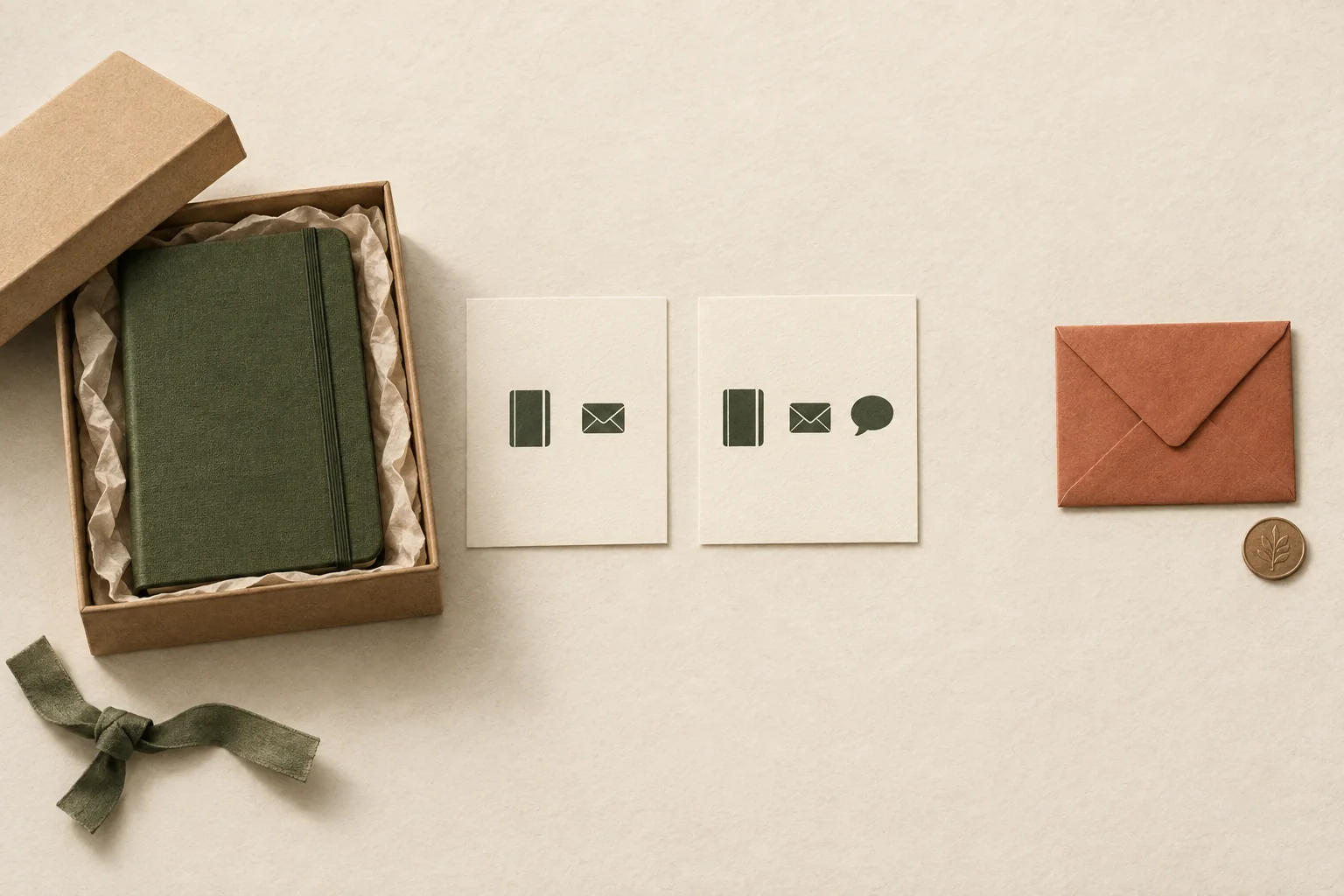
A gifted creator package should include the product name and variant, useful product facts, a working support contact, and a clear statement about posting. If sharing is optional, say so. Keep any sharing details separate from the gift message, explain disclosure for the relevant market, and remove language that suggests a paid partnership is waiting in return.
The insert should match the invitation the creator accepted. If you already agreed on content, payment or a loan, stop before using a no-obligation gift template. Resolve that arrangement separately rather than trying to change it with a card inside the box.
Decide what the card needs to do
Start with one question: can the creator receive this package, use the product and never publish anything without breaking the arrangement you offered?
If yes, use a gift insert. If your team expects a post, an approval step or a deadline, clarify those expectations before sending the package. A card discovered during unboxing is a poor place to introduce them.
The distinction matters because industry terminology varies. Modash's product-seeding examples include no-obligation gifts, review exchanges and affiliate arrangements. Its packaging advice includes a personal message and product details. For this article, a gift means the creator has no agreed content deliverable.
Use this content order as an editorial recommendation:
| Card element | What to put on it | What to check before printing |
|---|---|---|
| Gift message | One sentence thanking the creator for accepting the product | No implied debt or promised partnership |
| Product identification | Exact name, variant and contents | Match the items packed in the box |
| Product facts | A few verified details relevant to trying the item | Remove claims your team cannot support |
| Support | A monitored email and, if useful, the official product page | Test the address and link |
| Posting boundary | A direct statement that posting and feedback are optional | Match the accepted invitation |
| Optional sharing | Where to find the brand and how to disclose the gift | Use guidance relevant to the intended audience |
Keep product facts separate from a suggested opinion. A notebook's size and page layout are facts you can verify. Telling a creator it is their new favorite notebook asks them to adopt an experience they may never have had.
Two insert templates
These are complete hypothetical examples for a fictional stationery brand, Paper Finch. All product details, the handle and the reserved .example contact are illustrative. Replace them with verified details before printing. Both examples assume the creator accepted an unconditional gift and has no existing content agreement.
Template 1: product and support only
Use this version when the package needs no invitation to share.
Thank you for accepting this notebook from Paper Finch.
Inside is our A5 dot-grid notebook in moss green. It has 160 numbered pages and a ribbon marker.
This is a gift. You do not need to post, send feedback or return it. No paid work is included or promised.
Questions about the notebook or something wrong with your package? Email creators@paperfinch.example and our creator-support team can help.
If you independently choose to mention it publicly, clearly disclose that Paper Finch gave you the notebook for free. For posts reaching US consumers, put that disclosure with your mention where viewers can notice it.
The Paper Finch team
A disclosure reminder does not ask for content. It prepares the creator for the separate decision to endorse the product later.
Template 2: optional sharing details
Use this version when you want the creator to find the correct brand account without turning a tag into a condition.
Thank you for trying Paper Finch.
Your gift contains an A5 dot-grid notebook in moss green and a sheet of page-index stickers. The notebook has 160 numbered pages and a ribbon marker.
Posting, tagging us and sending feedback are optional. There is no posting deadline, and this gift does not include or promise paid work.
If you choose to share, our account is @paperfinch. Describe your own experience. For posts reaching US consumers, clearly say that Paper Finch gave you the products for free. Put the disclosure with the endorsement; for a video, include it in the video itself.
For product questions, package problems or optional feedback, email creators@paperfinch.example.
The Paper Finch team
Neither template includes a campaign hashtag, a shot list, a required caption or an invitation to compete for paid work. Add only details the creator needs. If a paid opportunity exists later, send a separate proposal using the process for moving a gifted creator into a paid partnership.
Optional posting still needs a disclosure decision
For US-facing endorsements, FTC guidance says free products can create a material connection. Disclosure can be needed even when a brand did not ask the creator to mention the product. Calling the package a gift or making posting optional does not remove that connection.
The FTC also says the disclosure belongs with the endorsement. A reminder printed inside a box cannot disclose the relationship to the creator's audience. For video endorsements, the FTC says disclosure should appear in the video, rather than only in its description.
Do not distribute the US wording worldwide without a market review. UK ASA/CAP guidance favors a prominent upfront Ad label and warns that Gifted alone is unlikely to identify advertising clearly enough. Its guidance distinguishes CAP Code coverage from consumer-protection rules that can apply without brand editorial control. These examples explain operational differences, rather than provide a legal assessment of a particular post.
Phrases to remove before printing
| Avoid | Why it creates confusion | Replace with |
|---|---|---|
| "We can't wait for your unboxing next week." | Assumes a format and deadline | "Posting is optional; there is no deadline." |
| "Post to unlock your paid partnership." | Suggests compensation will follow | "This gift does not promise paid work." |
| "Welcome to our ambassador team." | Implies an ongoing role | "Thank you for accepting this gift." |
| "No strings attached. Please post two Stories." | Adds a deliverable to an unconditional gift | Remove the request or discuss a separate content arrangement. |
| "Tag us and you're covered." | Confuses account identification with disclosure | Include a market-specific disclosure reminder. |
| "Tell everyone how much you love it." | Supplies an opinion before the creator has tried it | "Describe your own experience if you choose to share." |
Keep requests to reuse a post out of the packing insert. Handle them through a separate permission request for gifted creator content, with the intended use stated clearly.
Check the printed card against the invitation
Give the final insert and the original invitation to someone who did not write them. Ask that person to identify:
- Whether a post is required.
- Whether any payment or future role is promised.
- Which product is in the package.
- Where to ask for help.
- What disclosure guidance applies if the creator shares.
If their answers differ from your program's terms, rewrite the card. Apply the same boundary when you follow up after delivery without demanding a post.
Before packing the next box, test the support contact and compare the product name and variant on the card with the item in your hand.