



You can reuse a gifted creator's post when you have a valid basis for that use, such as permission covering the placement you plan. Sending a gift, receiving a public mention and obtaining reuse rights are separate events. For a brand's routine marketing reuse, ask for clear written permission before downloading, editing or republishing the content. Check the applicable law and the destination platform's rules before it goes live.
What the gift did and did not settle
In the United States, copyright protects an original photograph or video once it is fixed. The author generally owns that work, although employment arrangements, assignments and other exceptions can change ownership. The U.S. Copyright Office's overview explains that owners control uses including copying and adaptation, subject to legal limitations.
A gifted product does not, by itself, establish your right to copy the creator's resulting media. Start by reading any agreement already in place. If it covers reuse, check the specific asset and scope. If it is silent, request permission. Do not treat a tag, a thank-you message or the absence of a watermark as a rights grant.
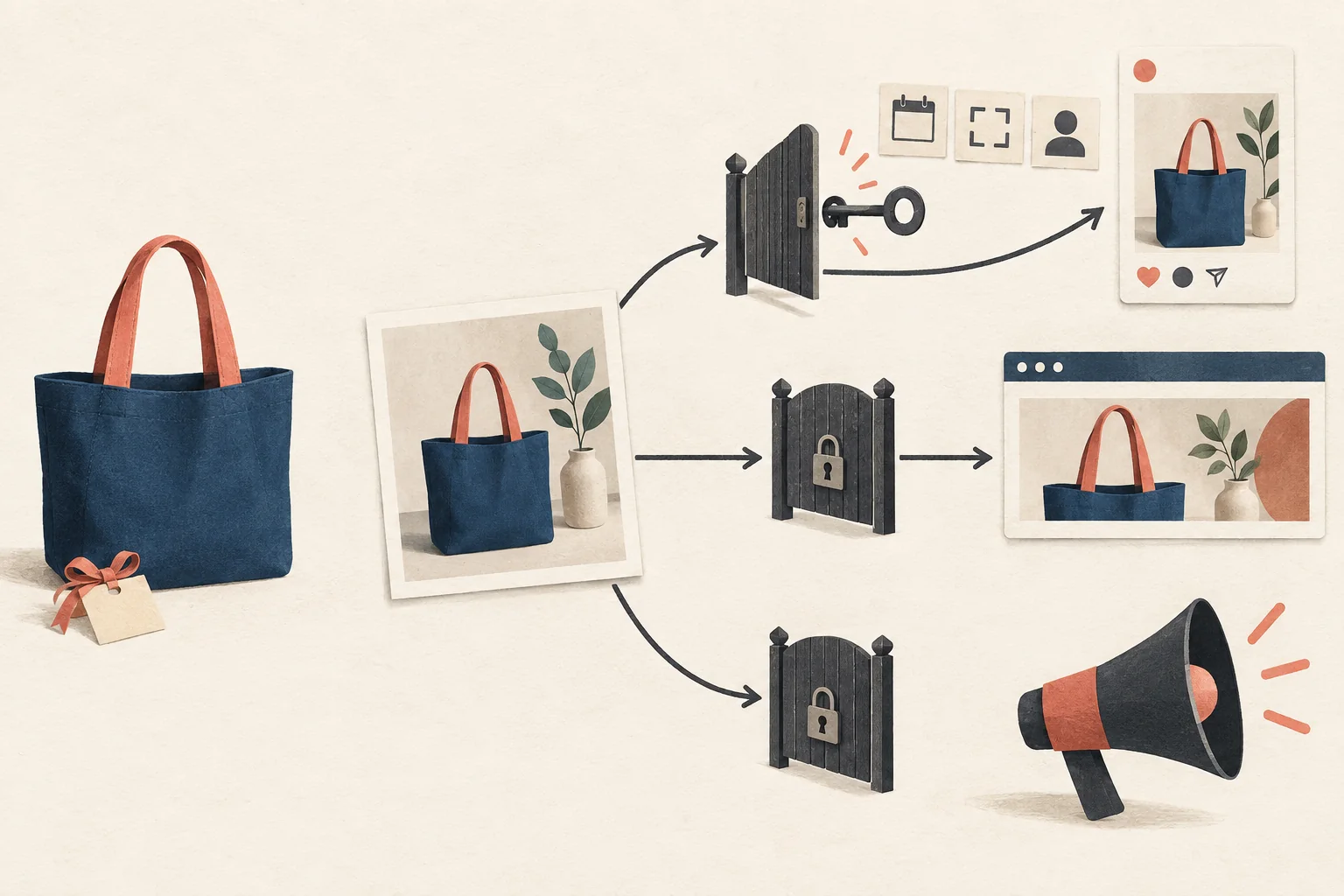
Keep these decisions separate in the campaign record:
| Event | What to record | What still needs review |
|---|---|---|
| Creator accepts a gift | The gifting terms | Whether any content or reuse was agreed |
| Creator publishes a post | The post URL and publication date | Ownership and permission for your intended use |
| Creator agrees to reuse | Their approval and its precise scope | Other rights, disclosure and platform requirements |
This is a recommended approval process, not a claim that copyright has no exceptions. If you intend to rely on an exception, an implied permission or disputed contract language, obtain jurisdiction-specific legal advice. An everyday repost request is a poor place to improvise that analysis.
Define what you mean by repost
Before contacting the creator, ask the team requesting the content where it will appear. A native share, a downloaded video uploaded to the brand account, a product-page image and a paid ad are different proposed uses.
For native sharing, review the current platform terms and the feature's limits. A visible share button is not evidence of permission to download the file or use it in an ad. Keep a native-share decision separate from approval for other placements.
For any requested reuse, complete this checklist. These fields are operational recommendations; the right agreement depends on the jurisdiction and circumstances.
| Scope item | Detail to settle |
|---|---|
| Asset | Exact post URL, image, video or approved cut |
| User of the content | Named brand entity and any agency handling publication |
| Placement | Named accounts, website pages, email campaigns or ad platforms |
| Paid use | Whether boosting, paid ads or ads through a creator account are included |
| Dates | Start date, end date and what happens to live copies at expiry |
| Territory | Intended markets and how online availability will be handled |
| Changes | Cropping, subtitles, translation, music replacement and other edits |
| Identity and credit | Agreed use of the creator's name, handle, face or voice |
| Payment | Agreed fee or explicit agreement that no additional fee applies |
| Other material | Music, other people's appearances and third-party footage requiring review |
| Approval and removal | Who approves the final version and how removal requests will be handled |
Modash's usage-rights guide also recommends identifying channels, changes and duration before negotiation. For a gifted post, start with the use your team has scheduled. Avoid asking for every future placement because another department might eventually want it.
If paid reuse needs its own budget, use the separate guide to budgeting usage rights apart from content production.
Send a request the creator can answer
The following is a hypothetical request for a photo with no music or other people. The names, account and dates are illustrative. Replace the details with the actual asset and proposed use before sending it.
Hi Maya, thank you for sharing the photo of the tote we sent. Would you be willing to let North Lane reuse the first photo in your tote post from September 25?
We would like to publish it once on our North Lane Instagram account on October 5, 2026, and remove it on November 4, 2026. The account is public and can be viewed worldwide; our campaign is aimed at U.S. customers.
We would tag your account and state that we sent the tote as a gift. We would only crop it to fit the feed, without changing your image or adding claims. We would send the final image and caption for your approval before posting.
This request excludes boosting, paid ads, our website, email and use by retailers. Would you agree to that scope without an additional fee, or would you like to propose a fee or different terms?
Please also tell us whether someone else took the photo or holds rights we need to clear. Receiving the gift did not require you to accept this request. We will wait for your reply before using it.
Attach or link the exact post in the real message. A reply such as "thanks!" does not resolve the scope. If the creator proposes different terms, send back the agreed version and obtain their confirmation. For paid, cross-border or more complex uses, have counsel prepare or review the agreement. This request is an operational example, not a legal contract template.
Silence leaves the request pending. Declining a fee or narrower terms means choosing another asset, not publishing while the discussion continues.
Check what the creator's yes cannot settle alone
Permission from the creator is one part of clearance. Ask who made the media and what third-party material it contains. If a photographer owns the image, the creator's reply may not cover the rights you need.
Music deserves a separate check. TikTok's commercial-music guidance recommends its Commercial Music Library for promotional content. TikTok states that its licenses for music outside that library do not cover commercial use. Do not assume a creator's permission clears a song, or that an in-platform music arrangement covers your website. Review the intended platform and use before retaining or replacing audio.
For paid promotion through TikTok, continue with the Spark Ads permission checks rather than treating a repost approval as ad authorization.
Disclosure also needs its own review. Under FTC guidance for endorsements affecting U.S. consumers, free products can create a material connection that needs disclosure. The guidance covers mentions even when the brand did not ask for them. It calls for clear disclosure alongside the endorsement and, for video, in the video itself.
For your reuse, preserve relevant context and review the disclosure in its new placement. Do not crop away the gifting disclosure or edit a qualified opinion into an unqualified recommendation. The FTC also notes that U.S. law can apply to overseas posts that foreseeably affect U.S. consumers, while foreign laws may apply too. Identify the markets involved and seek local advice where needed.
Save the permission beside the asset
Store the approved asset, the complete permission exchange, the agreed scope and the final approved version together. Assign someone to check the end date and remove or renew the content as agreed. Mark an asset as unavailable for any channel outside its approved scope.
Before scheduling this week's repost, send the creator one request naming the exact post, placement, dates and edits. Keep publication on hold until permission and the remaining rights checks are complete.