



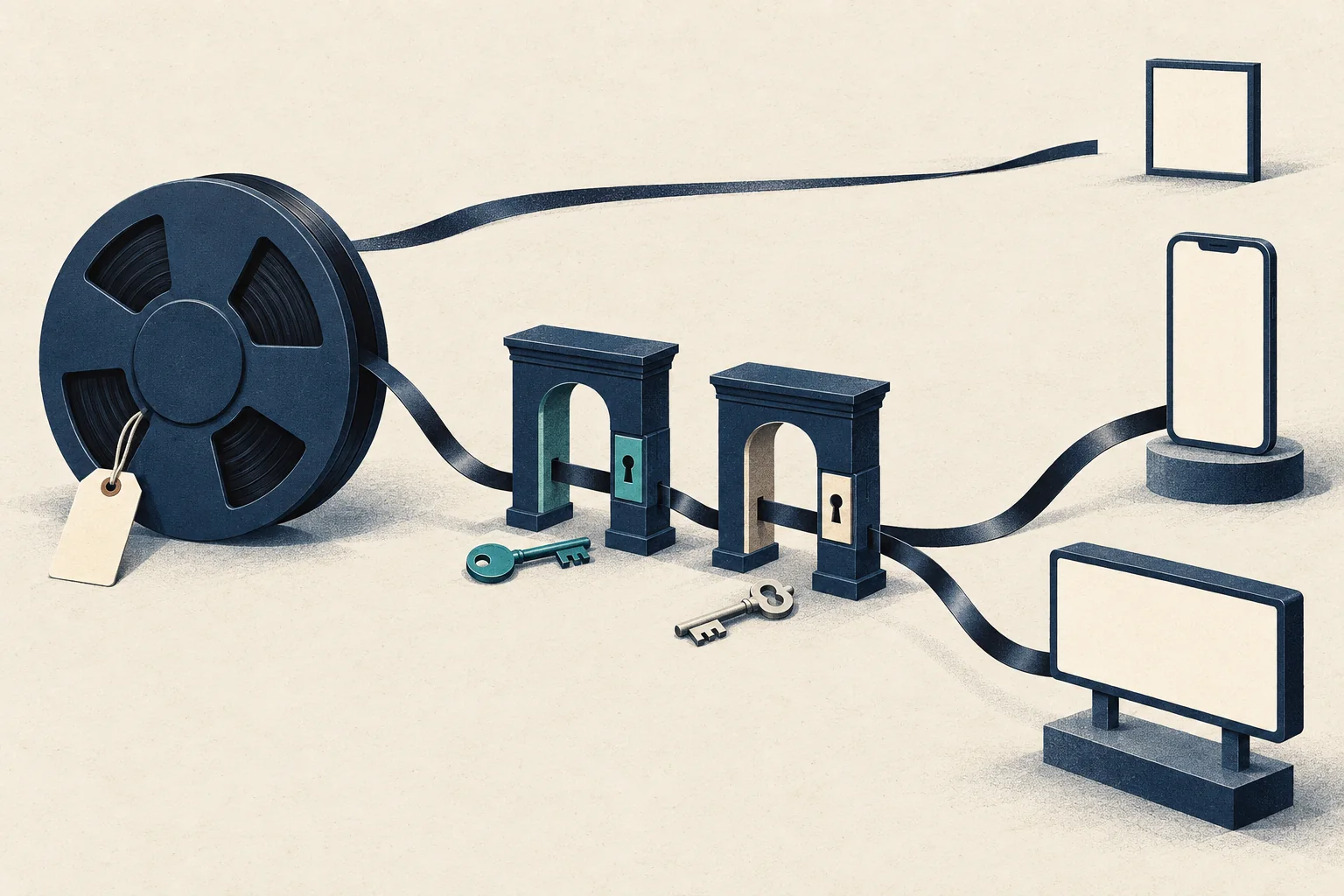
For a commercial TikTok video, choose music from TikTok's Commercial Music Library that covers your intended region and placement, or obtain the necessary licenses yourself. A song appearing in TikTok's general library, or carrying an original-sound label, does not establish commercial permission. TikTok's commercial music guidance applies when a post promotes a brand, product or service, including a creator's promotional post.
Treat the music choice as part of the brief. Record what lets you use the track before editing the video around it. Then check that record again if the brand wants to turn the post into an ad.
Start with the use, then choose the track
An unpaid distribution plan can still involve commercial content. TikTok's business guidance includes organic posts, video ads and branded content in its commercial music guidance. Buying media is not the test for whether a promotional video needs commercial music rights.
Write down these details before searching:
- What the video promotes, and which creator or brand will post it.
- Whether the plan covers an organic post, paid advertising, or both.
- The campaign's target countries or regions.
- Whether anyone expects to upload the finished video outside TikTok.
This is a recommended production check. It makes the intended use concrete enough to compare with a library entry or a separate license.
For example, a creator's product demonstration and a brand's later ad using that demonstration belong in the same planning conversation. If the ad is still undecided, record it as pending rather than treating it as cleared.
Check the Commercial Music Library for the campaign
TikTok's current CML instructions describe different starting points by account type. A Business Account sees Commercial Sounds when adding a sound. A personal account can open the Sounds dropdown and select Commercial Sounds.
Access to a wider music selection on a personal account does not expand the rights for a sponsored video.
When choosing a track:
- Select the region where the campaign will run.
- Check the track's usable placements against the planned use.
- Read any extra requirements or restrictions attached to that track.
- Save the track reference and the conditions you relied on with the video brief.
TikTok says selected Commercial Sounds can be used for organic or paid content. That supports planning both uses from the start, provided the selection fits the campaign. It does not mean every sound found anywhere on TikTok is available for both.
Read the CML terms alongside the library entry. They require web users to follow the Usable Placements designation and allow extra track-specific restrictions. They also say Premium Tracks may carry an additional fee. Avoid recording a blanket assumption that every CML track is free under every arrangement.
The English global terms and Help Center guidance form the basis of this workflow. Check the terms and track conditions that apply to your market before approving an actual campaign.
Treat other sounds as a separate rights question
Later's TikTok sounds guide describes finding audio through the For You feed, sound pages and search. Those routes help you discover a creative idea. They do not supply the permission record for a commercial use.
An original-sound label can appear on audio you did not create. Do not approve it based on its label, popularity, or use by another brand.
TikTok says that when you use original audio or music outside the CML with the content disclosure setting enabled, you must accept its Music Usage Confirmation. You confirm that the post contains no copyright-protected music, or that you obtained and paid for all necessary licenses. Accepting that confirmation records your assertion; it does not obtain missing licenses for you.
For separately licensed music, ask the rights owner or licensing provider to confirm coverage for the actual campaign. Send the planned accounts, commercial purpose, territories, duration, paid use and any off-platform uploads. Have the responsible rights reviewer resolve unclear terms before the team publishes.
Listen to the complete export too. Checking the added soundtrack alone can miss music audible in the original filming location or included in another audio layer. If you cannot establish permission for that music, replace or remove it before approval.
The commercial content disclosure workflow helps the creator handle the post's disclosure separately from music clearance.
Keep a music-source record with the final export
Use this record for each finished video. The fields below are an operational recommendation, rather than a TikTok submission form.
| Field | What to save |
|---|---|
| Video identity | Final export filename and the creator or brand account that will publish it |
| Music identity | Track title, artist, version and library link or identifier |
| Source | CML entry, creator-owned music, or separately licensed source |
| Permission evidence | Saved track conditions or the license document covering this use |
| Territory | Campaign regions checked against the source |
| Distribution | Organic TikTok, paid TikTok and any separately cleared destinations |
| Limits | Relevant placement, term, editing or other restrictions |
| Review | Reviewer, date checked and unresolved questions |
Keep permission evidence with the export, rather than relying on a favorite sound saved in someone's account. A reviewer should be able to connect the audible music to its source without guessing which remix or version the editor used.
A saved record is evidence of the review, not a promise of permanent availability. TikTok's CML terms allow it to mute or remove videos if it loses the right to offer a sound. As a production precaution, retain a version of the edit with the music on a separate track.
Reopen the record before paid or off-platform reuse
Before the brand spends money on the video, compare the new plan with the approved record:
- Does it use the same music version and finished edit?
- Do the current track conditions cover the paid placement and campaign regions?
- If separately licensed, does the license cover this advertiser's proposed use?
- Have any relevant terms expired or remained unresolved?
- Will the team export the video to another platform?
For Spark Ads, review the creator's advertising permissions as a separate task. Creator approval to advertise a post does not answer whether the music source covers that use.
Hypothetical reuse review
Suppose a creator makes a product demonstration with a CML track selected for the planned TikTok region. The brand later asks for a TikTok ad and an Instagram upload.
| Proposed use | Review decision |
|---|---|
| Original TikTok post | Check the CML entry and conditions for the planned commercial post |
| TikTok ad | Recheck paid placement and region coverage; also obtain the creator's ad permissions |
| Instagram upload | Hold the export until separate music rights cover that destination, or replace the soundtrack with music cleared there |
TikTok's CML terms do not grant blanket commercial rights outside TikTok. They require separate rights-holder permission for outside uses and require users to respect designated placements. Downloading a finished video does not expand that permission.
Before approving the next edit, attach its music-source record to the brief. Leave paid reuse and outside destinations pending until someone can point to the conditions that cover them.