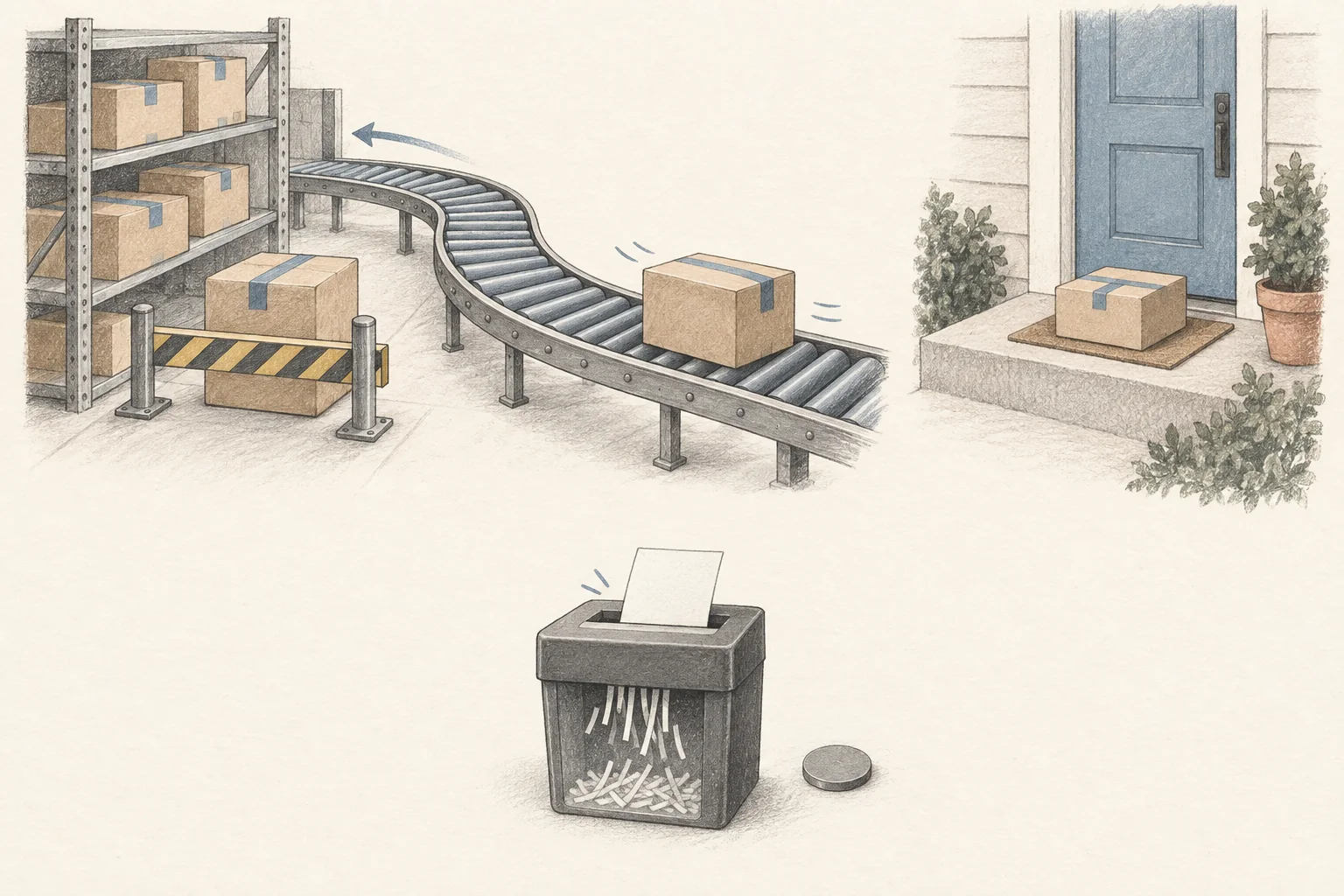





Resolve a lost influencer package by opening a delivery case, checking the shipping record, and making a separate replacement decision. Tell the creator who owns the case and when they will hear from you again. A missing package report should trigger fulfillment work, without becoming a judgment about the creator's honesty or interest in your brand.
This procedure covers ordinary domestic US shipments, with USPS and UPS examples. The ownership and communication steps are recommendations for your team. Carrier deadlines are carrier-specific. International customs cases and product-safety decisions need their own review.
Open one case with three separate decisions
Assign one person to update the creator. That person can coordinate work without personally handling every warehouse or carrier task.
| Workstream | Question to answer | Owner | Record to keep |
|---|---|---|---|
| Carrier investigation | Where did the parcel last appear, and what can the carrier investigate? | Shipping operations | Tracking history, case number, next action date |
| Address review | Did the shipping label match the creator's confirmed destination? | Fulfillment coordinator | Match, mismatch or confirmation pending |
| Replacement approval | Should we send another parcel, wait, or close without reshipping? | Seeding budget owner | Decision, reason, cost approval and creator preference |
These decisions can move at different speeds. A replacement may be approved while the original parcel remains under investigation. A carrier claim may remain open after the creator receives the replacement. Keep both outcomes visible.
The split follows the work that carriers require. USPS requests shipping and contents details for a missing-mail search. UPS asks for tracking and evidence of package value for a claim. Neither page sets your brand's replacement budget or decides whether the creator still wants the gift.
Use this lost-package triage tree
Start with the latest tracking history and the creator's report. Save the date you checked, because the next scan may change the route through this tree.
- Does the warehouse have a handoff record?
- If it cannot confirm handoff, ask fulfillment to check dispatch records before calling the parcel lost in transit.
- If it can confirm handoff, continue to the carrier status.
- Is there an attempted-delivery or collection notice?
- Check the notice for the next available action. Ask whether that option works for the creator.
- UPS tells recipients to check the delivery notice and tracking status. Do not invent a universal collection period.
- Does tracking show delivery, while the creator reports no parcel?
- Keep both facts in the case record. Ask whether a reception desk or usual receiving location could have accepted it, if relevant.
- Ask the carrier to investigate the delivery record. Do not record theft, fraud or creator receipt as an established fact.
- Is the parcel moving, delayed or showing no new scan?
- Check the carrier's current search or claim instructions. Record the next eligible action and its deadline.
- Continue the address review and replacement assessment while waiting.
- Has the parcel returned to sender or reached the creator?
- Confirm the physical outcome with the warehouse or creator. Then close the delivery task or decide whether a new shipment is wanted.
At every branch, set the next creator update. Avoid a case status that says only "waiting" with no owner or date. If the original record is scattered across inboxes, use a shipment record that follows approval through delivery to keep the investigation attached to the right parcel.
Check the address without assigning fault
Compare the address the creator confirmed with the label the warehouse printed. Check the recipient name, unit or suite, street, city, state and postal code. Look for a transcription error or a missing line before asking the creator to repeat information.
Ask for confirmation through your established private shipping channel. Avoid posting a full address in a campaign group chat. Keep the case summary to the result of the comparison, with shipping details available to the people doing the investigation.
This is a recommended handling practice. Where UK GDPR applies, the ICO's data-minimisation guidance requires personal data to be adequate, relevant and limited to the purpose. The ICO flags that guidance as under review. It does not supply a universal retention period for seeding records.
If the label differs from the confirmed address, say what your team found. If they match, record that result without treating it as proof of delivery. Before any resend, verify the replacement destination, especially if the creator has moved or uses a receiving service.
Keep carrier deadlines separate from your update schedule
USPS says a Missing Mail search can start seven days from mailing. Its search form needs identifying details about the shipment, packaging and contents. That threshold concerns a search request. It is not a general instruction to file every insurance claim on day seven.
UPS's US claims page says to start a claim within 60 days of the scheduled delivery for a lost or damaged package. It also asks shippers to keep an invoice that supports the package's value. Check the instructions for the actual shipment rather than applying that deadline to another carrier or country.
Prepare the records your team already has before asking the creator for more. Do not promise that the carrier will recover the parcel or reimburse the replacement. Set your next update based on when you will take an action, even if the carrier has given no resolution date.
Approve a replacement on its own facts
The budget owner should answer four questions:
- Does the creator still want the product and have a workable receiving location?
- Is the requested item available, with the cost of another shipment approved?
- Has the team fixed any known address or dispatch error?
- What will happen if both parcels arrive?
Record "replacement approved, original investigation open" when that is the situation. Do not make reimbursement a prerequisite unless your team has deliberately chosen that policy and explained the wait. For high-value or repeated losses, seek a manager's decision on delivery arrangements rather than adding unsupported accusations to the creator record.
Before dispatch, agree what the creator should do if the original turns up. If your team wants a duplicate returned, arrange that process and explain it before sending another package.
Recipient messages for a hypothetical case
The following examples describe a hypothetical shipment. The update dates and decisions illustrate the workflow, not carrier service promises.
First reply
Thanks for telling us the package hasn't reached you. I'll coordinate this with our shipping team. We'll check the carrier record and compare the label with the address you confirmed. If your usual reception desk accepts parcels, could you check there when convenient? I'll update you by Friday, even if the carrier is still investigating.
Investigation still open
The label matches the address you confirmed, and our carrier case is still open. We haven't confirmed where the parcel is. Our seeding team is reviewing a replacement separately. I'll send you the decision on Monday; you don't need to contact the carrier on our behalf.
Replacement approved
We've approved another package. Would you still like it sent to the same destination? Please confirm through the shipping form we used before. We'll send tracking after dispatch. If both packages arrive, you can keep the duplicate; please tell us so we can update the shipment record.
Use the last message only when your team has approved that duplicate policy. Keep requests for content out of these delivery updates. Modash's gifting guidance recommends checking receipt and product experience during follow-up. Once receipt is confirmed, move to a follow-up that does not demand a post.
Open the missing-package record now with one named contact, three workstream statuses, and a dated next update. Send that update to the creator before asking them to do more investigation.