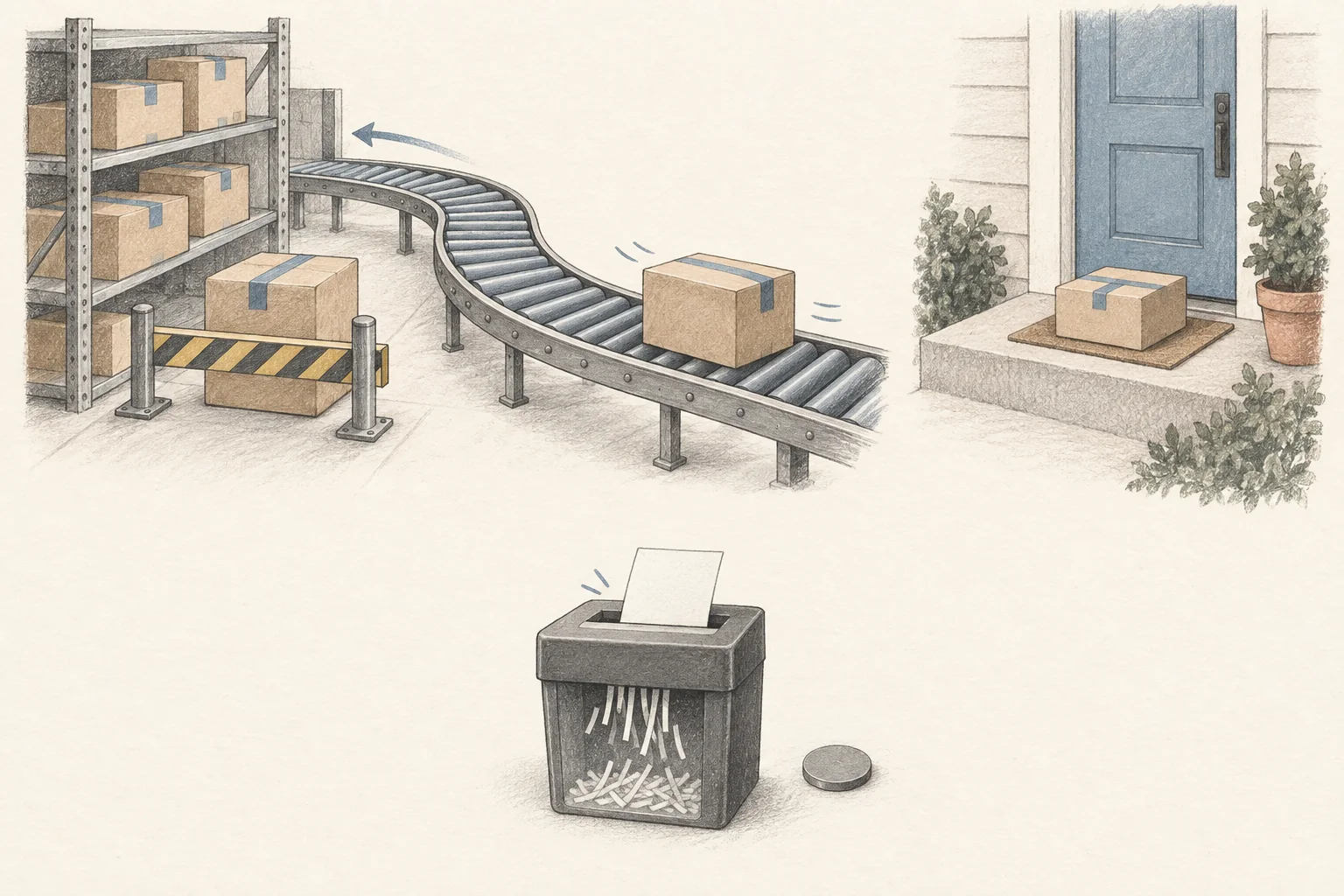





Expiry should set the latest dispatch date, the batch you select, and the time a creator has to use the product. Before releasing a shipment, confirm the manufacturer's handling instructions and whether your packaging and carrier service can meet them. If shelf life or temperature limits remain unknown, hold that product and resolve the gap before packing.
This worksheet is for planning creator shipments. It uses US carrier guidance and cosmetic product examples. It does not establish that an item is safe to use or eat, or that it can enter another country.
Start with the product and batch
A category name such as "face mask" tells you too little to plan delivery. Compare two manufacturer instructions:
- Lush's Cup O' Coffee has a four-month shelf life. Lush directs readers to the use-by details on the product and specifies a cool, dry storage place.
- Lush's Catastrophe Cosmetic requires refrigeration between 2°C and 8°C and use within 21 days of manufacture.
Those instructions belong to those products. Neither gives your team permission to assume the same limits for another mask, or to invent an acceptable time outside the stated conditions.
For each SKU, record the batch, its date marking, the manufacturer's explanation of that marking, and the storage instructions. Keep unopened shelf life separate from any instructions that apply after opening. Ask the manufacturer when a date code or instruction is unclear.
Use the remaining life of the units you will pack. A product's advertised total shelf life does not tell you how much remains after warehouse storage.
Keep two separate checks
Perishable influencer seeding needs a calendar check and a handling check. Passing either one alone is insufficient to release the shipment.
Calendar check. Will the creator receive the product with enough time for the intended use, within the manufacturer's instructions?
Handling check. Can the planned packing, dispatch, transit, receipt, and storage process meet the manufacturer's conditions?
An early arrival does not establish temperature compliance. A well-insulated parcel does not give the product extra shelf life. Record both decisions separately so a marketing deadline cannot silently override a handling problem.
The FedEx perishables guide includes cosmetics among temperature-sensitive goods. It also states that proper packaging is the shipper's responsibility. Treat carrier guidance as an input to the shipping plan, rather than proof that a particular product will arrive in acceptable condition.
Fill in the shipment-timing worksheet
Create one row per batch and delivery plan. Separate creators if their receiving dates or planned use differ.
| Field | What to enter | If unknown |
|---|---|---|
| Product and batch | SKU, batch code, date marking | Ask warehouse to identify the units |
| Meaning of date | Manufacturer's definition and applicable instructions | Ask manufacturer; do not decode by guesswork |
| Remaining life | Calendar days from planned packing to the applicable date | Hold allocation |
| Dispatch wait | Days between packing and carrier handoff | Confirm warehouse schedule |
| Transit allowance | Planned calendar days through delivery, including the delay allowance | Confirm route and service with carrier |
| Receipt delay | Time before creator can retrieve and store the parcel | Confirm availability |
| Intended use window | Time creator wants after receipt to use the product | Agree a workable receiving date |
| Planning reserve | Extra time your team chooses to leave unused | Set a documented internal minimum |
| Storage conditions | Manufacturer's instructions before and after opening | Ask manufacturer |
| Transit conditions | Accepted shipping conditions and any excursion limits | Hold dispatch pending clarification |
| Packing method | Product-appropriate pack-out and supporting evaluation | Ask fulfillment lead to resolve |
| Decision | Release or hold, owner, reason | Keep on hold |
The planning reserve is an internal recommendation. It does not extend an expiry date or authorize a temperature excursion.
Use this calendar calculation:
Remaining life at packing
minus dispatch wait
minus transit allowance
minus receipt delay
= remaining life when the creator takes possession

Required remaining life
= intended use window + planning reserve
Release only when the first result meets your required remaining life and the handling check has also passed. Any shorter manufacturer limit after opening needs its own check against the intended use.
Worked example with a temperature unknown
These numbers are hypothetical planning inputs, not shipping or safety standards.
A batch has 18 calendar days remaining when packed. The team allows two days before dispatch, three days for transit including its delay allowance, and one day for retrieval. That leaves 12 days when the creator takes possession.
The creator wants seven days to use the product. The brand chooses a three-day planning reserve. Its calendar requirement is therefore 10 days, which the 12-day result meets.
However, the manufacturer requires chilled storage and has not confirmed acceptable transit conditions. The warehouse has no supporting evaluation for its proposed packing method. The decision is hold. The calendar calculation cannot resolve that gap.
Suppose the same creator then says they will be away for another four days. The remaining life falls to eight days, below the brand's 10-day requirement. Even after the handling question is resolved, this batch no longer fits that receiving plan. Select a later-expiring batch, change the agreed delivery window, or ask whether the creator wants a different product. Use the substitution workflow before changing what they accepted.
Match dispatch to the receiving window
Ask whether the creator can receive and store the product during the proposed delivery window. Explain the actual storage instructions before dispatch. A surprise delivery is a poor planning choice when someone must retrieve a parcel promptly.
Modash's gifting challenges article recommends setting expectations before shipping and distinguishes shipping, tracking, and follow-up tasks. For expiry-sensitive products, add receiving availability to that handoff. Do not treat accepting a short-dated product as agreement to rush out content.
FedEx's US guide recommends specified overnight services for temperature-sensitive shipments and asks shippers to account for holidays and weekends. For a service other than next-day, it says packaging and refrigerant should protect the product for at least 24 hours beyond the delivery commitment. That carrier recommendation does not replace product-specific handling instructions or validate your pack-out.
Confirm the service for the actual origin, destination, and dispatch date. Keep the carrier's delivery estimate separate from any evidence about temperature protection. If a delayed handoff changes the plan, recalculate before releasing the parcel.
Give exceptions an owner
Assign one fulfillment contact to review late dispatches, delivery exceptions, and reported condition problems. Track the batch alongside the shipment so that person can retrieve the right instructions. The approval-to-delivery tracking guide covers the shipment record.
If a creator reports a late, warm, leaking, or otherwise questionable arrival, pause requests to use the product. Ask the manufacturer or designated product-quality contact for disposition instructions. Do not reassure the creator based on appearance, a tracking scan, or the expiry date alone. For replacement coordination, use the damaged shipment process.
Before the next batch leaves, complete the worksheet for one actual SKU and receiving window. Put a named owner beside every unknown and leave dispatch on hold until both checks have an answer.