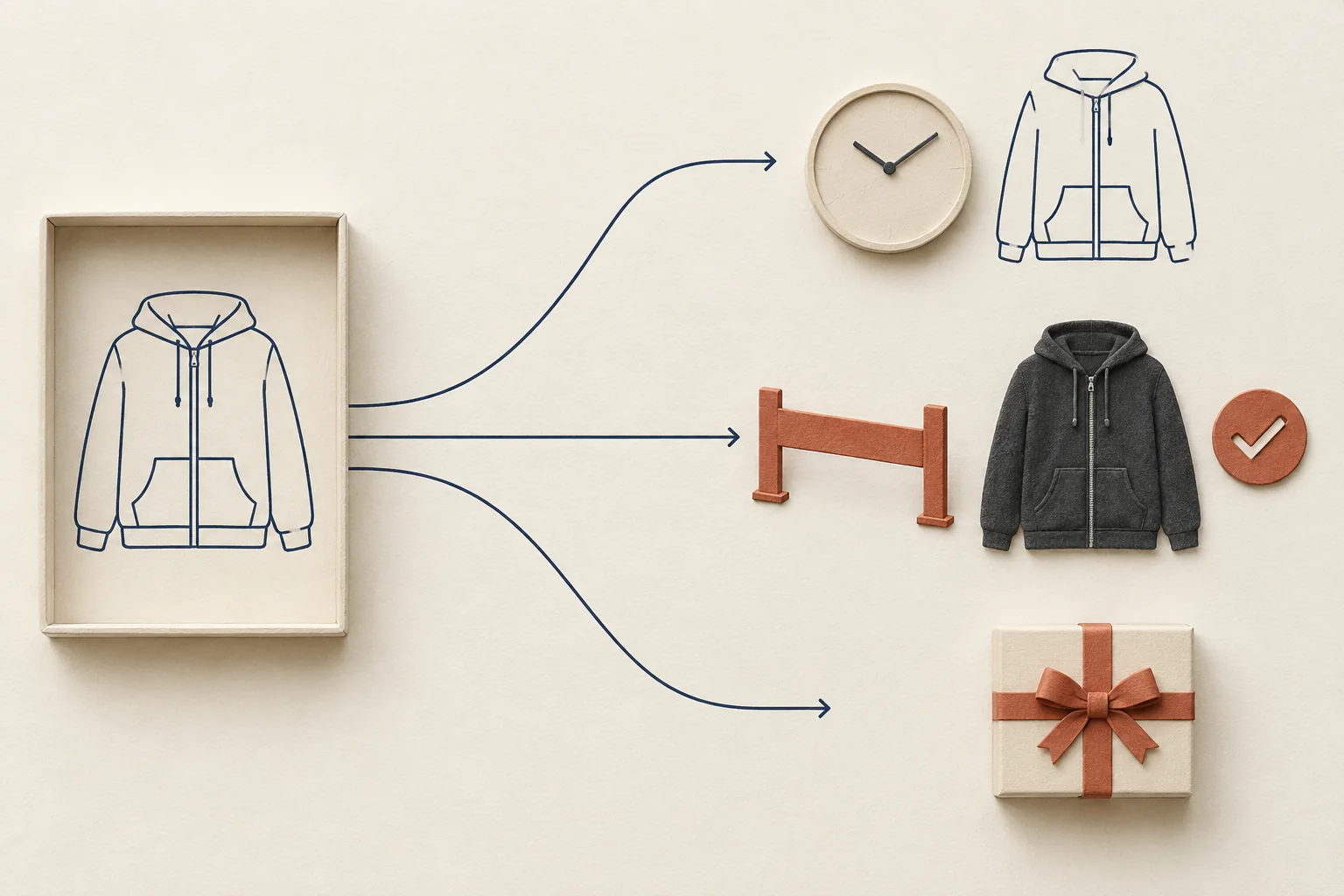




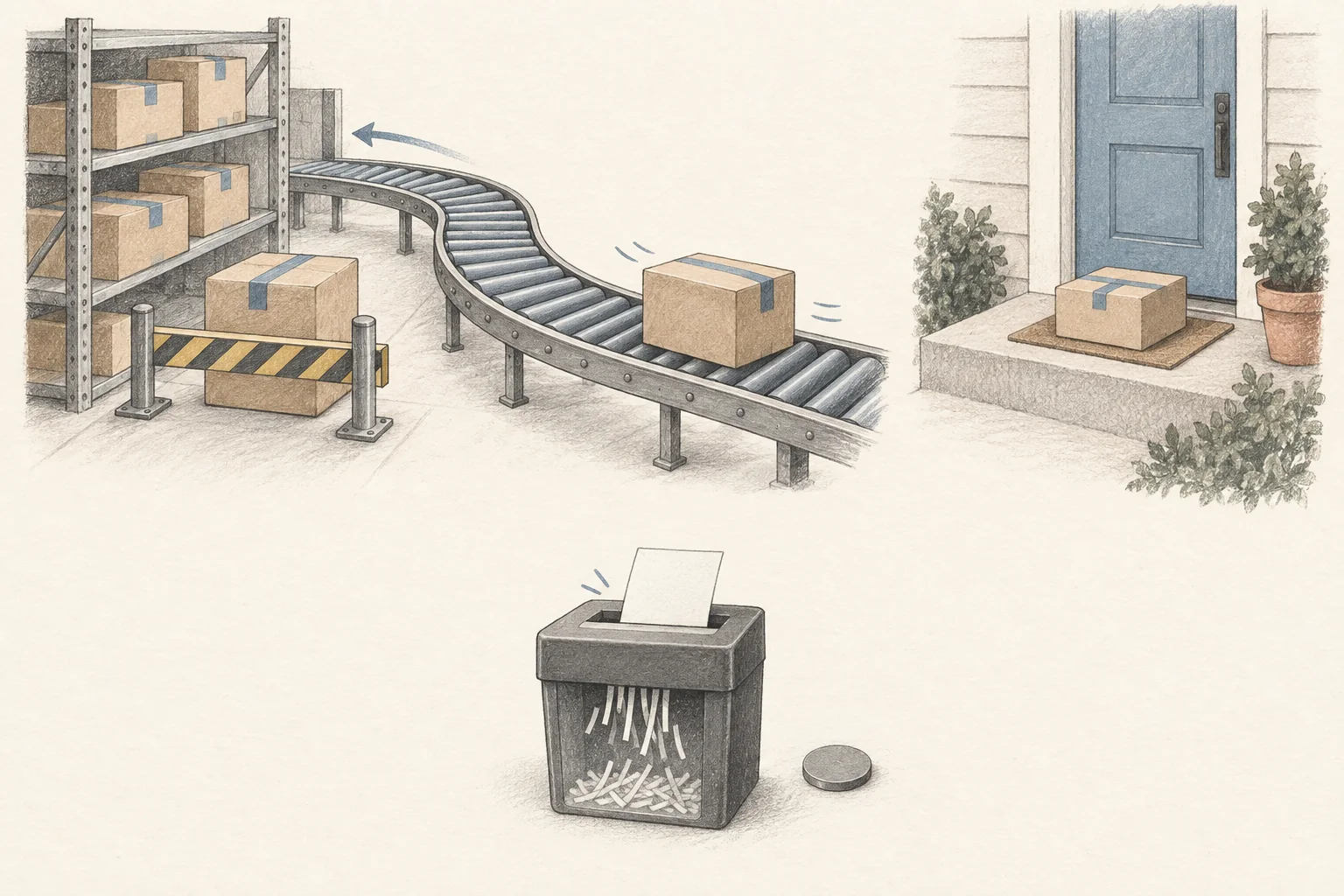
When a creator declines an approved gift, stop further fulfillment, confirm where the parcel is, and assign separate outcomes for the product and the shipping address. Release reserved stock only after the warehouse confirms it never left. Track an in-transit return until receipt. For a delivered gift, agree on what happens next without treating cancellation as proof that the creator owes a return.
This procedure is for voluntary product gifts. Route loans and paid or product-for-content agreements to the person who owns those terms. The table below is a recommended operating process. The carrier example is limited to US domestic USPS shipments, and the privacy guidance identifies its UK scope.
Start with a hold and a location check
A creator's message and the warehouse's dispatch record may arrive at different times. Record when the decline arrived, pause queued shipments and follow-ups, and ask fulfillment to confirm the parcel's physical location. A shipping label alone does not tell you whether the box left the building.
Give one person responsibility for the cancellation. Record the gift ID, SKU, quantity, fulfillment reference, last confirmed location and next action. Keep the full address in the shipping system rather than copying it into a cancellation spreadsheet.
Modash's account of gifting challenges discusses expectation setting and the work of coordinating shipment tracking and creator follow-ups. A cancellation needs the same coordination: someone must stop the warehouse job as well as the messages.
Ask one narrow question if the creator's request is unclear: "Would you like us to cancel this gift, or stop future gifts as well?" Do not delay the shipment hold while waiting for an answer.
Use a cancellation-state table
Keep the creator's decision separate from the parcel status. "Declined" describes the decision. It cannot tell the warehouse whether to release a reservation, receive a return or leave inventory unchanged.
| Confirmed stage | Immediate action | Stock treatment | Evidence needed to close |
|---|---|---|---|
| Approved, not packed | Remove from the packing queue and request a fulfillment hold | Release the reserved quantity after confirmation | Warehouse confirms the order cannot dispatch |
| Packed, still on site | Locate and hold the box; stop its dispatch job | Count the units back under the warehouse's receiving process | Physical hold and stock adjustment recorded |
| With carrier, return requested | Check eligibility and request interception where available | Keep units unavailable | Carrier outcome followed by warehouse receipt, if returned |
| Delivered, return undecided | Ask whether a voluntary return is wanted; offer a keep option if the brand approves it | No stock increase | Written agreement on the product's outcome |
| Return agreed, awaiting arrival | Give the creator confirmed return instructions | Track as an expected return, unavailable for allocation | Warehouse records receipt and disposition |
| Delivered, creator keeps gift | End this gift's follow-ups and record the agreed outcome | Leave the shipped units issued | Gift record closed without a return balance |
If the parcel location is unknown, leave the cancellation open with a named owner. Do not pick the pre-pack path because it produces a cleaner stock count. For the underlying shipment fields, use tracking gifted products from approval to delivery.
Before packing: prove the stop reached fulfillment
An internal approval reversal does not cancel a warehouse task by itself. Ask fulfillment to acknowledge the hold against its own order reference. Check for a second queued shipment, such as a replacement or a separately packed item.
Once fulfillment confirms nothing will leave, release the reservation and remove the order from dispatch exports. If a label exists, follow the shipping provider's procedure for cancelling or voiding that unused label. Keep the label task separate from the stock adjustment, so a pending postage issue does not hide a completed warehouse stop.
Use an outcome such as "cancelled before dispatch." Avoid deleting the whole gift record. You still need to explain why approved units were released.
In transit: a request is still unresolved
Check the actual carrier service before promising that you can stop delivery. USPS Package Intercept covers eligible domestic shipments that are not already out for delivery or delivered. USPS states that interception is not guaranteed. Retail senders can request a return to sender through the service.
Record the request reference and its result separately. "Return requested" must not become "returned to stock" while the parcel remains with the carrier. Check the final tracking event and ask the warehouse to confirm receipt.
Send the creator a message that matches this uncertainty:
Thanks for letting us know. We have stopped further gifts from this request. This parcel has already shipped, and we have asked the carrier whether it can return to us. We cannot confirm that yet. We will update you when we know where it is going.
Use that wording only after making the carrier inquiry. If interception is unavailable, say so and use the delivered-gift path. This domestic example does not establish a return procedure for international parcels; obtain the applicable carrier and destination instructions before arranging one.
After delivery: agree on the product's outcome
Review what was agreed when the gift was offered. Do not add a return requirement because the creator declined after receiving it. For an unconditional gift, the recommended default is to let the creator keep it if they want it. If they want to return it, offer a brand-funded route where your team can arrange one.
Record whether the creator will keep the gift, whether a voluntary return is agreed, or whether the decision remains open. Do not create an invoice or a return deadline from an internal "cancelled" label. If someone asserts a contractual obligation, ask the agreement owner to resolve that question under the applicable terms and law. This workflow does not decide legal return rights.
A returned parcel also needs a warehouse decision before it becomes available stock. Record receipt first, then the disposition under your product-specific policy. This article makes no claim that returned products are suitable for resale.
For example, in a hypothetical batch, a creator declines after a parcel has shipped. The coordinator requests an intercept and records an expected return. The warehouse receives it later and completes its normal assessment. Only then does the coordinator close the inventory task. No extra available units appear while the carrier still has the box.
Close the address task separately
Cancellation should trigger an address review. It should not silently preserve the address for the next campaign.
For organisations subject to UK GDPR, the ICO's storage-limitation guidance says retention must follow a justified purpose. It does not set one fixed deadline for every type of personal data. The ICO also flags this guidance as under review following the Data (Use and Access) Act.
Use this cleanup checklist with your privacy owner and retention policy:
- Stop this address from entering new packing lists or repeat-gift exports.
- Identify copies in the shipping system, intake form, shared sheet and fulfillment partner's files.
- Decide which details remain necessary for an open shipment, return, claim or other documented purpose.
- Set an owner and review date for any retained address data.
- Delete or anonymise unnecessary copies through the relevant systems' processes. An archived spreadsheet still holds personal data.
- Ask the fulfillment partner to confirm the cleanup it can perform and explain any justified retention.
- Record future-contact preferences without keeping a street address merely to remember a refusal.
- Route an explicit erasure request through the organisation's privacy process rather than promising immediate deletion everywhere.
The ICO guidance discusses coordinating retention when organisations share data. Confirm each party's responsibility rather than assuming your own deletion removes the partner's copy. For collection-stage controls, see collecting creator shipping details with explicit consent.
Close the cancellation only when the creator response, parcel outcome, stock adjustment and address review each have an owner-confirmed result. Then use seeding and warehouse reconciliation to check that the cancelled gift no longer appears in the next dispatch list.