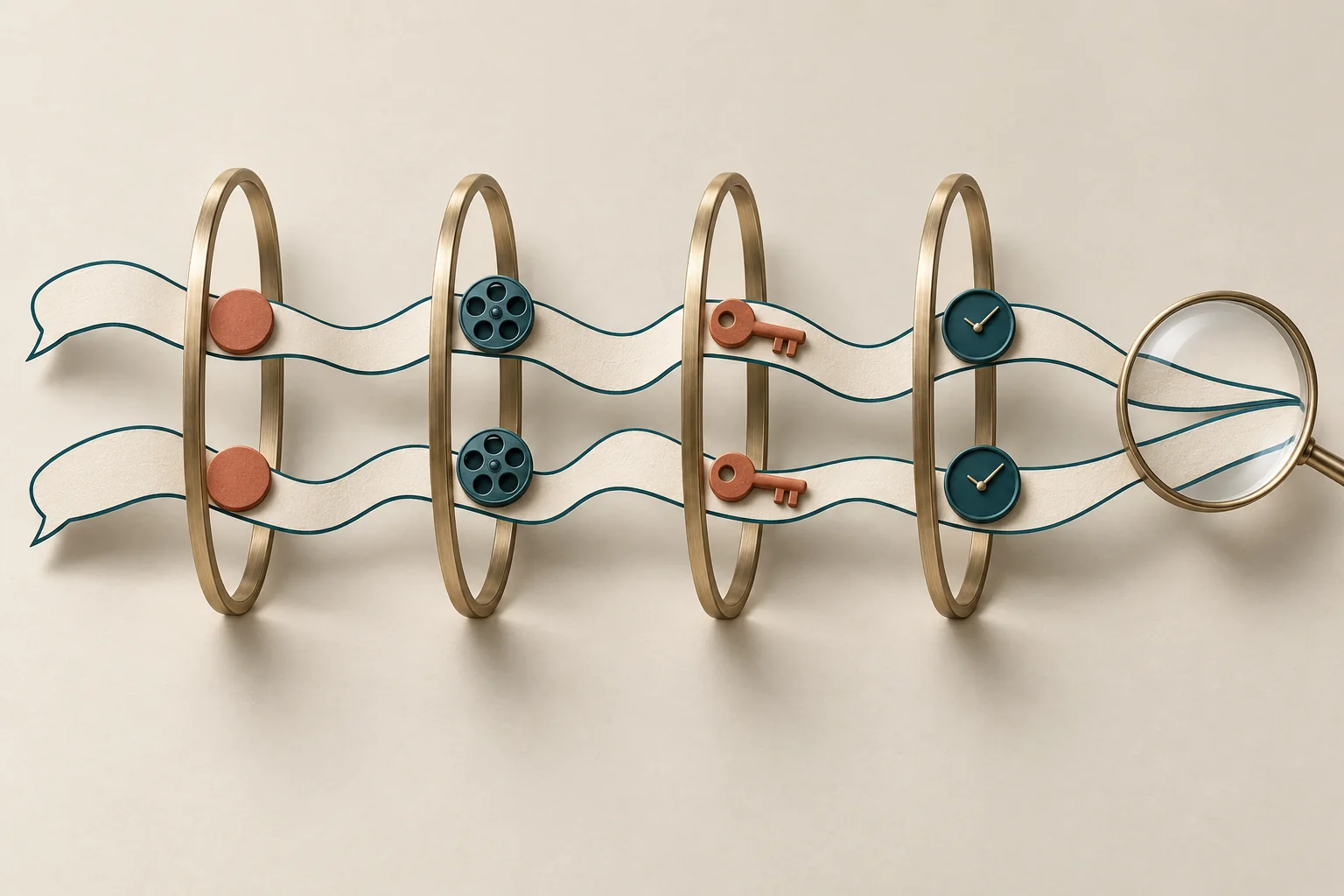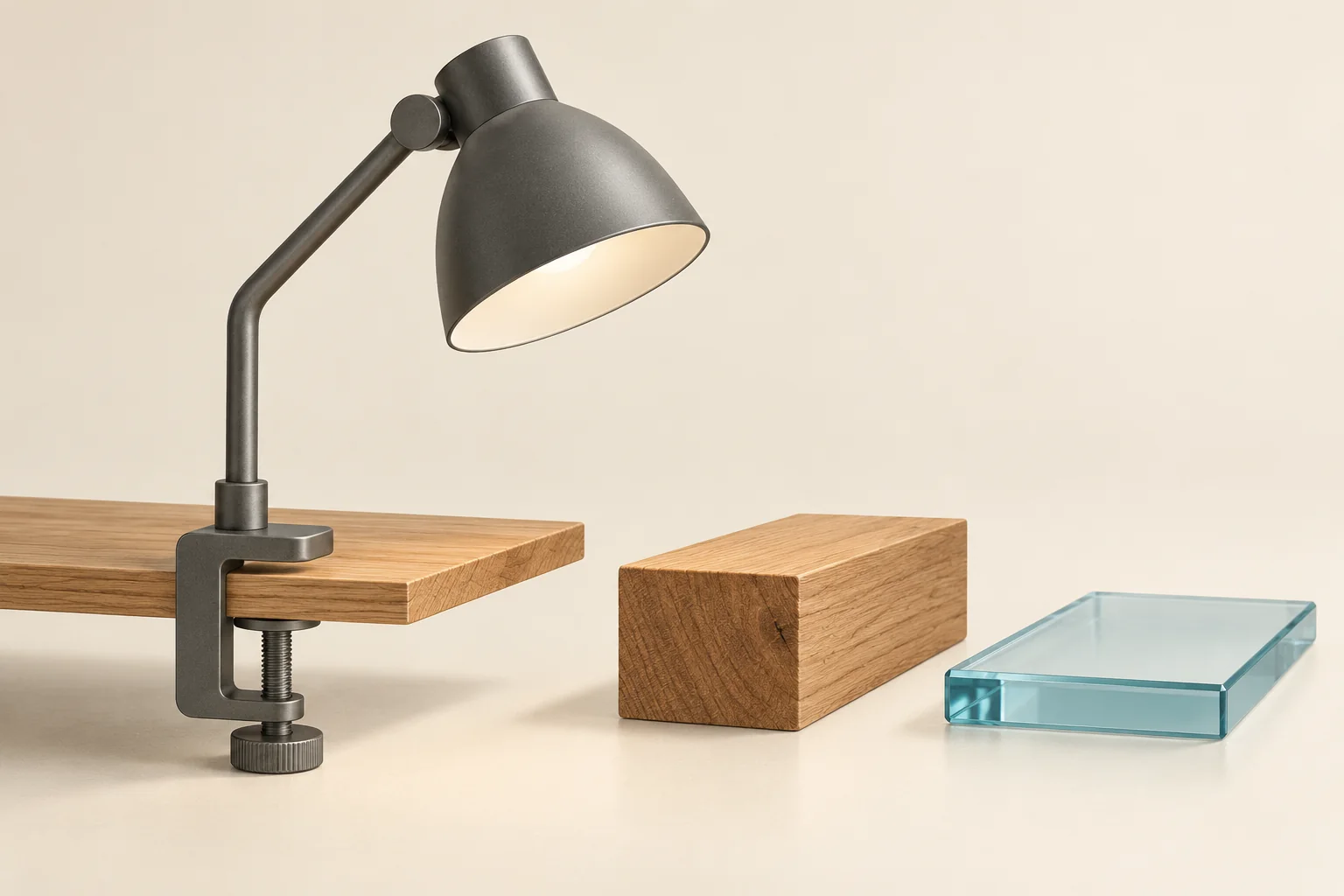




Useful personalization connects something you checked in a creator's work to the collaboration you propose. Name the work, describe a relevant choice they made, and explain why that choice fits your brief. Leave out invented admiration, assumed personal needs, and claims about their audience that the evidence cannot support.
For influencer outreach personalization, use this test: could a colleague open the same work sample and understand why you wrote that sentence? If the answer is no, revise the opening before sending it.
Start with a work sample
Open the original post, video, article, or portfolio entry. Read or watch enough to understand the detail you plan to reference. A title, thumbnail, search snippet, or generated summary can point you toward a sample; it cannot establish everything the creator said.
Look for a choice relevant to the assignment:
- A demonstration shows a product under stated conditions.
- A tutorial explains a step that your customers need to understand.
- A comparison separates strengths from limitations.
- A recurring format could accommodate your proposed subject.
- A visual technique suits the product you want to show.
Modash's outreach examples include messages that connect a creator's video or content style to proposed work. They are practitioner examples, not proof that a particular opening increases replies. The worksheet below is an editorial recommendation for making that connection traceable.
One relevant detail can support an opening. It cannot establish the creator's usual approach across their whole account. Write "in your bag-packing video" if you reviewed that video. Save words such as "always" and "your series" for patterns you have checked.
Keep a research note separate from the message
Record enough for the sender to verify the sentence. Avoid collecting personal details that have no role in choosing or describing the work.
| Note field | What to record |
|---|---|
| Work sample | Original URL, title or identifying description, and creator account |
| Date checked | When you opened it; also note the publication date if visible |
| Location | Timestamp, slide, or section containing the relevant detail |
| Observation | What the creator showed or said, without adding a motive |
| Proposed connection | Why that detail matters to the proposed deliverable |
| Limit | What the sample does not establish |
| Opening | One or two sentences using the observation and proposed connection |
An observation describes the work. A proposed connection is your judgment. Keep those separate in the note so a teammate can disagree with the fit without disputing the source.
For example, an overhead shot can support a comment about camera position. It cannot establish that the creator has a professional studio, a large production budget, or availability for your deadline.
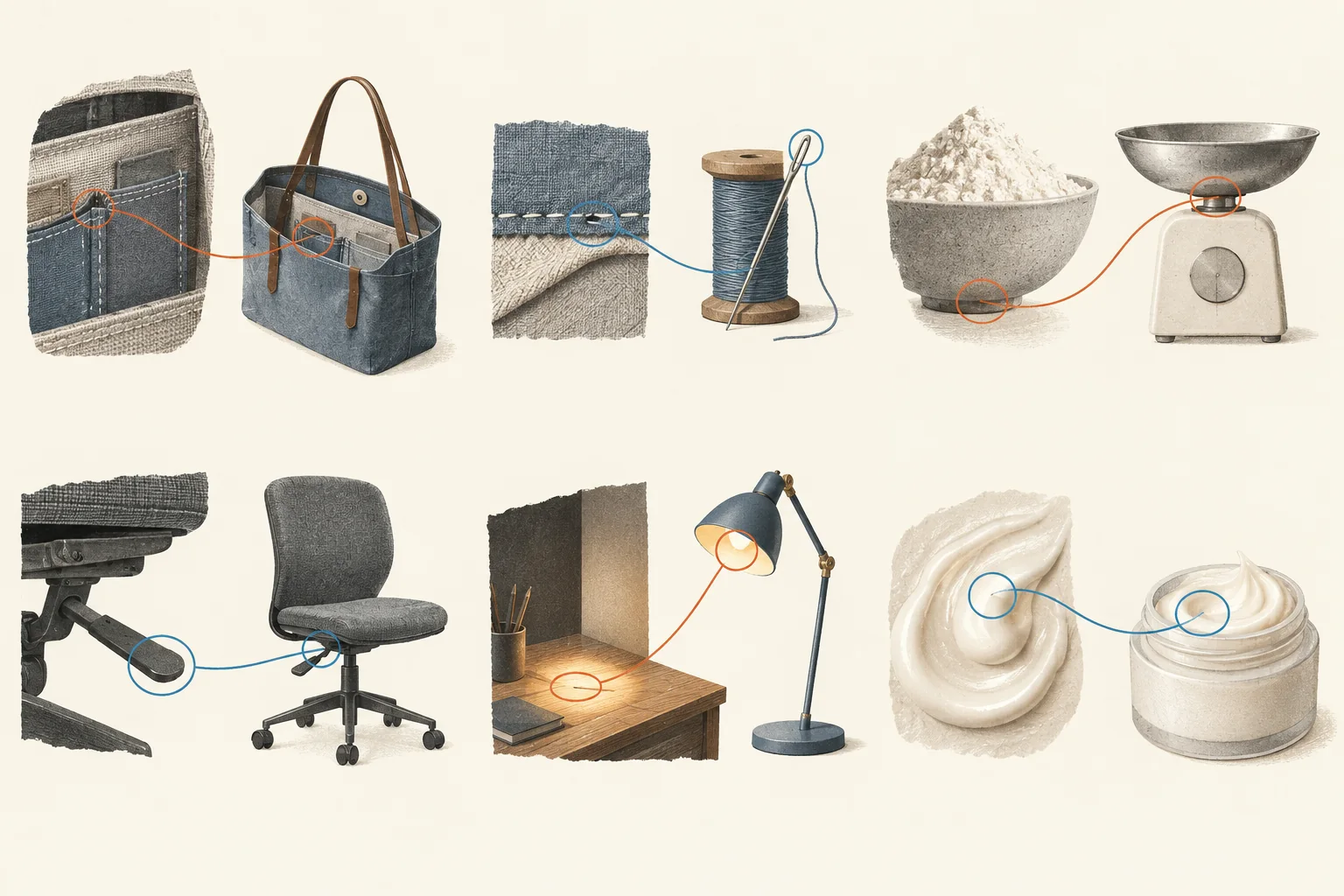
Six research-note to opening-line examples
Every work sample and message below is hypothetical and illustrative. None describes a real creator or a tested campaign. Use these to practice the reasoning; replace the observations with work you have read or watched.
| Hypothetical observation | Connection to the brief | Illustrative opening |
|---|---|---|
| A packing video shows how each item fits into a bag compartment. | A paid bag demonstration needs visible organization details. | "Your packing video showed where each item went inside the bag. We'd like to discuss a paid demonstration of our bag using that compartment-by-compartment approach." |
| A sewing tutorial shows the inside seam before turning the garment outward. | A repair kit demonstration needs close views of the process. | "Your seam-repair tutorial showed the stitching from both sides. That detail is relevant to a paid demonstration we're planning for our repair kit." |
| A recipe post gives ingredient weights and shows the bowl on a scale. | A kitchen-scale brief calls for a recipe-led demonstration. | "Your bread recipe showed the weighing step as you added each ingredient. Would you consider a paid recipe video using our kitchen scale?" |
| A chair comparison identifies a setup problem as well as useful adjustments. | A review proposal must leave room for the creator's own findings. | "Your chair comparison explained the setup problem alongside the adjustments you liked. We'd like to discuss a paid review of our chair with room for your own findings." |
| A desk-light video shows the same workspace with each lamp switched on. | A lamp demonstration needs consistent viewing conditions. | "Your desk-light video kept the workspace consistent between lamps. We'd like to discuss a paid demonstration of our lamp with similarly clear viewing conditions." |
| A skincare video explains how the creator films texture close-ups. | The brief concerns visual product texture, without claims about skin conditions. | "Your texture video used close-ups to show how the product spread. We're planning a paid texture demonstration and would like to discuss your approach." |
Each opening names something the hypothetical sender could verify. Each connects that detail to proposed work. None promises sales, assumes the creator will like the product, or labels the audience from a handful of comments.
After this opening, state the offer and the next decision. Use the creator pitch guide to make the proposed work and compensation clear without turning the research note into a long email.
Remove personal guesses and scripted enthusiasm
Keep health, religion, sexuality, family circumstances, and financial need out of routine personalization research. A topic appearing in someone's work does not establish their personal circumstances. A skincare demonstration, for example, gives you no basis to assign the creator a medical condition.
This also has a specific UK data-protection context. The ICO's special category guidance explains that intentionally inferring protected details, or treating someone differently on that basis, can involve special category data. Uncertainty about the inference does not remove that issue. The ICO flags this guidance as under review following the Data (Use and Access) Act. Avoiding these inferences is the operating recommendation here; it does not replace a jurisdiction-specific privacy assessment.
Delete claims of personal familiarity you cannot substantiate. "I've followed you for years" is a factual claim about the sender. "Our whole team loves your work" claims a shared opinion. A precise description of a work sample does not need either sentence.
Also avoid turning the opening into a demand for a favorable opinion. For endorsements affecting U.S. consumers, the FTC's influencer guidance says creators cannot describe product experience they have not had or give an opinion they do not hold. It also explains disclosure of material connections such as payment or free products. Propose work that leaves room for truthful experience and the required disclosure.
Check the line before it leaves the draft
Ask the sender to confirm:
- Does the linked work belong to the intended creator?
- Does it support every factual detail in the opening?
- Does the proposed collaboration use the skill or format you identified?
- Have you removed claims about private circumstances or unverified audience demand?
- Can the creator disagree with the proposed fit without correcting your facts?
If you cannot find a relevant connection, reconsider the creator or the brief. Do not manufacture praise to fill a personalization field.
A researched opening also does not establish permission to send marketing. Limit contact to creator-welcomed business inquiries where applicable rules permit the message. Review the business-contact boundaries before choosing a route.
Open one candidate's work sample now. Complete the observation, proposed connection, and limit fields. Then write the opening and have the sender check it against the original work.