



Coordinate seasonal fashion content with a separate release window for each market, tied to local weather, available garments and delivery dates. Keep one campaign idea, then prepare a weather-dependent alternative for each creator. Publish a version only when its styling context fits the audience and the featured variants can reach shoppers in time.
Seasonal fashion influencer planning needs two dates: when the brand wants to introduce the collection and when each market is ready to buy and wear it. Those dates can differ. A shared collection announcement can go ahead while a weather-specific outfit post waits.
Define the market more narrowly than the country
Start with the audience's city or region, its intended activity and the week you want to reach it. A creator's filming location alone does not tell you where their viewers live. Ask for relevant audience-location information they can supply, and label its date and geographic limits.
Record the wearing occasion too. An outdoor commute, an indoor office and an evening event can call for different styling within the same city. Ask the creator which situation they can demonstrate credibly.
Modash's market-expansion guide recommends adapting product selection and content to local markets and calendars. Apply that principle at the garment level: decide which outfit belongs in each place before assigning a common posting date.
For advance U.S. planning, NOAA's Climate Normals give location-specific temperature and precipitation statistics. The official normals cover a uniform 30-year period. Use them to choose a likely campaign window, then review the local forecast nearer publication. A historical monthly average cannot establish the weather on a particular shoot day.
Do not turn a temperature into a universal clothing rule. Comfort, activity and personal preference vary. Set any numerical trigger with the local creator and describe it as your campaign decision, without presenting it as a garment performance rating.
Fill in a two-market worksheet
The following example is hypothetical. The temperatures, stock dates and campaign decisions are invented planning inputs, not forecasts, climate averages or sales recommendations. Both markets are U.S. regions so the disclosure guidance below has a defined jurisdiction.
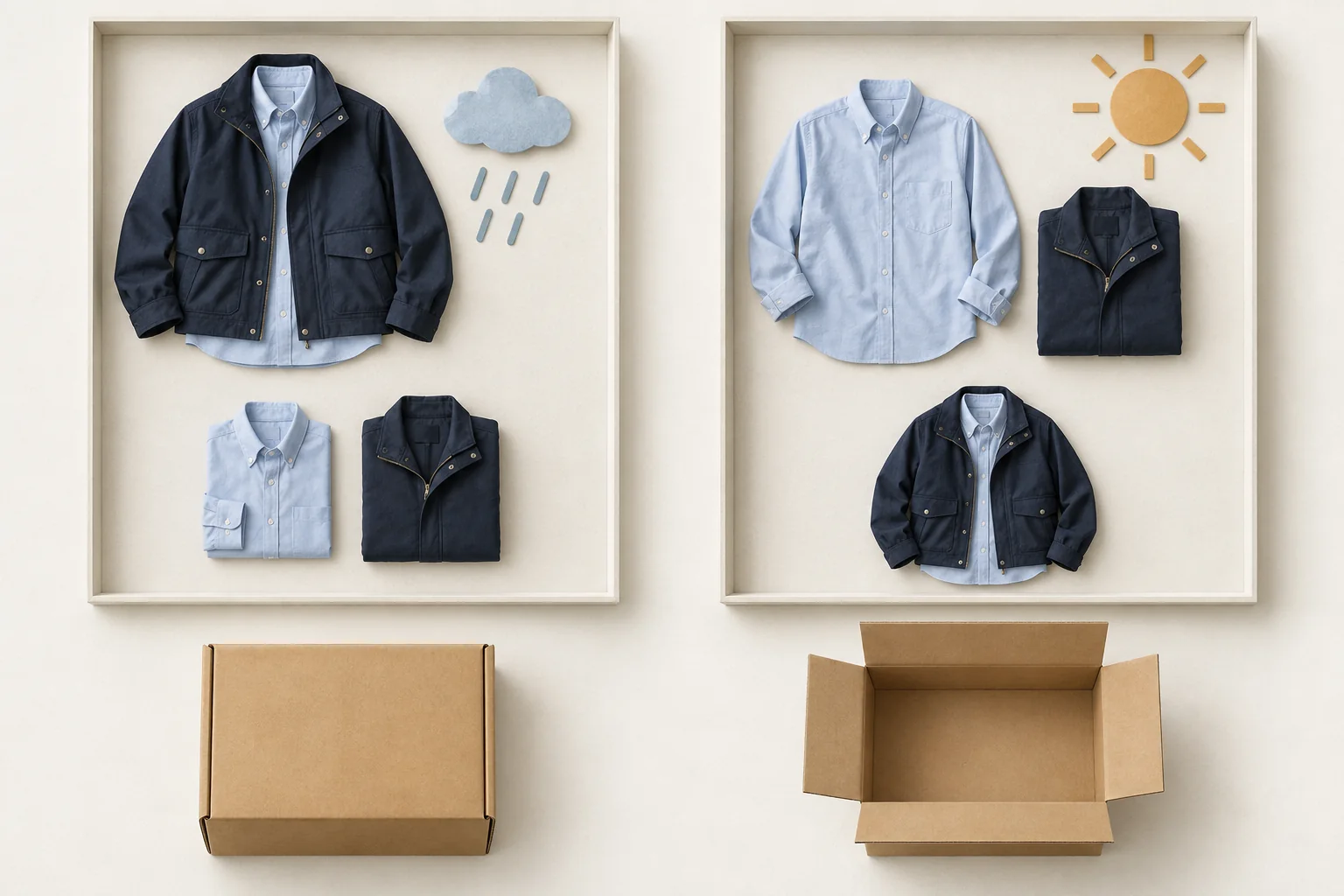
The shared idea is an outfit for the journey to work. The team wants both regions to see the collection in the same month, but it allows the outfit posts to run on different days.
| Planning field | Market A: cooler region | Market B: warmer region |
|---|---|---|
| Audience and use | City commuters walking outdoors | City commuters moving between outdoors and offices |
| Initial creative | Jacket layered over a shirt | Shirt outfit, jacket carried as an optional layer |
| Hypothetical review trigger | Morning forecast at or below 15°C | Afternoon forecast at or above 24°C |
| Sellable-stock date | Featured jacket and shirt variants confirmed by October 5 | Shirt variants confirmed by October 5; jacket receipt expected October 12 |
| Release window | October 6 to 10 | October 6 to 13 |
| Weather alternative | Shirt-led version if the week turns warmer | Layered version if conditions turn cooler and jacket stock is ready |
| Stock alternative | Hold the outfit if its featured size or color cannot be supplied | Publish the shirt-only version; remove the jacket purchase prompt |
| Final decision owner | Regional campaign lead after creator and inventory confirmation | Regional campaign lead after creator and inventory confirmation |
Copy the row labels into your plan and replace every example with a named market, product variant and owner. Add the forecast source, time checked, expected shopper delivery date and the creator's availability for changes.
One market's delay should not automatically move the other. In this example, Market B can use the shirt-only version while its jacket delivery remains uncertain. Market A can publish its approved layered outfit if weather and stock both support it.
Let inventory set the last usable date
Confirm stock by size, color and fulfillment location. A total for the whole collection can conceal a missing variant in the outfit the creator wears.
Shopify distinguishes available inventory from incoming, committed and unavailable inventory. Incoming units do not count as available until they have been received and moved into the available state. If your store uses another system, ask the inventory owner for its equivalent sellable-stock definition.
Work backward from when the shopper would use the outfit:
- Set the last useful delivery date for the weather-specific message or event.
- Allow for the store's confirmed handling and delivery times to that region.
- Choose the latest publication date that still leaves a reasonable purchase window.
- Ask the inventory owner whether the featured variants will be sellable by then.
- If they will not, choose an available outfit or remove the purchase-led post from that window.
These are planning recommendations. They do not predict demand or guarantee delivery. Keep an expected warehouse receipt date separate from a customer delivery promise.
Use the available-variant try-on plan when a multi-item outfit depends on several sizes or colors being in stock.
Agree on the alternative before filming
Give each creator a main version and one bounded alternative. Specify what changes, such as the outer layer, opening line or destination link. Keep the approved product facts and sponsorship disclosure attached to both versions.
Agree on the review deadline, who selects the version, and whether another filming session costs extra. Do not leave an open-ended request to keep reshooting until the weather matches the campaign.
A practical review sequence is:
- Before filming, confirm samples, fit, product facts and the two outfit options.
- Near publication, review the forecast, sellable variants and regional delivery message.
- On publication day, confirm the selected version and its destination page still agree.
- During an unsafe weather event, pause outdoor production and reassess the post's timing and tone.
If both versions become unsuitable, hold the post. An indoor fit demonstration may be another option if it is within the agreed scope. It should not imply that the creator wore the outfit through weather they never experienced.
For U.S.-directed endorsements, the FTC's disclosure guidance covers material connections such as payment and free products. Put the disclosure with the endorsement, including within an endorsement video. The FTC also says creators cannot describe experience with a product they have not tried.
Keep weather changes from changing the claims
A forecast change gives you a reason to change styling. It does not establish that a garment is waterproof, suitable for a stated temperature or more environmentally responsible. Use the brand's current specifications for factual product language and keep personal comfort comments limited to the creator's experience.
The fabric and care briefing guide can help organize those source documents before approval. This worksheet uses unnamed garments and makes no claims about their materials or performance.
Do not add an environmental promise to make a delayed collection sound more appealing. For U.S. marketing, the FTC's Green Guides summary says qualifications for environmental benefit claims should be clear, prominent and specific. Review other markets under their applicable guidance before reusing the copy.
Choose your two priority regions now. Have each regional lead and inventory owner complete one worksheet column, then approve a main version, an alternative and a last decision time with each creator.