



Creators should verify fiber percentages, care instructions, construction details and size information against records for the exact garment they receive. Keep softness, comfort and drape as the creator's own impressions. Give them a garment fact card with a source beside each factual statement, then remove any claim the available evidence cannot support.
Modash's fashion influencer guide covers recruiting creators and choosing collaboration formats. Once a garment enters production, the brief needs more detail. A creator can show a sleeve or describe how fabric feels, but should not have to guess its composition or washing method.
Match the records to the garment
Ask the brand's product team for the current specification, care instructions and size chart. Record the style code, color, size, sales market and sample status. A pre-production sample needs its own note if it differs from the item shoppers will receive.
Use this source order as a recommended workflow:
- Match the sample's labels and style code to the manufacturer's records.
- Compare those records with the product page the campaign will link to.
- Ask the product team to resolve any difference in writing before filming the disputed claim.
- Save the source version and date beside the approved wording.
Do not choose whichever source makes the stronger sales claim. If a label and product page disagree, mark the statement as on hold. The creator can film other parts while the brand checks it.
For a real example, Patagonia's Men's Capilene Cool Daily Shirt page, style 45216, separates its fit, construction, materials and care details. Its body-fabric entry identifies polyester jersey with a 50% recycled share, then lists a 100% recycled polyester exception for BLK. Turning the page's broader recycled-content range into a claim that every color is fully recycled would lose that distinction.
The same page lists regular fit and set-in sleeves. Those are manufacturer descriptions. Whether the shirt feels loose or comfortable on a particular creator remains a separate observation.
Build a garment fact card
Attach one card per style and variant to the creator brief that leaves room for judgment. Keep factual checks separate from requests about shots or storytelling.
| Card field | What the brand supplies | What the creator checks |
|---|---|---|
| Item identity | Style code, color, sample version and intended market | Received item matches the card |
| Fiber content | Fiber names and percentages, separated by body, lining and other documented components | Label agrees; no guesses from touch |
| Construction | Verified weave or knit, lining, closures, pockets and seam details | Features are present on this sample |
| Care | Complete washing, drying, ironing and warning instructions | No instruction disappears from the script |
| Size and fit | Size-chart version, units and whether measurements describe bodies or garments | Worn size and any alterations are accurate |
| Performance | Exact supported claim, evidence owner and limits | Demonstration stays within those limits |
| Personal impressions | Prompts to try the garment, with no required positive answer | Words describe the creator's experience |
| Publication status | Approved facts, unresolved questions, reviewer and date | Only cleared facts enter the final copy |
A technical term is useful only when it helps the shopper. Keep the precise fiber name, but ask the product team to explain unfamiliar construction terms. Do not replace an unknown term with a familiar fabric name because the materials look alike.
Hypothetical completed card
This example describes an invented overshirt and invented records. It does not describe a Virev customer or a real product.
| Field | Entry |
|---|---|
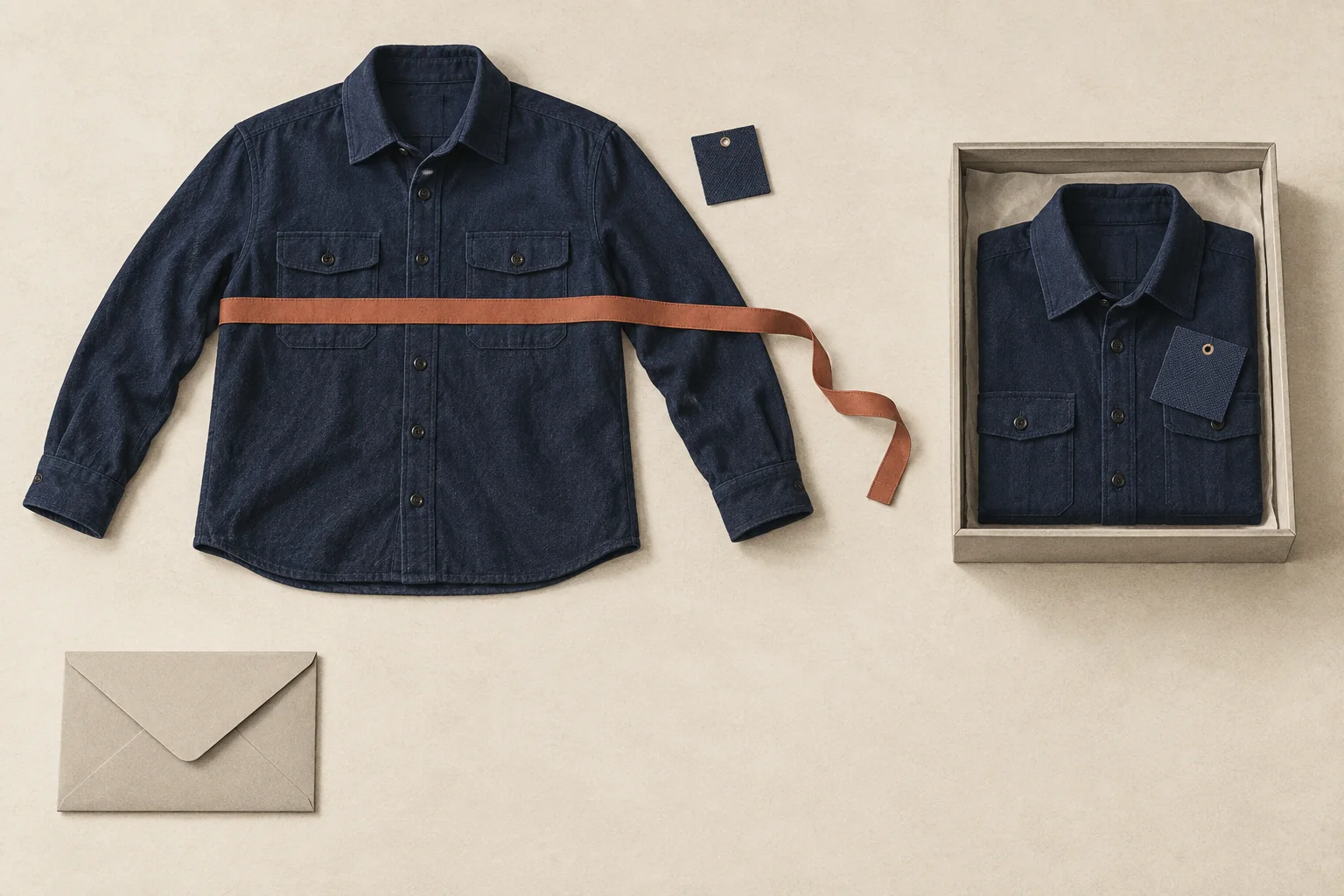
| Item | Studio overshirt, style OS-14, navy, medium, final production sample |
| Evidence | Manufacturer specification revision 3; sample label photographs; current product page |
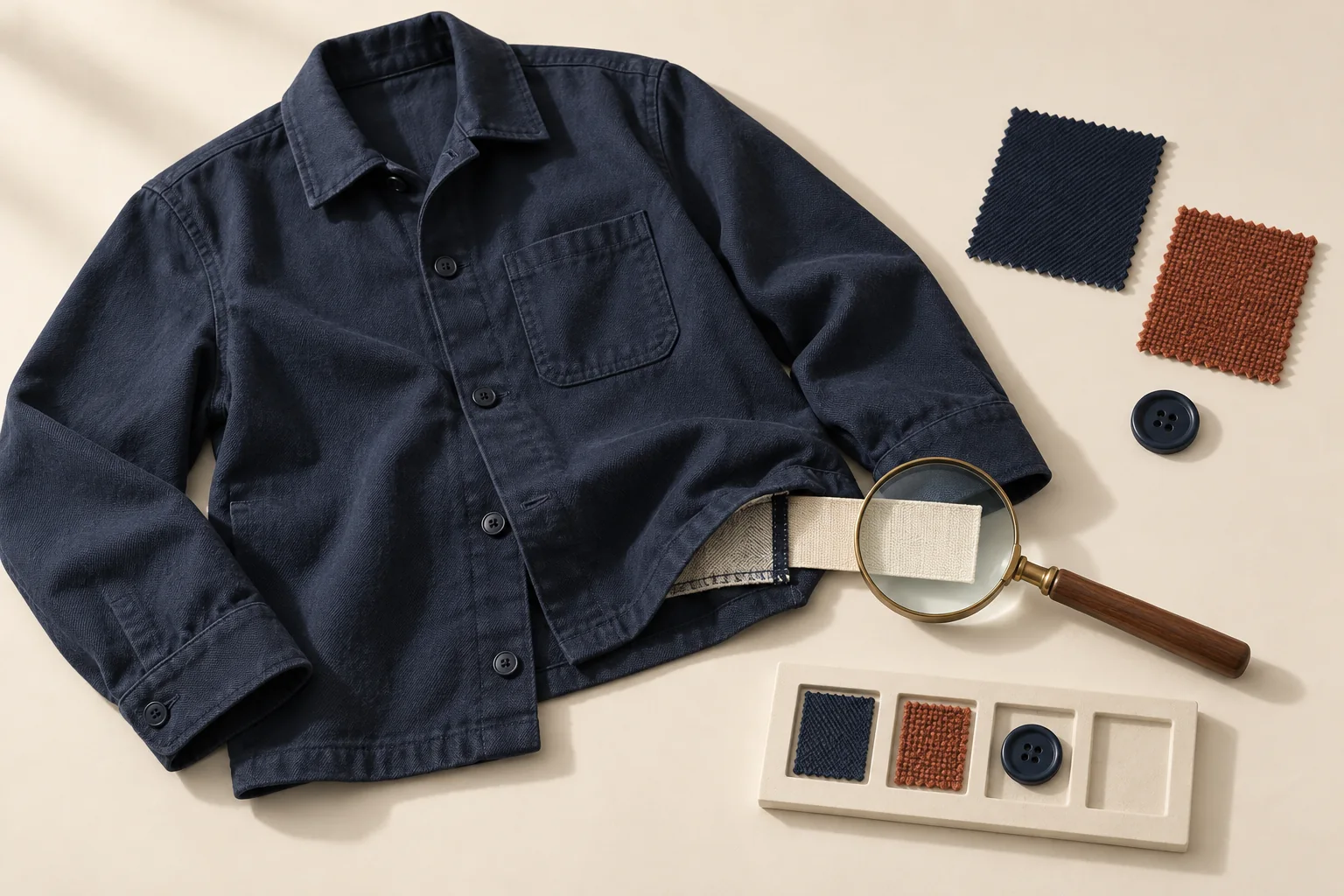
| Material | Body 100% cotton; unlined |
| Construction | Woven twill; two chest pockets; button front |
| Care | Hand wash cold; no bleach; dry flat; cool iron |
| Fit | Brand describes a relaxed cut; creator wears medium; no pins or alterations |
| Creator observation | To record after trying on; no opinion supplied by the brand |
| On hold | Shrink resistance, wrinkle resistance and environmental benefit claims; no supporting evidence supplied |
The approved script can name cotton, twill and the pockets. It cannot promise that the overshirt will never shrink. The absence of shrinkage evidence does not become permission to infer performance from the fiber content.
Preserve the care instructions
Care applies to the assembled garment. The FTC's US care-label guidance explains that covered manufacturers and importers need reliable evidence for care instructions. It also addresses components such as linings, trim and fasteners.
For the brief, transcribe the manufacturer's instructions without relaxing a temperature, method or warning. Check drying instructions separately from washing instructions. If care symbols are unclear, request the manufacturer's written explanation rather than decoding them from memory.
Patagonia's shirt page, for example, specifies machine washing at a warm setting and tumble drying at low heat. It also prohibits bleach and fabric softeners. A creator's laundry segment should preserve those restrictions; saying the shirt can go into any ordinary wash would broaden the instructions.
Keep manufacturer instructions and personal washing observations in separate fields. If a creator tries one wash, record the method and observed result. One successful wash does not justify a promise about every future wash, dryer setting or color.
Separate impressions from claims that need proof
The FTC's influencer guidance says endorsers cannot invent product experience or make claims requiring proof the advertiser lacks. This is US guidance. The following wording review is an operational recommendation, and campaigns elsewhere need their own local review.
These are hypothetical editing examples, not statements by real creators:
| Proposed line | Review decision |
|---|---|
| "It feels smooth against my skin." | Keep only if that is the creator's experience. |
| "It looks silky, so it must be silk." | Replace with the verified fiber composition. |
| "It feels stretchy, so it contains elastane." | Verify composition; report perceived stretch separately. |
| "It stayed comfortable during my indoor try-on." | Keep if true, with that limited context. |
| "It prevents irritation for everyone." | Hold for evidence and specialist review; a try-on cannot establish this. |
| "It fits everyone true to size." | Replace with the worn size and specific fit observations. |
A creator can dislike the texture even when every specification is correct. Factual review should not rewrite that experience into praise. For the fit segment, use guidance on showing garment fit without universal promises.
Run the unsupported-claim review
Before publishing, scan the spoken script, captions, text overlays and product links together. Ask:
- Does each percentage name the correct component and variant?
- Does each care statement retain the relevant restrictions?
- Did a description of appearance become a claim about composition?
- Did a single try-on become a durability, comfort or performance guarantee?
- Did a material attribute become a broad environmental claim?
- Does the displayed item match the linked product?
- Does the post disclose the brand relationship where required?
For US campaigns, the FTC's Green Guides summary advises against broad, unqualified environmental claims. A recycled-content entry should not silently become a claim that the whole garment is environmentally harmless. Send broader wording through the fashion sustainability-claim review.
The FTC's influencer guidance also covers disclosures for material connections, including free products. Accurate garment facts do not remove that separate disclosure task.
Send the card to the product owner and creator before the shoot. Ask the product owner to resolve every on-hold factual statement, and ask the creator to add their own observations after trying the garment.