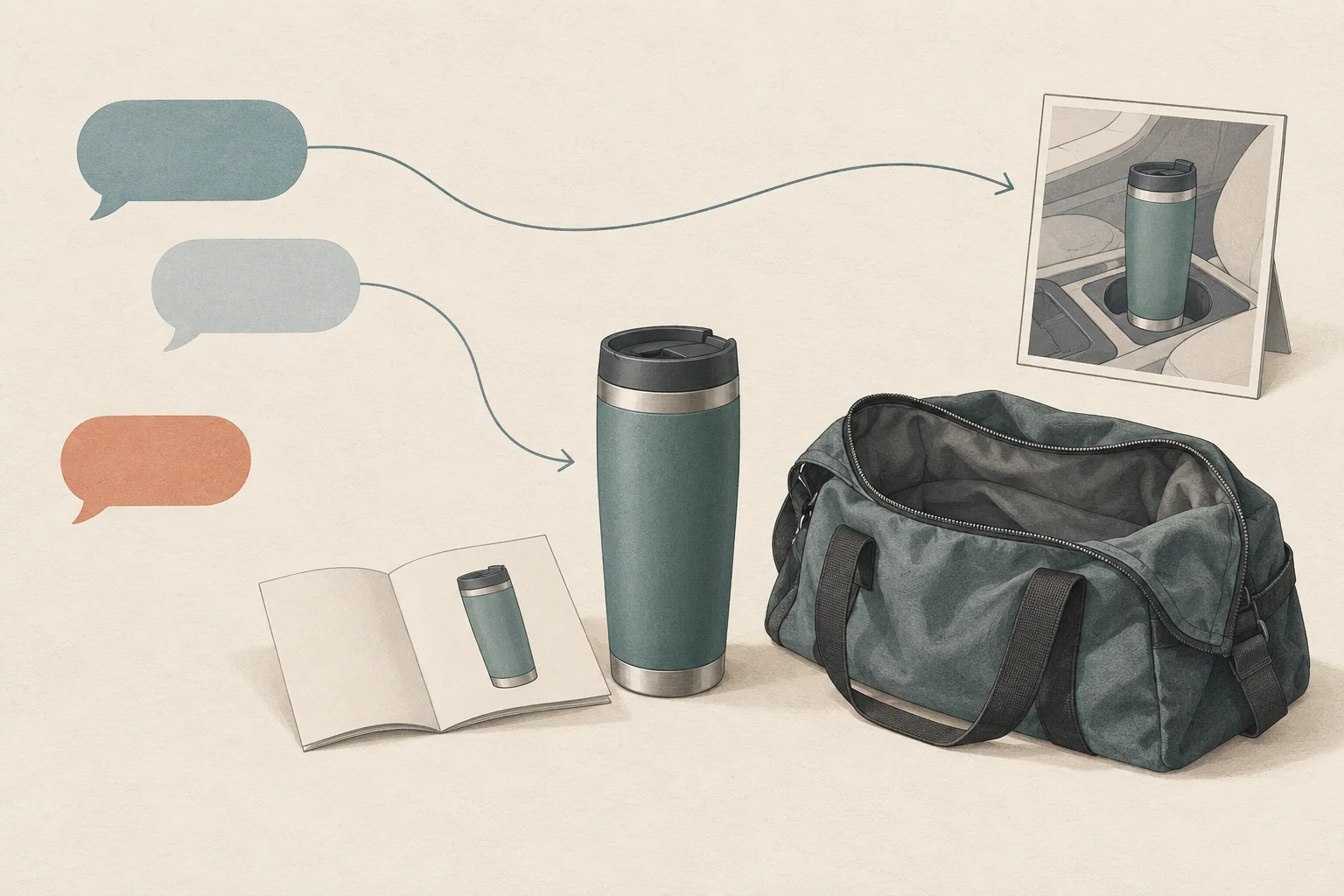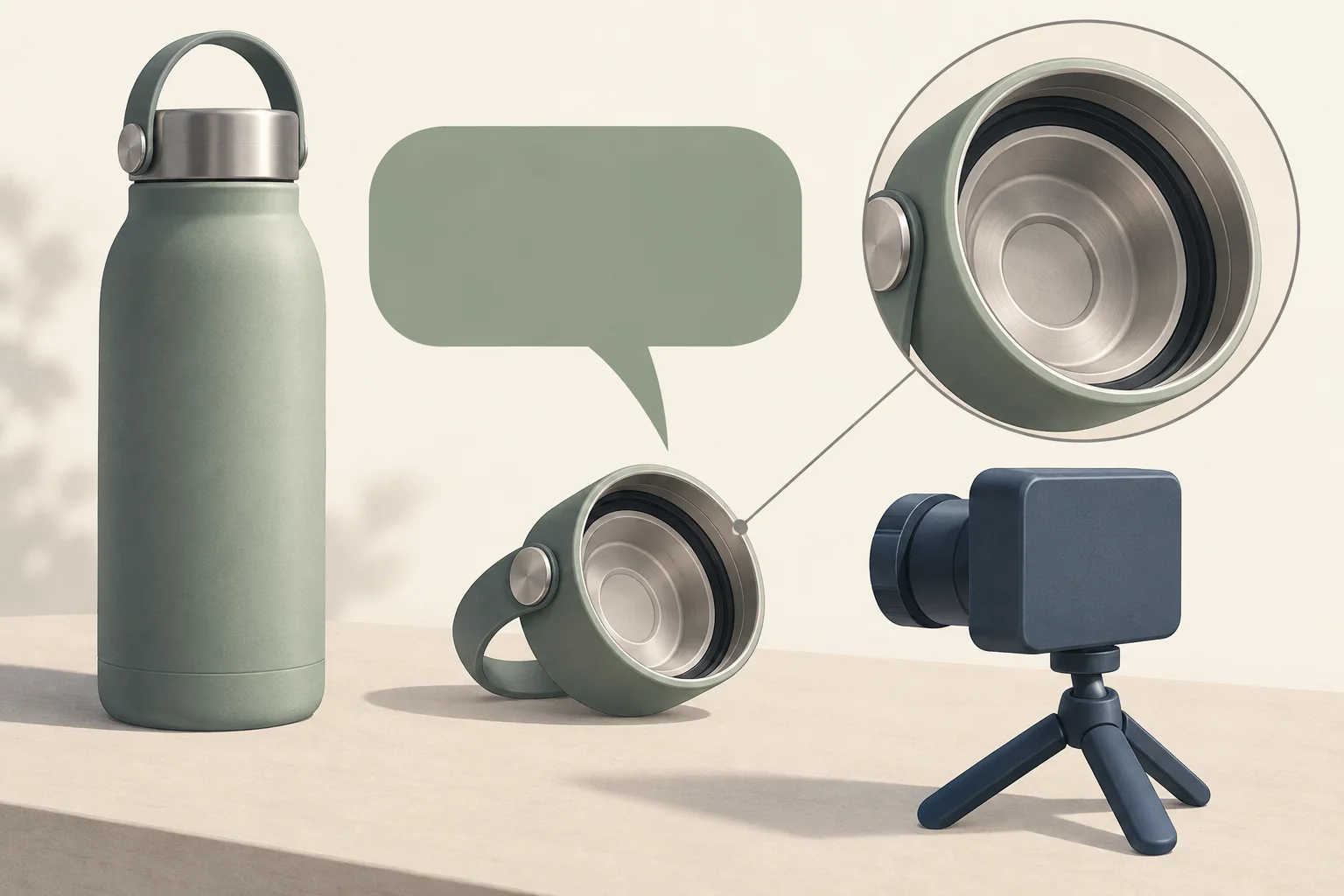




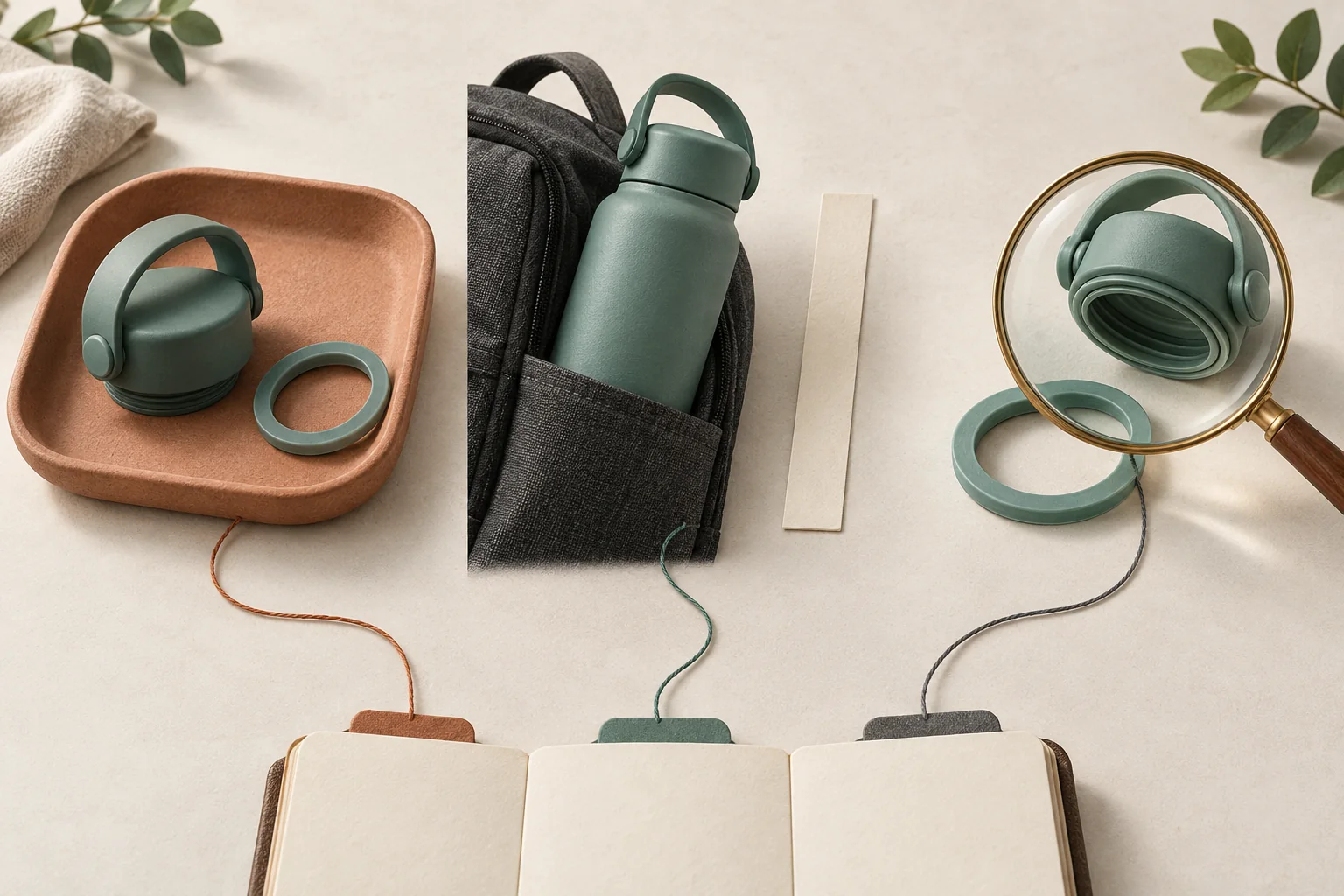
Use TikTok search suggestions to find questions a creator can answer with a visible product demonstration. Record the wording, check what the question means, and choose an explanation you can support. Treat suggestions as qualitative clues. Their appearance or position does not give you a monthly search-volume estimate or a promised ranking.
A useful outcome from TikTok search content research is a brief such as "show how to clean the lid's removable seal." "Make a video about water bottles" leaves the creator with too many unanswered decisions.
Separate suggestions from measured demand
Later's TikTok SEO article recommends typing a base keyword into TikTok search and examining predictive text. That can help you discover wording you had not considered. The article dates to 2022, so use that research tactic without adopting its older platform limits or claims about algorithm rewards.
TikTok explains that recommended search terms and results can reflect past searches, content interactions, language, location and device settings. Query relevance also matters. A suggestion seen on one account is therefore an observation from that research session, not a representative survey of your market.
Keep these distinctions in the log:
| Observation | What you can record | What you cannot conclude |
|---|---|---|
| A phrase appears while typing | Exact wording, seed term and session context | Monthly search count |
| A phrase appears again on another visit | It recurred in your observations | Demand grew across TikTok |
| Several visible videos answer it poorly | The specific answers you reviewed leave a gap | Nobody has answered it well |
| Creator Search Insights shows popularity information | The displayed measure and its stated context | An invented equivalent in searches or sales |
The recommendation here is conservative: use the clues to decide what to investigate, then use product evidence to decide what to say.
Keep a question-research log
Start with a product and a decision someone needs to make. For a reusable bottle, possible decisions include whether it fits a bag, how to clean it, and how its lid closes.
Enter the category term, then relevant task words such as "clean," "fit" or "lid." Record only suggestions you see. Keep phrases you invent in a separate proposed-query field. If nothing useful appears, record that result rather than filling the log from memory.
For each session, record the date, target market, app language and account context. Note whether you used autocomplete, a results page or Creator Search Insights. Do not assume these supply interchangeable evidence.
Copy this log structure:
| Field | What to enter |
|---|---|
| Session | Date, market, language, account context |
| Seed and location | Exact typed phrase and where the suggestion appeared |
| Observed wording | The suggestion as shown; distinguish your own proposed query |
| Intended question | Your interpretation of the viewer's problem |
| Answer review | Links to relevant results you watched and what each explained |
| Product evidence | Instructions, model details or demonstration needed |
| Decision | Film, investigate or decline, with a reason |
| Follow-up | Published post link, review date and unresolved questions |
Review relevant results before declaring an explanation missing. An answer may sit halfway through a video. Watch enough to understand what the creator demonstrates and what conditions they state. Take notes about the unanswered question; do not copy their script or shots.
The following is a hypothetical log excerpt for a reusable bottle. These phrases were invented to explain the workflow; they are not reported TikTok suggestions or tested product claims.
| Proposed question | Interpretation | Evidence needed | Brief decision |
|---|---|---|---|
| How do I clean the bottle lid? | Viewer needs the disassembly and care sequence | Instructions for this lid and a readable view of its parts | Film after confirming which parts detach |
| Will this bottle fit my bag pocket? | Viewer needs dimensions and a practical fit check | Bottle dimensions and the specific bag pocket | Show this combination; avoid universal fit claims |
| Why does my bottle lid leak? | Viewer needs help identifying a cause | Manufacturer troubleshooting and the sample's condition | Investigate before naming a cause |
When a question also appears in comments or support conversations, record that as a separate source of evidence. Turning social conversations into product questions helps you turn those observations into questions the product team can investigate.
Use Creator Search Insights when available
TikTok's Creator Search Insights documentation describes personalized search topics, a Content gap filter, search popularity information and related videos. Search for "Creator Search Insights" in the app and open the View entry if available to your account.
The Searches by followers filter requires more than 1,000 followers. Do not present that threshold as a requirement for the whole tool. Check which features your account displays; this workflow does not assume every creator has identical access.
Keep the tool's labels intact. A topic under Content gap is a lead for research. You still need to inspect the question and establish whether your product can answer it. TikTok also warns that some topics are AI-generated and may be inaccurate.
If you cannot access the tool, continue with the observation log. Mark popularity information unavailable. Do not substitute video views for search counts.
Choose a question the creator can prove
Before commissioning a script, make four decisions:
- Product match. Does the question concern the model, material or use case being promoted?
- Answer evidence. Can the creator show the answer, or support it with the relevant instructions?
- Viewer decision. Will the answer help someone use, compare or rule out the product?
- Claim limits. Can the script state the conditions without implying a broader result?
Film when all four have an answer. Investigate when the question is useful but its explanation is uncertain. Decline when answering would require an unsupported safety, performance or compatibility claim.
For example, a pocket-fit question can produce a useful demonstration even without evidence of large search demand. A leak question should wait if the brand has not established the cause. Popular wording cannot supply missing product evidence.
Three illustrative script outlines
These outlines continue the hypothetical bottle example. They are production plans, not claims about an actual product.
Cleaning the lid
- Opening question: "How do you clean this bottle lid?"
- Show the exact lid and identify the model. Display only the parts its instructions allow users to remove.
- Demonstrate the supported cleaning and reassembly sequence. Make the order visible without hiding a step in a cut.
- End with the applicable care limitation from the instructions. Avoid claiming dishwasher safety unless that model's documentation supports it.
Checking bag-pocket fit
- Opening question: "Will this bottle fit this bag's side pocket?"
- Identify the bottle and bag. Show the bottle dimensions used for the comparison.
- Show insertion and removal from the same pocket, with the bag in its stated condition.
- End by telling viewers which dimensions to check on their own bag. Keep the conclusion specific to the tested combination.
Investigating a leaking lid
- Opening question: "What should you check when this lid leaks?"
- Show the lid's condition and consult the manufacturer's troubleshooting steps.
- Demonstrate only supported checks. If inspection does not establish a cause, say the cause remains unknown and direct viewers to the manufacturer's support route.
- Avoid turning one sample's result into a claim that every leak has the same cause.
Use the first-explanation brief to give the creator room to choose their delivery. Then build a product demonstration shot list so every claim has a corresponding view of the product.
Review the answer after publication
Search-inspired promotional content still needs disclosure. TikTok requires its content disclosure setting for posts promoting a brand, product or service, including own-business promotion and incentivized third-party content. This is a platform requirement; it does not settle local advertising obligations.
After publication, use the creator's available search analytics to review performance. Creator Search Insights distinguishes All posts from Inspired posts. Record the displayed measures and review period without attributing every view or sale to the researched phrase.
Read follow-up questions too. If viewers still ask how to reinsert the seal, the next explanation may need a closer shot of that step. A useful answer and a high search position are separate things to evaluate.
Choose one question from the log, attach its product evidence, and ask the creator to propose the shot that makes the answer visible.