



When a garment leaves the range, stop active sales placements for it, keep useful historical content only within its permitted use, and label any alternative as a different product. Route old creator links to a page that explains the discontinuation before offering another item. A similar-looking dress does not inherit the original dress's fit review or the creator's recommendation.
Treat the link, the public asset and the stored file as separate decisions. The workflow below is an operating recommendation. The cited advertising and copyright guidance concerns the United States; contracts and other markets need their own review.
Confirm what has ended
Ask merchandising to confirm the exact product ID, affected colours and sizes, remaining saleable stock, and whether replenishment has ended. Record the confirmation date and owner.
A discontinued style may still have units available. In that case, accurate remaining-stock promotion can continue if the offer and rights allow it. A missing size alone does not mean the whole garment has left the range. For temporary supply gaps, use the stockout response workflow rather than declaring a permanent retirement.
Once the last available units are gone, pause brand-controlled ads and scheduled promotions that invite shoppers to buy that garment. Ask creators to hold any unpublished deliverables while you agree on the next step. Avoid demanding an unagreed replacement shoot or deletion of their own post.
Build an asset retirement map
Search by product ID, product name and campaign name. Include links whose visible text names the creator rather than the garment. Give each row an owner and a completion check.
| Location | Default action | Check before closing |
|---|---|---|
| Creator's original post | Ask for an availability update where editing is possible | Creator confirms the agreed change; sponsorship disclosure remains |
| Brand ad or scheduled sales post | Pause or cancel the garment-specific placement | No remaining scheduled or active copies promote unavailable stock |
| Creator affiliate link | Send to an explanatory retired-item page | Original item is identified; alternative is visibly separate |
| Brand lookbook or styling article | Retain only if useful, accurate and permitted | Historical context is clear; outdated shopping prompts are removed |
| Current product-page testimonial | Remove from any different garment's page | Review refers only to the item the creator used |
| Asset library master and edits | Mark unavailable for new promotion pending review | Every export links to its rights record and retirement decision |
| Campaign report | Keep the record needed for reporting within permitted retention | Readers can distinguish historical results from current availability |
Modash's ecommerce guide recommends collecting creator content for later repurposing, reporting and analysis. Those uses need separate retirement decisions. A report may still need evidence of the old campaign even after the same video stops being suitable for an ad.
Use a status such as "historical reference only" for retained material. Keep it out of folders that the paid-media team treats as ready to launch. Retention must still follow the agreement; an internal folder is not a blanket exemption from rights restrictions.
Make the old link explain the change
Prefer a page that preserves the original garment name and says it is discontinued and unavailable. Keep useful original care and sizing information where appropriate, with a clear label tying it to that garment. Place any alternative in a separate section with its own name, pictures and specifications.
A silent redirect to a replacement can make the old review appear to describe the new item. The FTC's endorsement guidance says endorsements must be honest and non-misleading. It also tells advertisers to check that older endorsements remain accurate and recommends new endorsements when the product has changed.
That supports reviewing the message a shopper receives across the post and destination. It does not prescribe a specific redirect setup. Ask the web team to implement the routing after you settle the shopper-facing explanation.
If no suitable alternative exists, leave the page informative. A route to a clearly labelled category is an option. Do not call a category page "shop this dress". For the destination itself, use the creator landing-page message-match checklist.
Review a replacement before changing the link
Require merchandising and the creator manager to answer these questions:
- Identity. Does the destination name the original item and explain that the alternative is different?
- Construction. Have you compared current manufacturer specifications for materials, lining, fastening and stretch?
- Fit. Do the cut, garment measurements and size chart differ? Remove any suggestion that the old fit advice transfers automatically.
- Care. Does the alternative have different washing, drying or handling instructions?
- Offer. Are the displayed price, size availability, delivery region and creator discount valid for the alternative?
- Experience. Has the creator used the replacement? If not, do not present the old review as their assessment of it.
- Claims. Does every retained product claim have evidence for the replacement itself?
- Payment. Have you checked the link's destination and commission eligibility, then told the creator what changed?
Environmental language deserves its own check. For U.S.-directed marketing, the FTC Green Guides summary advises against broad, unqualified environmental benefit claims and calls for specific qualifications. Do not transfer an old recycled-content claim, certification or environmental comparison to a new garment without support for that item.
A hypothetical dress replacement
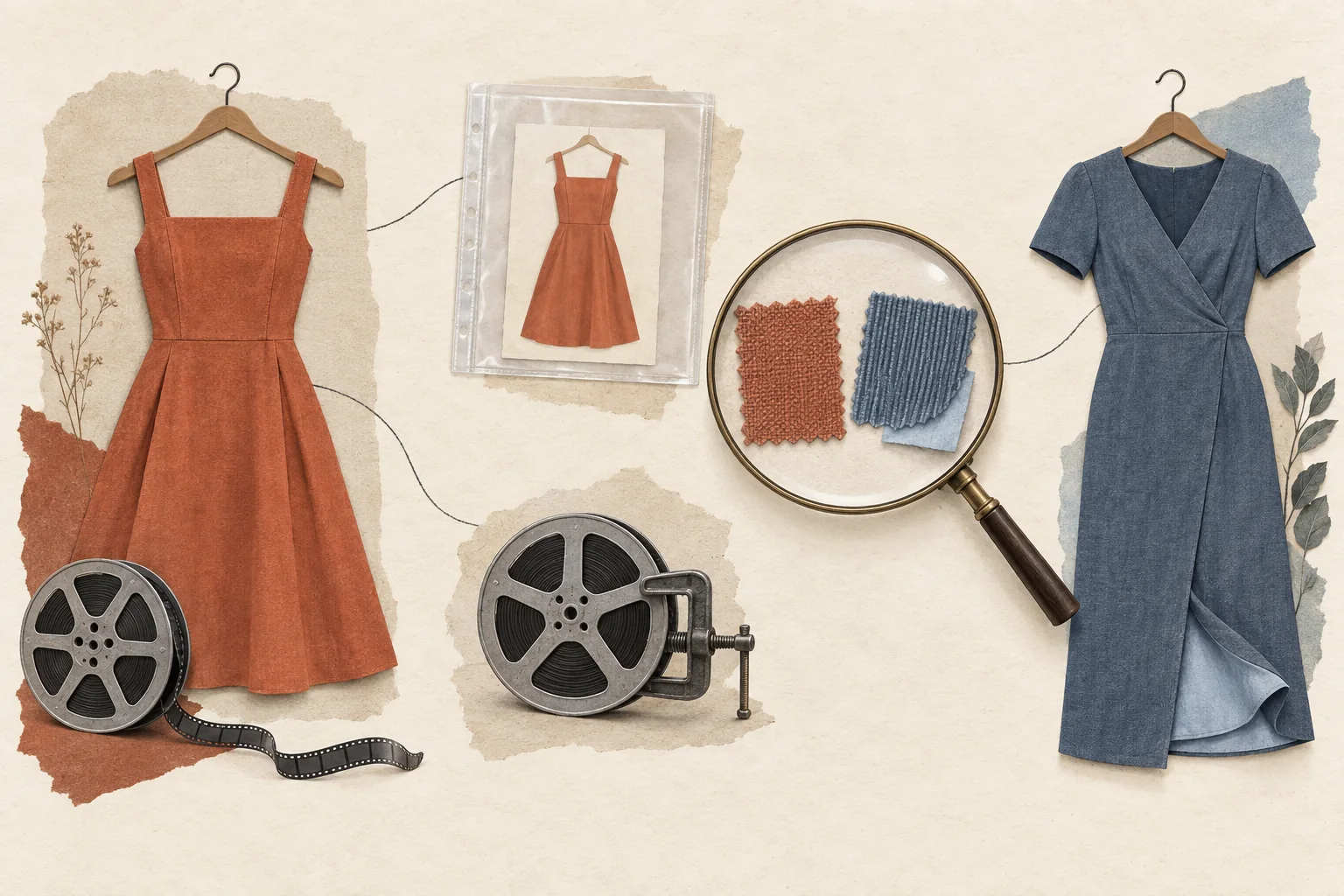
Suppose a creator filmed a review of a discontinued linen dress. A proposed alternative has a similar colour but uses a different fabric blend, includes a lining and has a narrower cut. These are hypothetical product details, not specifications for real garments.
The old video may still explain how the creator styled the linen dress. It cannot establish how the alternative fits, feels or washes. Keep the original product identity beside the video if you retain it in a permitted archive. Offer the alternative separately using its current documentation.
An illustrative destination notice could read:
The linen dress shown in this video is discontinued and no longer available. The lined dress below is a different style with a different fabric and cut. The video reviews the original dress. Check the alternative's size chart and care instructions before ordering.
If the brand wants a creator endorsement of the replacement, agree on a new review after the creator tries it. Do not edit the old footage to imply that experience happened.
Close the rights decision separately
Find the signed permission or licence covering each retained asset. Check allowed channels, paid use, edits, duration and any product-specific limits. Confirm who controls the image, music and other included material before approving a new use.
The U.S. Copyright Office's FAQ distinguishes owning a copy of a photograph from owning its copyright. A saved file alone does not establish permission to reuse it. Changing a link also does not expand the permission you already have.
Use the content-rights expiry register to keep the licence deadline separate from the product retirement date. Preserve existing sponsorship disclosures when updating retained content. Refer unclear licence terms to the person responsible for contract review.
Finish by opening each affected link as a shopper. Check the original item notice, alternative label, offer and destination. Record the result beside the asset owner. Start with the retired garment that still has active ads or incoming creator traffic, and close every row in its retirement map.