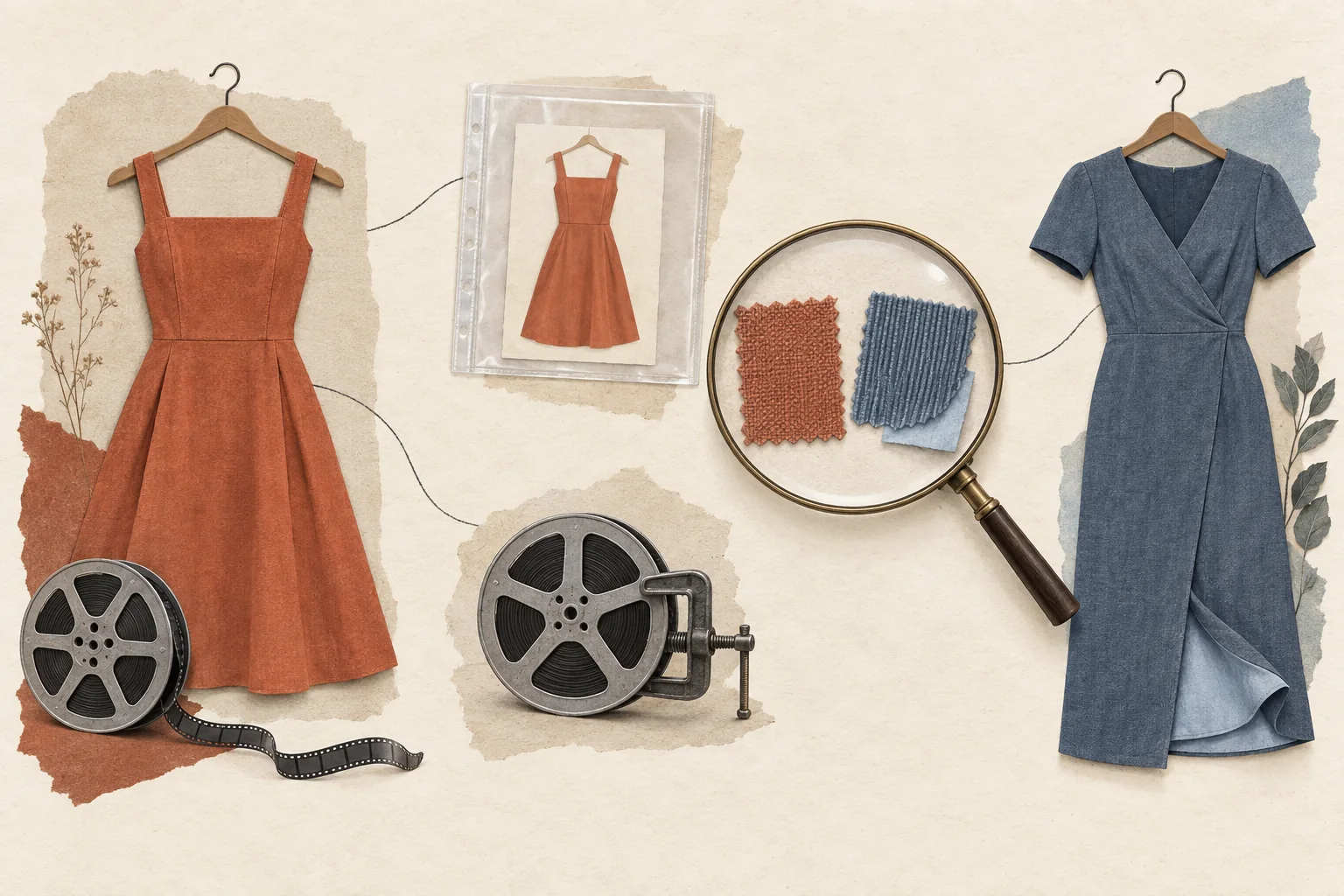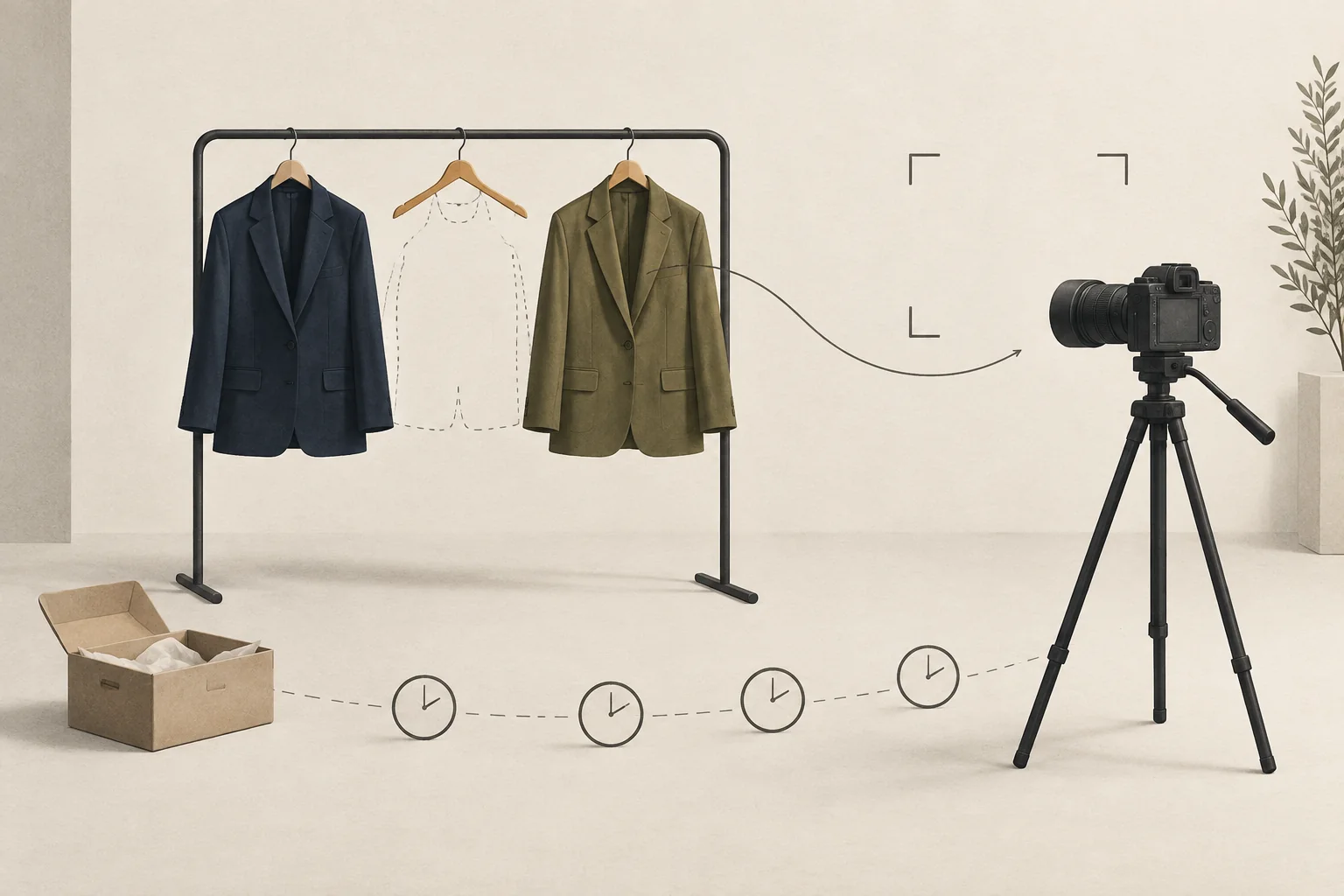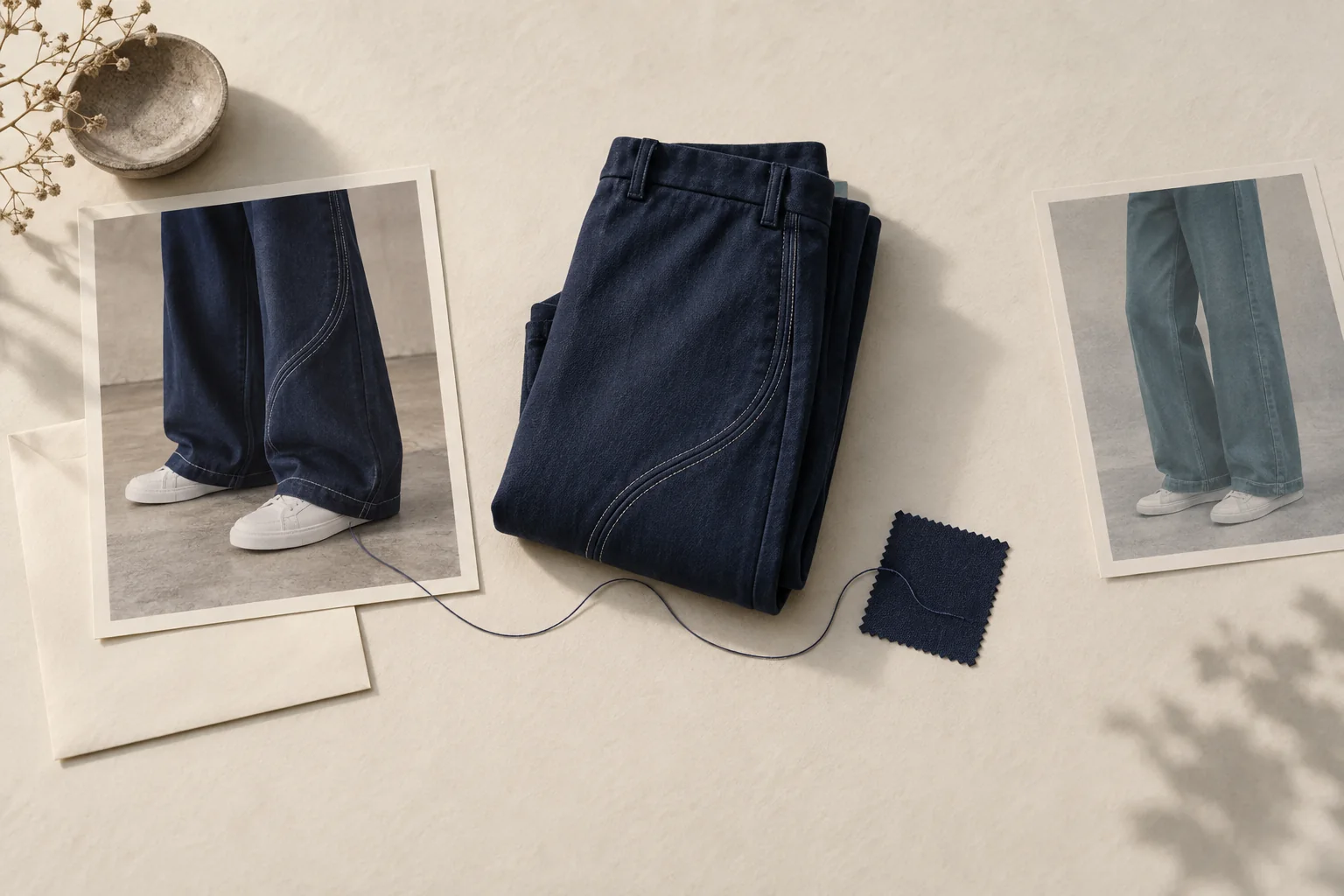




Fashion creator content should help shoppers judge fit, understand the fabric, picture outfits they would wear, and check the care and purchase details. Build each post around a question a shopper needs answered. Assign a demonstration, a source for factual claims, and a destination where the shopper can check their own size or variant. Treat reach as a separate planning estimate, without promising that views will produce sales.
A fashion influencer marketing strategy needs more than a list of creators and posting dates. Modash's fashion marketing guide covers audience selection, recruitment and collaboration models. The content plan below starts with the garment and the buyer's unanswered questions. It is an editorial recommendation, with no claimed sales lift or return-rate improvement.
Turn buyer questions into assignments
Start with one product or a small capsule. Read the product page, size guide, care label and available variants. Then collect recurring questions from your own customer-service conversations, product reviews and public comments. Record the question without copying customer identities into the brief.
Sort the questions into three groups:
- Decides the purchase. The shopper needs the answer to choose a size, assess suitability or understand an upkeep cost.
- Needs a demonstration. A creator can show something useful, such as how a hem moves when seated.
- Needs a store answer. Stock, shipping and return terms belong to the current store information. A creator should link there rather than improvise.
Give production priority to questions in both of the first two groups. A close-up of a waistband may answer a purchase question more directly than another outfit montage. That is a content choice to test, not a platform rule.
| Buyer question | Creator assignment | Evidence to supply | Boundary |
|---|---|---|---|
| Where does it sit on the body? | Show front, side and seated views; identify the size worn | Exact style, size chart and garment measurements when available | One try-on cannot predict everyone's fit |
| What does the material look and feel like? | Show drape, texture and the relevant lining | Composition for that color and version | Separate personal feel from verified fiber facts |
| Can I wear it with clothes I own? | Build outfits around one repeated garment | Item names and which pieces the campaign sells | Do not imply accessories come with the garment |
| What upkeep does it need? | Explain the label and show a permitted care step if useful | Instructions for the actual sample | Do not claim wash results without doing the wash |
| Which option can I buy? | Identify the shown color and size; point to the matching page | Current product and variant links | Do not promise future stock or delivery dates |
Choose creators who can answer the assigned question in their usual format. Use the guide to selecting fashion creators by styling context and product knowledge when deciding who should receive each assignment.
Keep product facts attached to the version
A product name alone may be too broad for a brief. Record the style number, color, size, date checked and source link. Keep the manufacturer's facts separate from what the creator observes.
For example, Patagonia's US page for the Men's Capilene Cool Daily Shirt, style 45216, describes a regular fit. Its material section lists polyester jersey with 50% recycled content, with a separate 100% recycled polyester specification for the BLK color code. Its care instructions include machine washing warm, tumble drying low and avoiding fabric softener. Read the full instructions before making a care demonstration.
That page supports a narrow materials statement tied to the variant. It does not establish how the shirt feels to a particular wearer or prove that another garment in the range has identical care requirements. A creator's opinion about softness should come from handling the sample. A claim about long-term durability needs more evidence than an unboxing.
Use this separation in every brief:
- Product fact: copied accurately into working notes from the matching product documentation, with a link and check date.
- Creator observation: recorded after trying the supplied garment, with the conditions described.
- Unanswered question: sent back to the brand, or left out of the post until resolved.
For fit demonstrations, use the guide to showing garment fit without universal promises. Do not replace missing size information with a confident recommendation to size up or down.
A hypothetical three-piece capsule
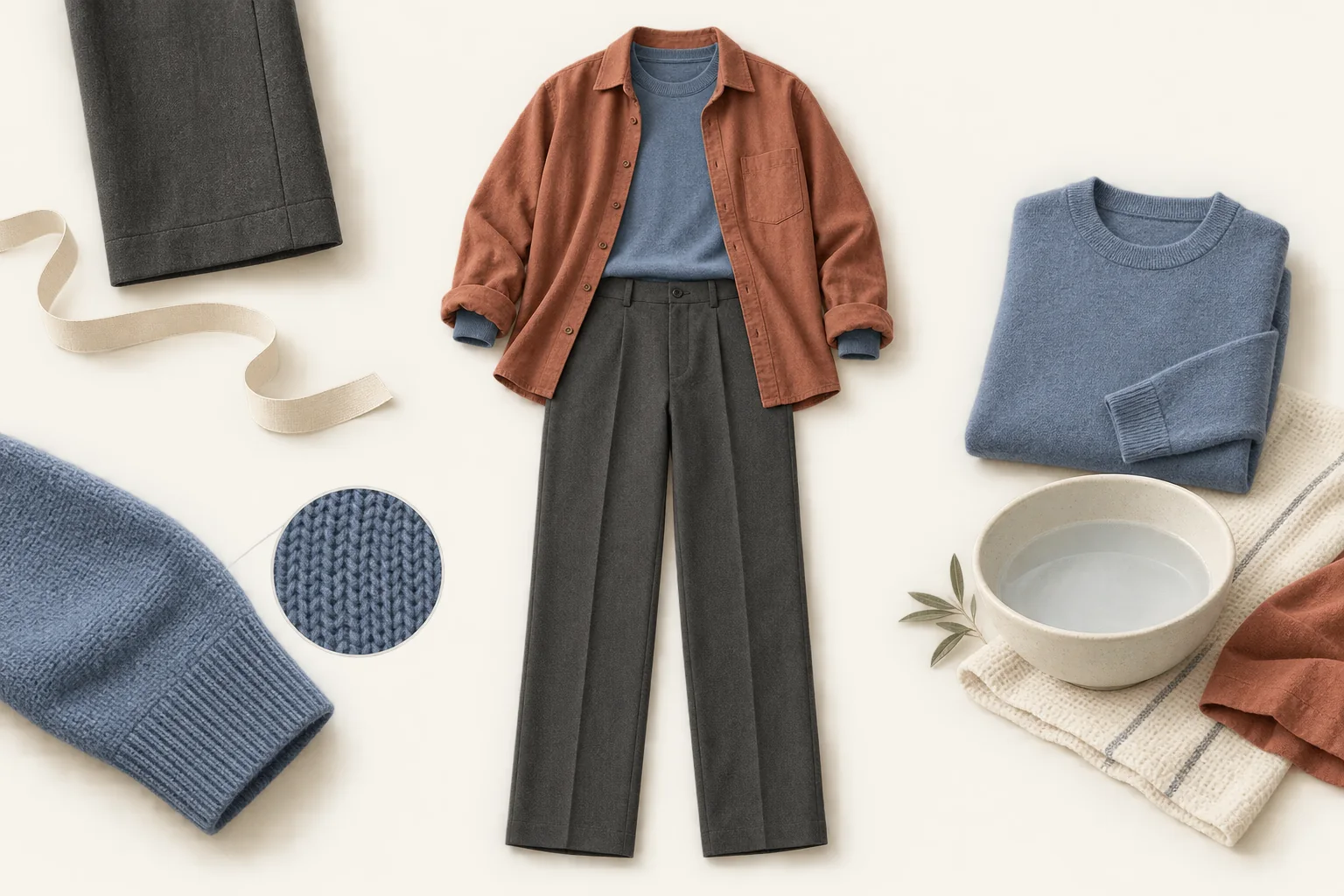
Suppose a brand plans a capsule of straight-leg trousers, a knit top and an overshirt. This is an illustrative campaign, not a real launch or a tested result. Assume the brand has supplied matching product documentation and confirmed the variants it intends to sell.
The brief's main question is: can a shopper choose the right trouser option and build outfits around it?
| Assignment | What the creator shows | Question it answers | Release condition |
|---|---|---|---|
| Trouser fit video | Waist, rise and hem while standing and sitting; size worn | How does this cut sit and move? | Actual sample matches the linked style |
| Outfit sequence | Same trousers with the knit top, then the overshirt layered over it | What combinations could I repeat? | Each campaign item is identifiable |
| Fabric and care post | Close views of each garment; each item's own care instructions | What am I buying and maintaining? | Composition and care checked separately for all pieces |
| Follow-up answer | A demonstration addressing a remaining fit or layering question | What did the first posts leave unclear? | Creator can answer from experience or a verified source |
The plan does not require every creator to cover every question. One creator may explain trouser proportions well. Another may make the layering sequence easier to follow. Assign both from the question map, then leave room for their own language and styling choices.
If the supplied trousers do not fit, pause the fit assignment and arrange a suitable sample. If the overshirt variant becomes unavailable, change the linked item or the assignment before publication. For destination checks, use the guide to matching a creator landing page to the promised product.
Review claims before polishing the edit
For endorsements affecting US consumers, the FTC's disclosure guidance says material brand relationships should be clear. These include payment and free products. Place the disclosure with the endorsement. For video endorsements, include it in the video, rather than relying on the description alone.
The same guidance says creators cannot describe an experience with a product they have not tried or invent claims that require evidence the advertiser lacks. Check the edit for statements about comfort, washing or wear that exceed what the creator experienced. Factual review should allow an unfavorable observation to remain accurate.
Keep environmental language narrow. In the US, the FTC's Green Guides summary advises against broad, unqualified environmental benefit claims. A documented fiber percentage does not, by itself, justify calling a whole outfit eco-friendly. State the supported material fact and its scope. Obtain market-specific advice for claims beyond these US examples.
Decide what the next post should answer
After publication, return to the question map. Record which questions the content answered, which remain unclear and which new ones shoppers raised. Read comments in context: a question about length could reflect interest, missing information or confusion.
Track views separately from purchase evidence. If shoppers click but keep asking which trouser version appears in the video, repair the identification and destination first. If they ask how the overshirt sits over the knit, brief a layering demonstration. Neither pattern proves that creator content caused or prevented a sale.
Before booking the next post, choose one unresolved purchase question. Attach the matching product source, name the demonstration and assign someone to check the answer before it goes live.