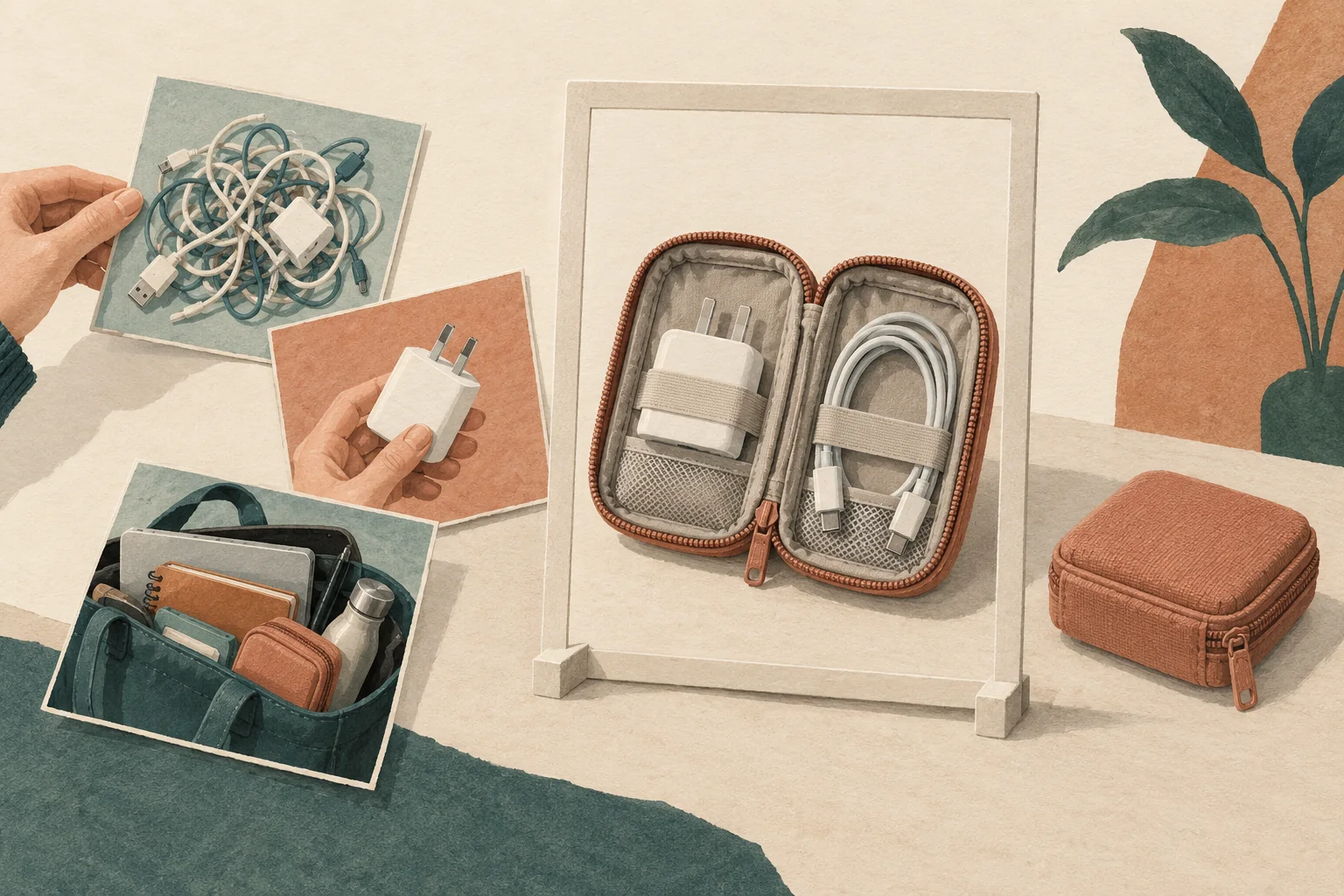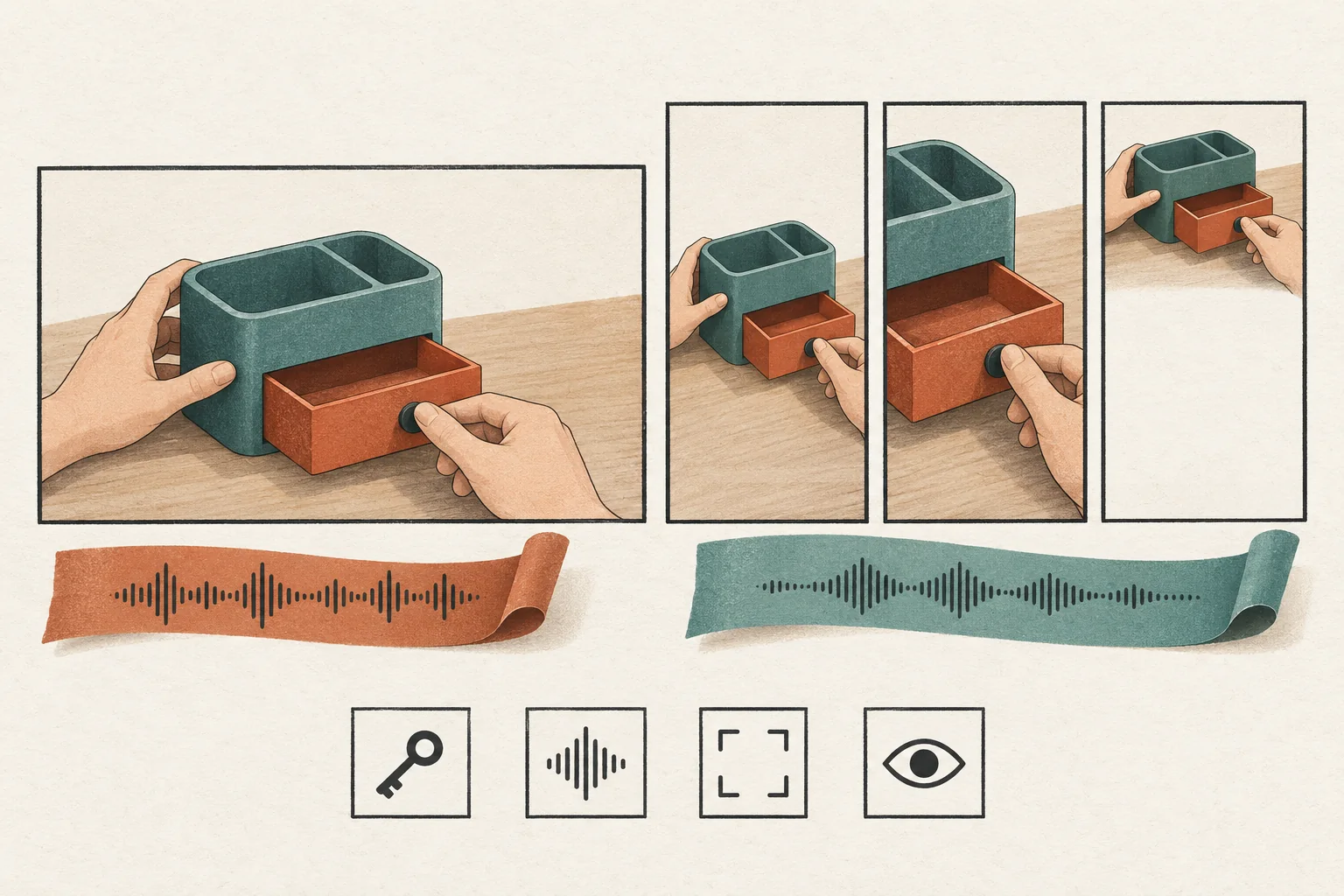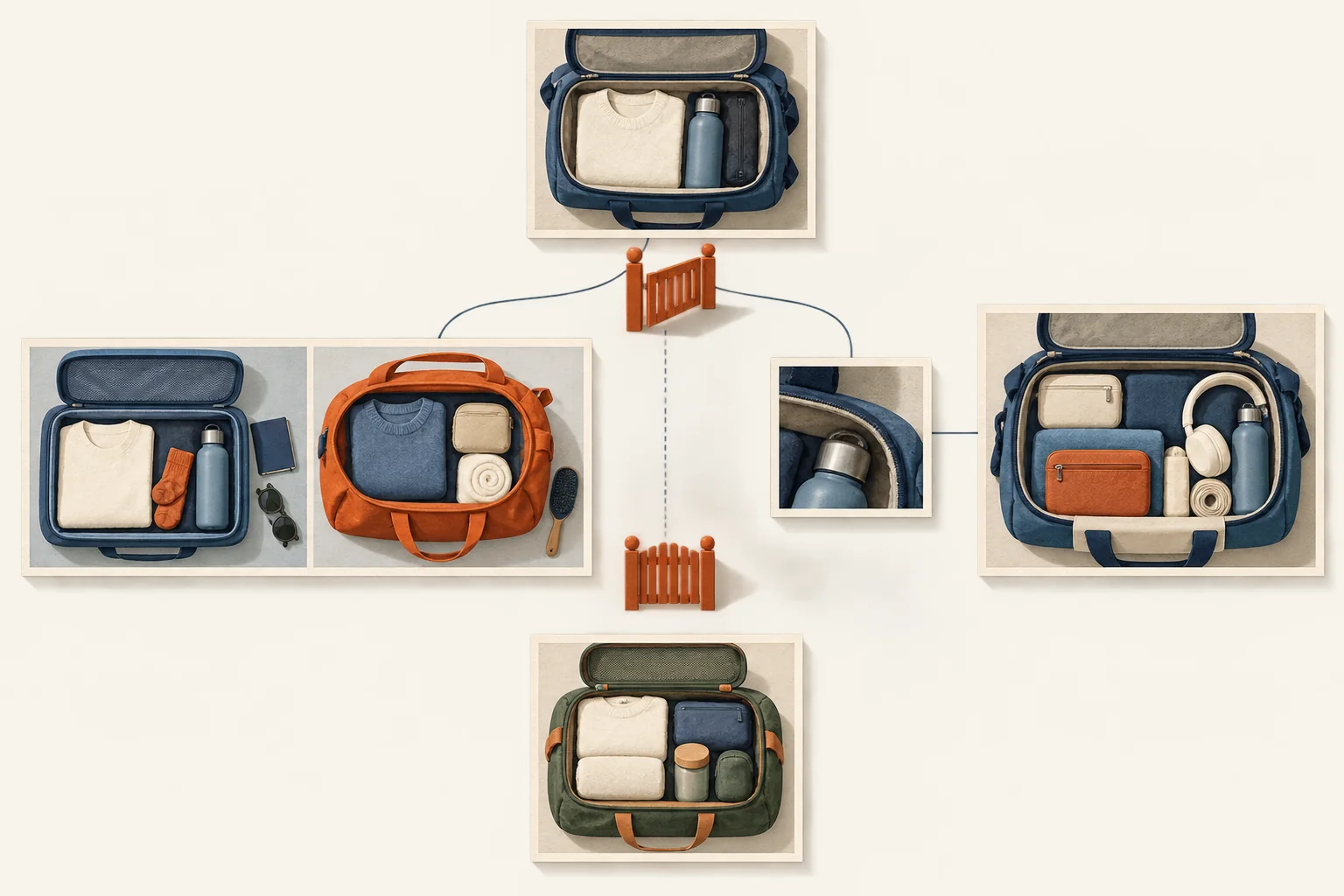




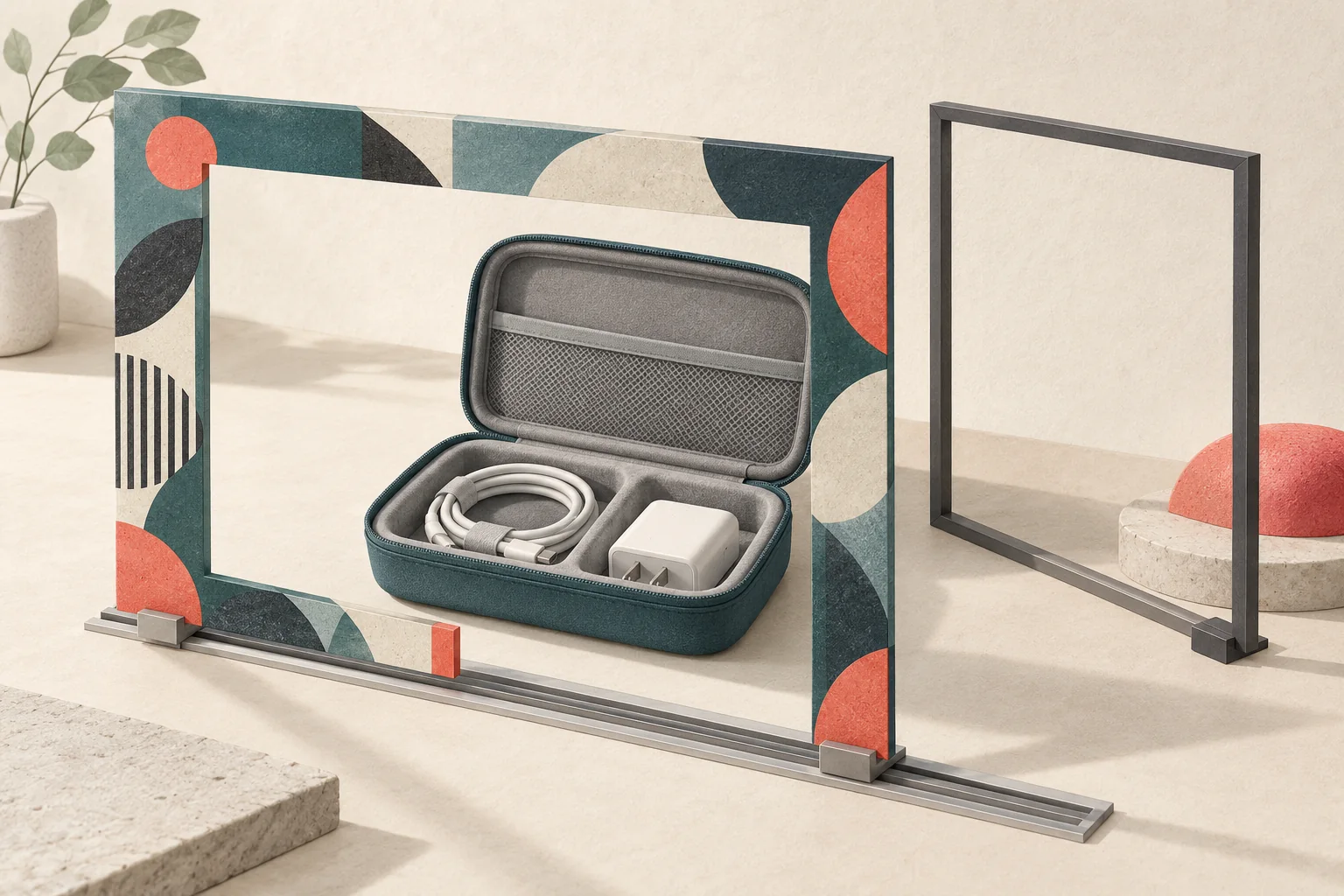
Build the campaign around product questions that remain useful after a trend fades. Treat a trending sound, joke or editing pattern as an optional treatment, and approve a trend-free version before filming ends. A TikTok influencer campaign strategy should still have a clear audience, product explanation and next action if every trend reference disappears.
That separation needs to appear in the brief, production scope and approval schedule. Otherwise, calling a trend "optional" changes nothing when the only footage you have depends on its punchline.
Define what survives the trend
Start by writing the campaign's core in plain language:
- Who has a question about the product?
- What should they understand after watching?
- What can the creator show to answer it?
- What should an interested viewer do next?
A travel organizer campaign might answer whether a commuter's daily cables and charger fit together. The demonstration is the core. A current packing joke could shape the opening, but the viewer should understand the fit demonstration without knowing the joke.
TikTok's creative guidance for performance ads recommends a hook, product selling points and a clear call to action. It also recommends varied creative and keeping assets available for refreshes. Those are advertising recommendations, not rules predicting organic reach. The core-and-optional method here is a planning recommendation built around those practical constraints.
Choose creators who can explain the product in more than one format. When comparing candidates, look for repeatable content skills, so the campaign does not depend on their ability to reproduce a particular meme.
Build a plan with a replacement for every trend treatment
Give each planned post a product question, a required demonstration and an optional treatment. Then name the replacement before approving the concept.
The following is a hypothetical plan for a travel organizer. These are proposed scenes, not claims about a real product or a campaign's results. Actual filming must establish what fits.
| Product question | Required demonstration | Optional treatment | Replacement edit |
|---|---|---|---|
| Will my daily kit fit? | Place the creator's named items inside, then show whether it closes | A current packing transition | Overhead packing with spoken explanation |
| Can I find a cable without emptying it? | Open the organizer and retrieve the named cable | A recognizable search-and-reveal joke | Continuous close-up of the retrieval |
| What would I leave out? | Show an item that does not fit and explain the limit | A trending expectation-and-reality format | Direct comparison of the item and available space |
The last question matters. A useful product story can explain a limit. Do not replace an awkward finding with an unsupported promise because the trend needs a positive reveal.
Across the plan, vary the questions as well as the openings. Several videos built around the same joke and the same product point leave the campaign exposed to one creative idea failing.
Keep a shared record with a row for each deliverable. Include the creator, product question, treatment, replacement, review owner and decision deadline. A trend name alone tells the producer too little about what must survive an edit.
Film the core before adding the treatment
Ask for a complete explanation that works without the trend. Capture the product action, the creator's explanation and the next step. Then capture any extra opening, reaction or transition needed for the optional version.
Keep narration separate from added music where the agreed production workflow allows it. Retain a version without third-party music. A trend-free fallback does not have to be silent; the creator can explain what the viewer is seeing.
Agree on the extra work before filming. An alternate opening, a second edit and raw footage delivery are distinct requests. Record which are included, who will make the replacement edit and when it will be ready. Do not assume the creator owes additional versions because a trend changed.
Later's TikTok campaign guide recommends defining deliverables and approval deadlines while leaving room for creator control. Apply that boundary here. Specify the product facts and fallback requirement, then let the creator choose wording and pacing.
If the explanation itself is unclear, write the TikTok brief around the first explanation before spending review time on transitions.
Give the optional version a decision deadline
Choose a review point that leaves enough time to finish the replacement. Name one person who can approve the trend treatment or abandon it. Without that authority, a team can keep debating relevance until neither edit is ready.
At that review, ask:
- Does the creator still think the treatment fits their audience and usual work?
- Can someone unfamiliar with the trend understand the product point?
- Does the edit show the required demonstration without hiding a limitation?
- Are the sound and other borrowed elements cleared for the intended use?
- Can this version meet the publishing deadline without skipping review?
These are operational questions. They do not require predicting when TikTok will stop distributing a trend. If the creator no longer wants to use it, or an unresolved rights issue blocks it, choose the prepared replacement.
For the hypothetical organizer campaign, suppose the packing transition no longer feels appropriate when the creator submits the draft. The reviewer selects the overhead packing edit. The named items, fit demonstration and next action stay unchanged. The team records the reason and approves the replacement through the normal review process.
If both versions contain an inaccurate product claim, hold the post. Changing the opening cannot repair the demonstration.
Keep music and disclosure checks in both versions
A popular sound is not evidence of permission for commercial use. TikTok's commercial music guidance recommends its Commercial Music Library for promotional content. TikTok says its licenses for music outside that library do not cover commercial use.
For original sounds or music outside the library, TikTok requires confirmation that the post contains no copyright-protected music or that all necessary licenses have been obtained and paid for. The label "original sound" alone does not settle that question. Check music for commercial content before making a sound central to the concept.
TikTok also requires the content disclosure setting for promotional posts. Content made for another business uses the Paid partnership label. Keep that check in the fallback's publishing instructions. Removing a trend does not change the commercial relationship. These are TikTok's platform requirements; teams must also check applicable local advertising requirements.
Review the product story separately from its opening
After publishing, record which product question each post answered and which treatment ran. Review viewer questions for missing explanations, and examine the available results against the campaign's original goal.
Avoid concluding that a trend caused a stronger result from posts that also differ in creator, product story, timing or paid support. Treat that comparison as a reason to test again. Preserve an explanation that answers a real buying question even when you retire its opening.
Before sending the next brief, remove every trend reference from the content plan. If a row no longer contains a filmable product story, rewrite that row and name its replacement edit.