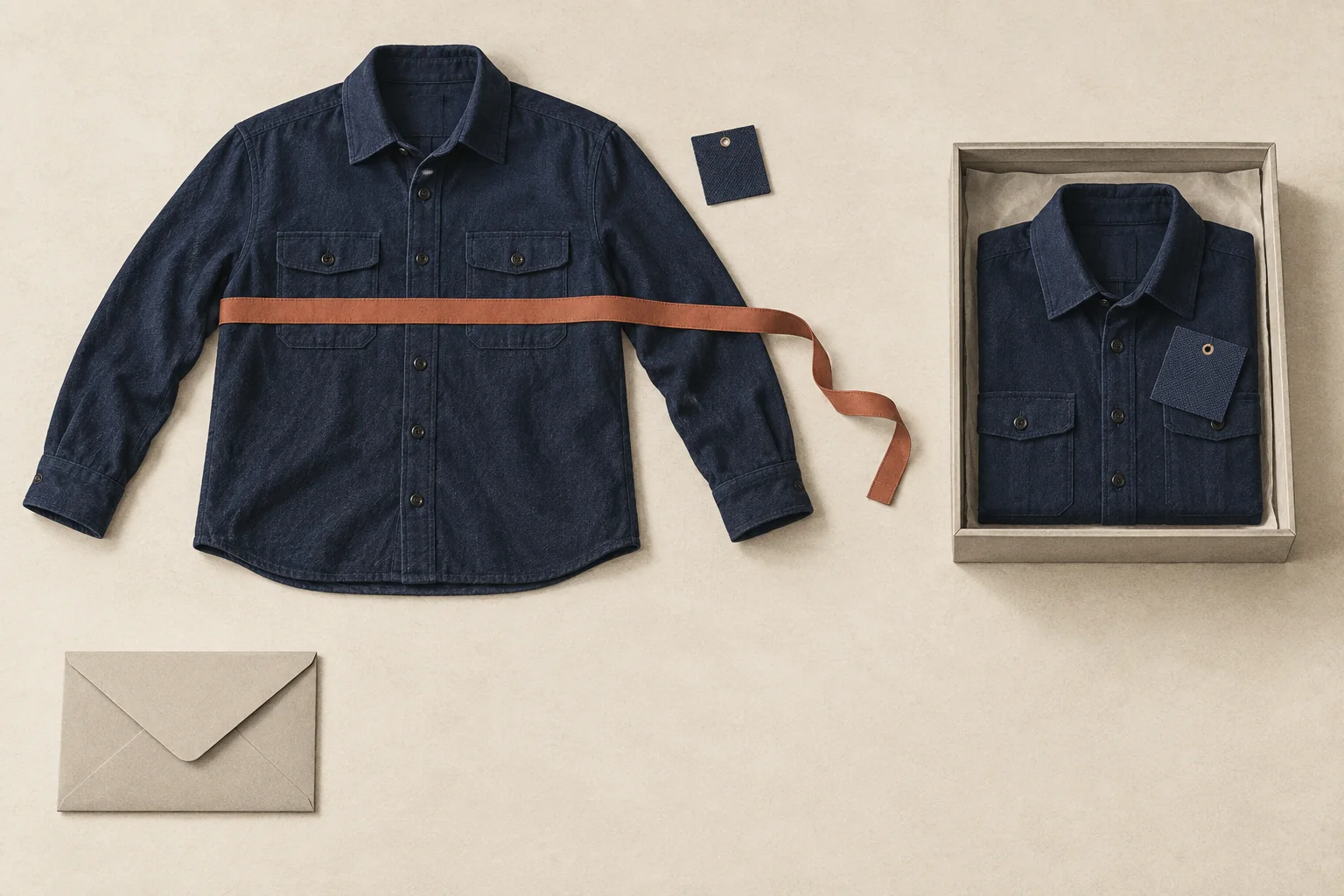




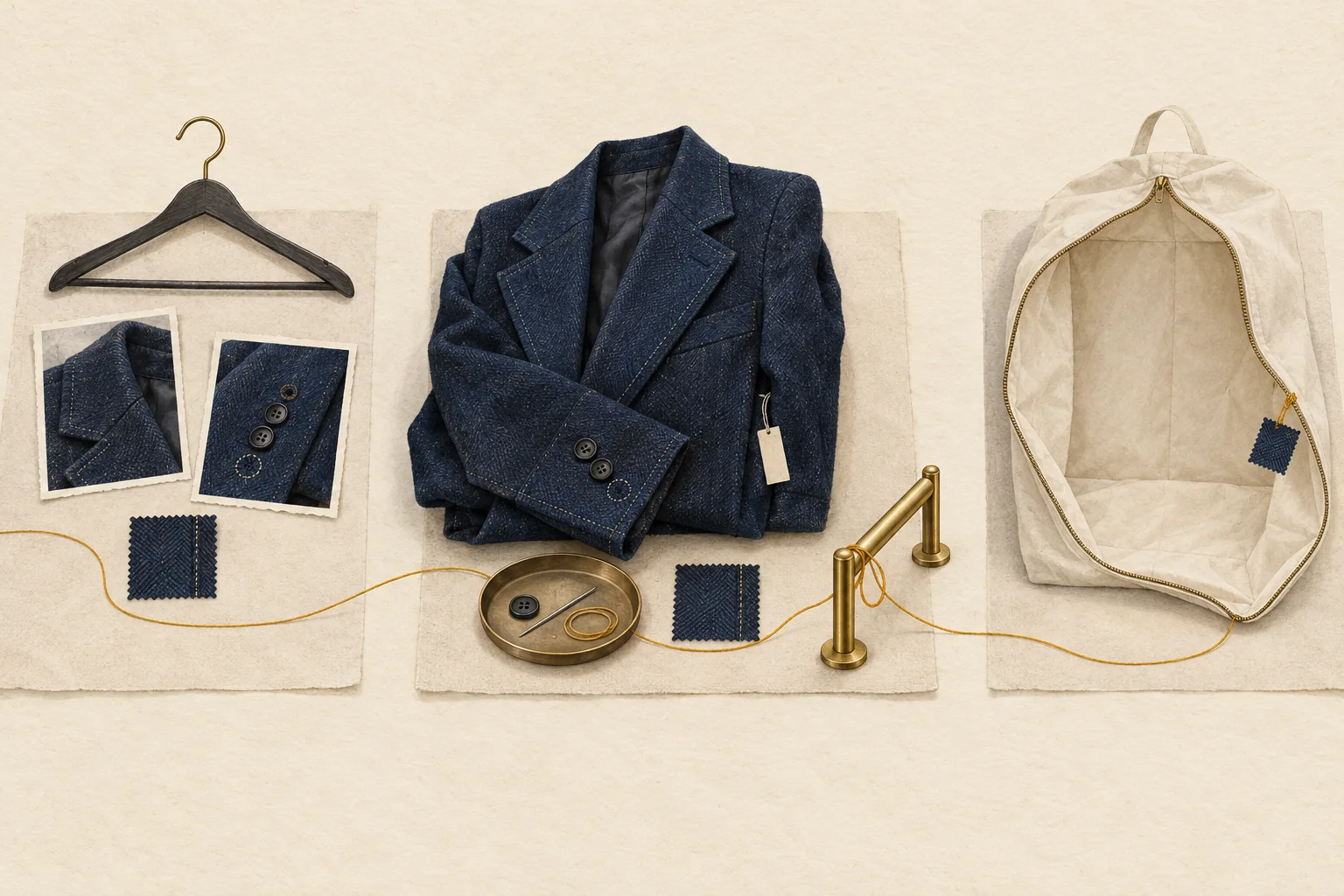
Give each physical garment a permanent sample ID, then record every handoff as a new event. Keep its location, condition and cleaning status in separate fields. A booking becomes ready to ship only after someone confirms receipt, inspects the garment and clears any cleaning or repair hold. This fashion sample rotation tracking method preserves the history when the same piece moves through several creators.
Use two linked sheets: a sample register for the current state and a custody ledger for the history. The workflow below is an operational recommendation. Agree the underlying return obligations separately using the loaned-product planning guide.
Identify the physical piece before booking it
A style code alone cannot distinguish two jackets of the same size and color. Assign each piece its own ID, such as JKT-017, on a removable tag or garment bag without damaging the fabric. Match that ID to a photograph of the item and its labels.
The sample register should contain:
- Sample ID, brand style code, color and labeled size.
- Any recorded alterations and detachable parts, such as a belt or liner.
- Care-label photo and any item-specific manufacturer instructions.
- Current holder and location, with the last confirmed event and time.
- Condition, cleaning status and release status as separate fields.
- Next booking, required arrival date and the person who can release the sample.
Keep delivery addresses in the shipping record; the rotation sheet can use a creator or studio reference. For size confirmation, use the clothing-size collection guide before allocating the piece.
Record both sides of every handoff
Modash's gifting guide describes shipment tracking and confirming that creators received their products. A rotating sample needs another step: compare what the sender packed with what the recipient opened.
Create a dispatch event when the sender hands the parcel to the carrier. Record a receipt event when the recipient confirms the contents. Keep the carrier tracking reference between those events. A delivered scan can prompt a follow-up, but leave condition as uninspected until someone opens the package.
Use the same photo sequence at each handoff:
- Full front and back, with the sample ID visible nearby.
- Collar, cuffs, underarms and hem.
- Closures, seams, pockets and detachable pieces.
- Close-ups of every existing or newly noticed defect.
- Packing arrangement and the included accessories before dispatch.
Use consistent light and framing. Record observations that photos cannot establish, such as an odor or a zipper that catches. Describe the defect's position from the wearer's perspective, so a later reviewer can locate it.
Each event needs a time with time zone, sender, recipient, event type, photo references, condition notes and the next action owner. Preserve old events. Correct an error with a dated correction linked to the original row.
A newly reported mark establishes when someone noticed it. It does not, by itself, establish who caused it. If photographs conflict, hold the sample and ask both parties for clarification before drawing a conclusion.
A three-creator custody ledger
The following is a hypothetical rotation for jacket JKT-017. The creators, dates, defects and durations are illustrative. Assume the coordinator has already obtained care instructions for this specific sample.
| Event | Custody | Condition and photos | Care and booking decision |
|---|---|---|---|
| Oct 5, dispatch | Studio to carrier for Creator A | Baseline P01: front, back, label, closures; no defects recorded | Inspection passed; release to A |
| Oct 6, receipt | Creator A confirms possession | P02 matches baseline; belt present | No care action pending; A booking active |
| Oct 8, dispatch | A to carrier for studio | P03: new collar mark reported | Cleaning required; B remains conditional |
| Oct 9, receipt | Studio confirms possession | P04 confirms mark; accessories complete | Hold for approved cleaning |
| Oct 12, receipt | Cleaner returns to studio | P05: mark no longer visible; inspection recorded | Care record complete; release for B |
| Oct 13, receipt | Creator B confirms possession | P06 matches released condition | B booking active |
| Oct 15, return | B dispatches; studio confirms receipt later that day | P07 and P08: loose sleeve button | Repair hold; C's Oct 16 dispatch blocked |
| Oct 16, repair | Repairer returns to studio | P09: button secured; closure check passed | Repair closed; cleaning review still pending |
| Oct 17, release | Studio completes required care and inspection | P10: updated condition set | C's revised booking cleared |
| Oct 19, receipt | Creator C confirms possession | P11 matches release set | C booking active; return still due |
In a live ledger, split the compressed table's combined actions into individual timestamped events. Record the cleaner and repairer handoffs too. Their workshops are locations in the custody history.
The sample register now shows Creator C as the current holder. It still links to the collar mark, cleaning and button repair. Closing a hold must preserve those records.
Cleaning needs an instruction and a completion record
Use the garment's care label and item-specific manufacturer guidance as the starting point. Do not choose a cleaning method from the fiber name alone. The US FTC care-labeling guidance explains that care instructions must account for components such as linings and trim. It also warns that a method absent from the label can carry risks.
If the sample has no label, or the instructions conflict, ask the manufacturer for written guidance before treatment. Do not invent a wash temperature, solvent, steaming method or stain-removal recipe to meet a shoot deadline.
For each care event, record the instruction used, who performed the work, completion time and the post-care inspection. Separate these statuses:
- Cleaning required. Work has not started.
- With cleaner. The garment remains unavailable.
- Cleaning completed. Work finished, but inspection is still pending.
- Released. The coordinator accepted the condition and cleared all holds.
Decide who arranges cleaning before dispatch. A creator who finds a stain should report it and await instructions rather than improvise treatment. Put the relevant item instructions in the handoff message; use the fabric-and-care briefing guide to prepare that brief.
Make bookings depend on release
Reserve the full interval from studio dispatch through return transit, inspection, required care and readiness for the next shipment. A shoot ending on Tuesday does not establish that the garment can leave for another creator on Wednesday.
Work backward from the next creator's required arrival date:
Latest release time = required arrival time minus planned outbound transit and the team's chosen delivery buffer.
Then compare the latest release time with the current return and care plan. Use carrier estimates and your cleaner's stated availability. Any assumed durations remain planning assumptions until confirmed.
If inspection or care cannot finish before the latest release time, choose one action:
- Move the next shoot with the creator's agreement.
- Allocate another physical sample with its own ID and inspection record.
- Cancel that garment's booking and agree an alternative look.
Name one coordinator to resolve competing bookings. Do not let two campaign owners independently promise the same piece. A direct creator-to-creator shipment should follow the same receipt, inspection and care requirements. If those steps cannot happen, route it through the studio.
Close a repair hold before shipping
A repair hold needs the defect, photographs, assigned repairer, decision owner and next review time. Avoid filling in a release date before the repairer has assessed the work.
Patagonia's repair resources separate jobs such as zipper repairs and insulation patches. That is a useful reason to record the specific fault rather than a broad label such as damaged. Those resources do not establish a repair method for another brand's sample.
After repair, inspect the affected area and record any visible change. Check whether the garment still represents the product the creator will discuss. A changed hem or replacement fastening may require a different sample for a fit-focused shoot.
Before the next dispatch, the coordinator should be able to answer five questions: Who has the garment? Which photos show its current condition? Is required care complete? Are all holds closed? Can it arrive before the agreed deadline?
Start with the next sample leaving your studio. Assign its ID, take the baseline photographs and enter the first dispatch event before handing it to the carrier.