



Before handing creator shipments to a fulfillment partner, ask for a written service scope, an exportable shipment history, a clear address-data policy, and a named owner for exceptions. Then test those answers with a small shipment trial. Choose a provider only after it can show what happened to each order and who fixes a failure.
An influencer seeding fulfillment partner may receive stock, assemble kits, pack orders, and hand parcels to carriers. Your evaluation should establish which of those jobs the provider accepts, how it reports them, and what it charges when an order changes.
Separate software access from warehouse work
A gifting platform and a fulfillment service can cover different work. The Modash gifting-platform comparison discusses store integrations, creator ordering, outreach, and content tracking. Those are useful software questions. A warehouse evaluation also needs evidence of physical packing, carrier handover, and problem resolution.
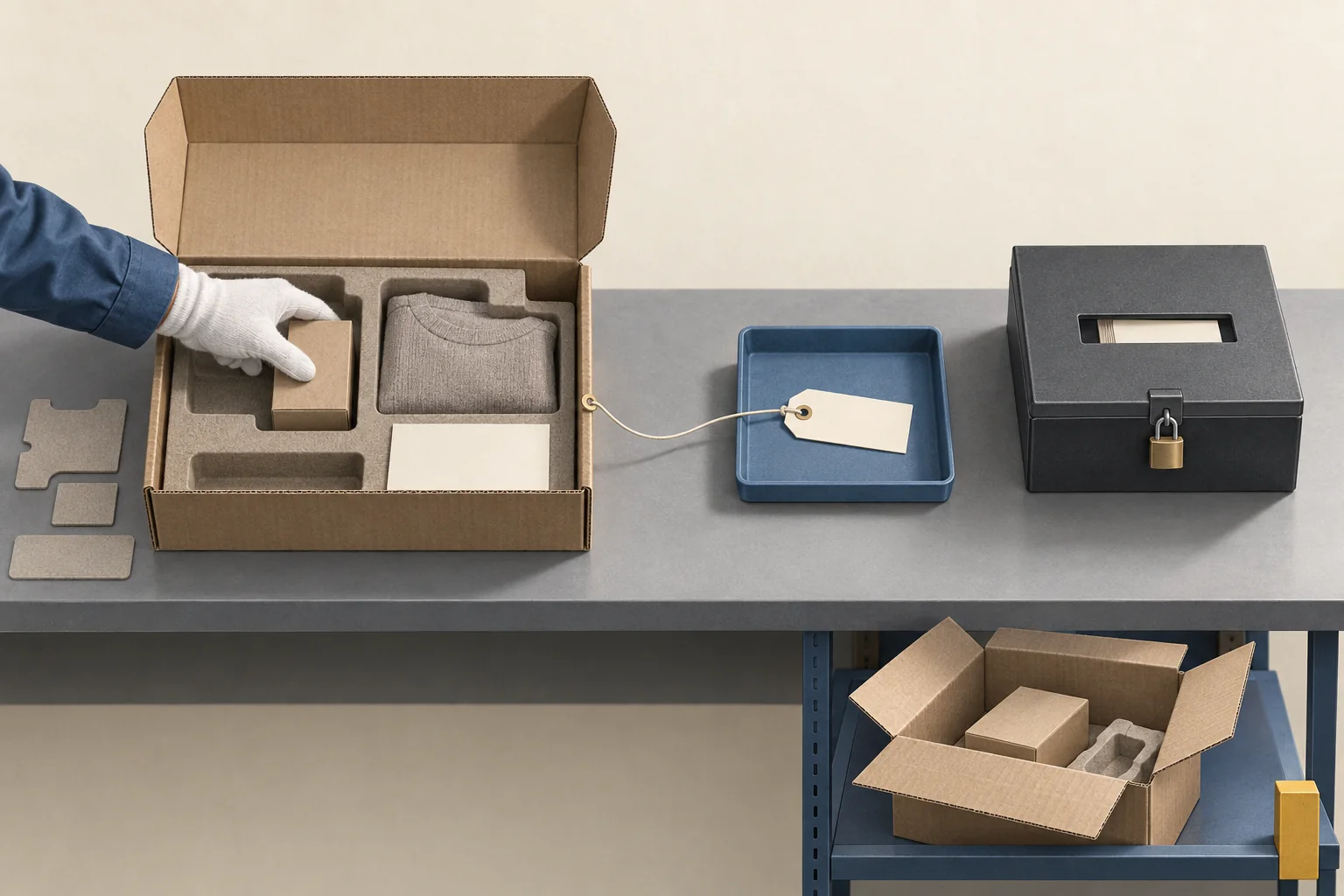
Give each candidate the same brief. Include your kit contents, variants, intended destinations, expected batch pattern, packaging instructions, and required dispatch window. Ask it to mark each requested task as included, separately charged, subcontracted, or unavailable.
Keep creator selection, gift acceptance, campaign messages, and content follow-up assigned to named people on your team unless you commission those services separately. A delivered parcel should not close the creator relationship record.
Send this provider questionnaire
Ask for written answers and supporting examples. A redacted order export or a live demonstration with test data gives you more to evaluate than a yes in a sales call.
| Area | Question to ask | Evidence to request |
|---|---|---|
| Service scope | Who receives inventory, assembles kits, adds inserts, packs, dispatches, and handles returns? | Task list with owners and exclusions |
| Order identity | Can one campaign shipment ID follow an order through your system, carrier record, and invoice? | Redacted export joining those records |
| Packing control | How do staff confirm the correct variant, quantity, and insert? What prevents an unapproved substitution? | Packing procedure and test-order history |
| Dispatch reporting | What event changes an order to dispatched? Can we distinguish a label from carrier possession? | Timestamped event history |
| Changes and cancellations | Until which processing step can we change an address or stop an order? Who confirms the change? | Demonstration before and after the cutoff |
| Exceptions | Who handles missing items, damage reports, carrier delays, and returns? Who authorizes replacement costs? | Escalation route and redacted case history |
| Data handling | Which staff and outside companies can access recipient data? Where does it go, and when is it removed? | Data-flow description and applicable processing terms |
| Capacity | What batch volume can you accept within our proposed dispatch window? What happens above that limit? | Written capacity commitment and notice process |
| Charges | Which costs sit outside the packing fee? | Itemized quote for the same sample batch |
| Exit | How do we recover inventory and records when the service ends? | Exit procedure, charges, and data-return terms |
For the quote, request separate lines for receiving, storage, kit assembly, packing materials, dispatch, carrier charges, returns, rework, and account minimums where applicable. Have the provider mark unused items as excluded. Use the full-cost seeding calculation to compare candidates on the same batch assumptions.
If a proposed product or destination needs specialist handling, require a separate review before including it in the trial. This questionnaire does not establish product suitability or destination eligibility.
Require a shipment history you can interpret
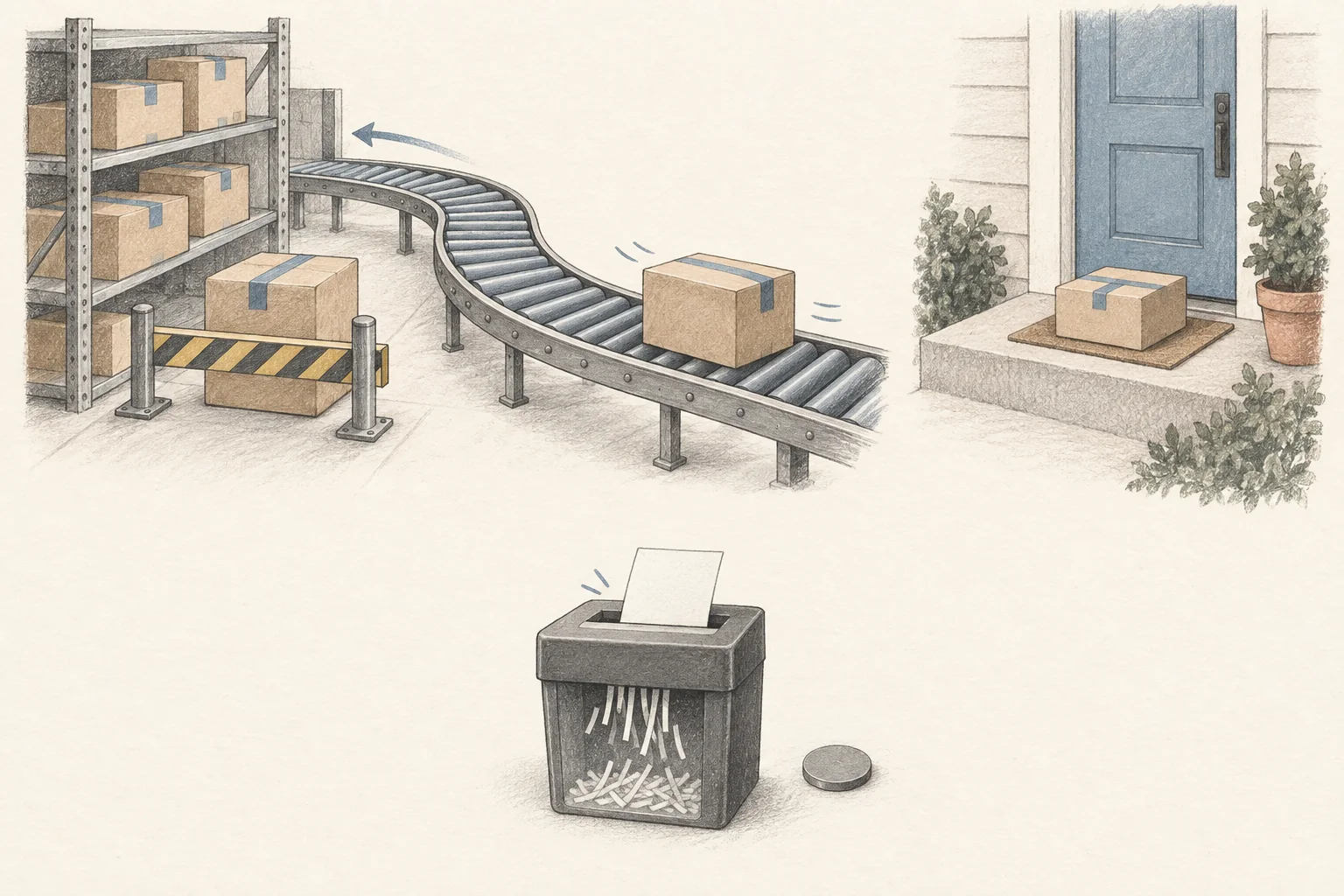
Ask the provider to show an order accepted, picked, packed, handed to the carrier, and delivered, with timestamps and the original event descriptions. Also ask to see a stopped order and a replacement linked to its original shipment.
The event definition matters. On the UPS US tracking guide, Label Created means UPS has received shipment details and billing information. Carrier possession is a later step. UPS also explains that an exception can change the scheduled delivery date.
For UPS shipments, do not accept label creation as proof that the carrier has the parcel. For another carrier, ask the provider to show that carrier's definitions and explain its status mapping. Preserve the carrier's event alongside the provider's summary so your team can investigate disagreements.
Request an export containing the campaign shipment ID, provider order ID, item and variant, quantity, carrier tracking reference, event time, exception reason, and current owner. Keep full addresses out of routine campaign reports when shipment IDs will do. Tracking gifts from approval to delivery helps define the record your team should retain.
Review recipient data before uploading it
Ask the provider to demonstrate who can view an address, who can export a recipient list, and how it removes access when a staff member leaves. Establish who receives incident reports and how your team requests a correction or deletion. Agree which recipient details the warehouse needs for each task.
For arrangements subject to UK GDPR, where the provider acts as your processor, the ICO's contract guidance describes required terms. These cover documented instructions, confidentiality, security, sub-processors, assistance, audits, and end-of-contract data handling. Its deletion guidance includes exceptions where UK law requires retention.
The ICO flags that guidance as under review following the Data (Use and Access) Act. Have the person responsible for privacy confirm the provider's role, applicable law, and current terms. The questions here are procurement prompts, not legal advice or a complete contract. For the creator-facing collection step, use the shipping-details consent workflow.
Run a trial that includes changes
Use consenting staff or test recipients for a small physical trial. Choose cases that resemble your kits. Tell the provider which changes you will test, and keep a shared record of the expected result before processing begins.
Include a standard kit, a variant-sensitive kit, and an address correction before the agreed cutoff. Test cancellation and duplicate submission with orders intended to remain unshipped. Rehearse a loss or damage report as a clearly labelled simulation; do not create a false carrier claim.
Use this scorecard to record each result. These are recommended acceptance conditions, not carrier rules or industry benchmarks.
| Trial case | Pass condition | Evidence to keep |
|---|---|---|
| Standard kit | Recipient receives the approved contents and insert | Packing record and recipient confirmation |
| Variant selection | Packed variant matches the approved order | Order, packing record, and received item |
| Address correction | Corrected details reach the label before dispatch | Change history and label check |
| Cancellation | Provider stops the test order at the agreed stage | Cancellation event and inventory record |
| Duplicate submission | Provider identifies the duplicate before a second parcel leaves | Duplicate flag or documented review |
| Carrier handover | Dispatch evidence shows the agreed handover event | Carrier event and timestamp |
| Simulated exception | Named owner responds and records the next action | Ticket history and elapsed response time |
| Trial closeout | Shipment export and invoice reconcile to the trial | Matched order list and itemized invoice |
Record pass, fail, or untested for every row. A small trial cannot establish a long-run failure rate. It can expose a missing control or a promise the provider cannot demonstrate.
Pause selection if the provider ships a cancelled order, exposes recipient details to an unauthorized person, or cannot reconcile an order to its parcel. Require a documented fix and repeat the failed case. A low packing price should not cancel one of those failures in an average score.
Before releasing the first creator batch, put the accepted scope, cutoff times, response commitments, exception owner, and agreed fees into the service agreement. Send the questionnaire with one representative kit brief and ask the candidate to return both its answers and a proposed trial plan.