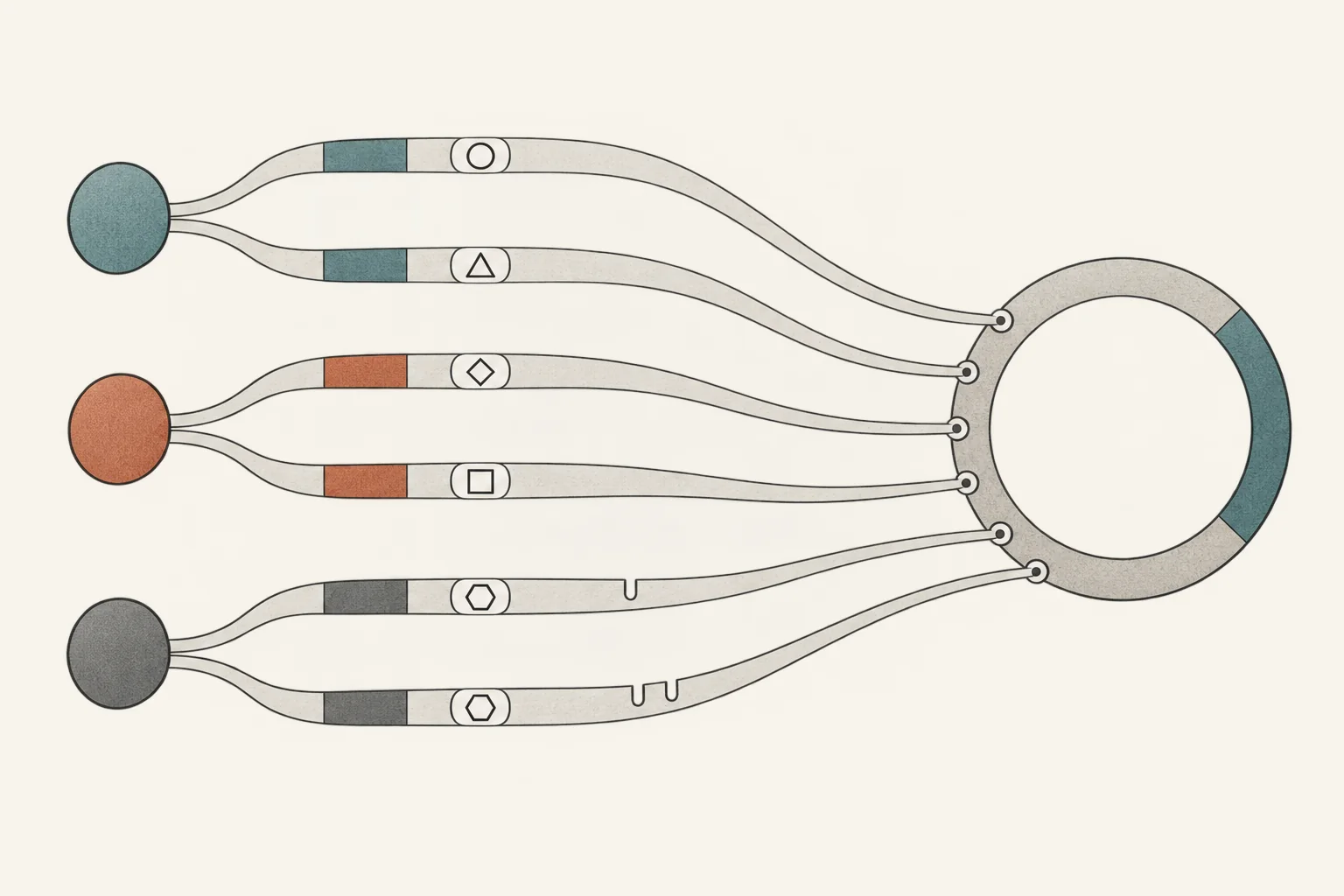





Campaign exposure numbers disagree because they count different things. Reach counts distinct users within a defined scope. Impressions count qualifying displays. Views count the events a platform defines as views, which may include a play starting or content appearing on screen. To compare reach, impressions and views, start with the platform, report, content type and date range. There is no universal conversion between them.
A campaign can therefore have several correct exposure numbers. Keep their original labels and explain what each one measures before calculating a total.
A metric dictionary for one campaign
Use this dictionary for a campaign containing Instagram creator content, TikTok in-feed ads and YouTube videos. The TikTok rows describe advertising reports, not organic profile analytics.
| Report and field | What it counts | Comparison limit |
|---|---|---|
| Instagram insights: Views | Times content played or appeared on screen | Can include repeated exposure; does not mean unique people |
| Instagram insights: Viewers | Unique accounts that saw content on screen at least once | Reel Viewers can include accounts that never played the Reel |
| TikTok Ads Manager: Impressions | Times ads appeared | Ad delivery, not a count of distinct viewers |
| TikTok Ads Manager: Reach | Unique users who saw ads at least once | Unique within the report's scope, not across platforms |
| TikTok Ads Manager: Video views | Video play starts, counted per impression, excluding replays | Does not establish a minimum viewing duration |
| TikTok Ads Manager: 2-second video views | Plays lasting at least two seconds in an impression session, excluding replays | A different threshold from a play start |
| YouTube Analytics: Thumbnail impressions | Registered thumbnail displays on eligible YouTube placements | Measures the thumbnail, with visibility conditions |
| YouTube Analytics: Unique viewers | Estimated viewers who watched during the selected date range | An estimate with a different viewing basis from Instagram Viewers |
Instagram's current definitions use Views for plays or displays and Viewers for unique accounts. Meta flags gradual availability of Views and describes relevant unique metrics as estimated and in development. Preserve the label in the creator's supplied report. If an older export says Accounts reached or Impressions, do not silently rename that field to match a newer screen.
TikTok's basic advertising glossary separates Reach from Impressions. Its video play glossary then separates play starts from duration-based metrics. Even a duration in the field name needs checking. TikTok's 6-second video views can qualify through full playback of a shorter video or an engagement within the first six seconds. Treating every such event as six seconds watched would misstate the report.
YouTube thumbnail impressions require more than one second of display and at least half the thumbnail visible. External websites and apps, email and notifications are among the excluded placements. Total video views therefore need not come entirely from registered thumbnail impressions. YouTube supplies a separate Views from thumbnail impressions field for that narrower question.
These definitions describe reported exposure. None establishes that someone remembered the brand or bought because of the campaign.
A hypothetical report with incompatible fields marked
Assume the campaign team collects these figures for September 1 through September 7. Every number below is hypothetical. The team has verified matching date boundaries and has separate organic and paid reports.
| Campaign item | Reported field | Hypothetical value | Treatment |
|---|---|---|---|
| Instagram creator A Reel | Viewers | 8,000 | Keep as this Reel's unique accounts |
| Instagram creator A Reel | Views | 12,000 | Non-comparable with TikTok ad impressions |
| Instagram creator B Reel | Viewers | 6,000 | Overlap with creator A unknown |
| TikTok paid campaign | Reach | 10,000 | Keep as paid campaign unique users |
| TikTok paid campaign | Impressions | 25,000 | Eligible for same-scope frequency calculation |
| TikTok paid campaign | 2-second video views | 15,000 | Keep its duration threshold |
| YouTube video | Thumbnail impressions | 20,000 | Non-comparable with TikTok ad impressions |
| YouTube video | Views from thumbnail impressions | 1,000 | Subset associated with registered thumbnails |
| YouTube video | Total views | 1,600 | Includes views beyond that subset |
The report should leave cross-platform unique reach unreported. Adding the two Instagram Viewers figures counts account-content pairs. The same account could appear in both rows, so the sum cannot establish distinct campaign accounts. Adding TikTok Reach introduces another unresolved audience overlap.
Two calculations remain useful within their stated scope:
| Hypothetical calculation | Result | Permitted interpretation |
|---|---|---|
| TikTok Impressions divided by TikTok Reach: 25,000 / 10,000 | 2.5 | Average paid impressions per reached user for that campaign and period |
| YouTube Views from thumbnail impressions divided by Thumbnail impressions: 1,000 / 20,000 | 5% | Share of registered thumbnail impressions that led to views in this example |
A calculation to reject in the same hypothetical report:
| Mismatched calculation | Result | Why it fails |
|---|---|---|
| YouTube Total views divided by Thumbnail impressions: 1,600 / 20,000 | 8% | Total views includes traffic beyond registered thumbnail impressions |
The first calculation requires campaign-level Reach, not a sum of daily or ad-level reach. The second requires the thumbnail-related numerator. The rejected calculation mixes the broader view total with the narrower impression denominator.
Do not add Instagram Views, TikTok Impressions and YouTube Thumbnail impressions into a headline called total reach. Those rows differ in event, viewing condition and unit. For cost comparisons, choose a CPM denominator that matches the exposure field.
Resolve a disagreement before editing the number
Use this reporting procedure whenever two exports seem to contradict each other:
- Record the original field. Save its full label, platform, report name and definition. A column called views is insufficient.
- Check the scope. Identify the account, asset or campaign, plus included placements and organic or paid delivery. A creator's whole-account total cannot stand in for one sponsored post.
- Align the time. Record the date range, timezone and extraction time. YouTube says its key metric cards update more often than its impressions-to-watch-time report, so two screens can disagree while processing catches up.
- Check uniqueness. Use the platform's aggregate unique count when available for the required scope. If you only have asset-level unique counts, disclose that campaign-level overlap is unknown.
- Check access and availability. Missing means unavailable until you obtain the field. It does not mean zero.
- Choose the operation. Compare like-defined rows, calculate a ratio with matching scope, or mark the pair non-comparable. Do not invent a conversion factor to fill the gap.
Instagram currently lets public accounts inspect insights for their own content. That does not make a creator's private analytics available to a brand. Ask the creator for the relevant report. Instagram's overview supports timeframes within the past 90 days; this is not a universal retention rule for every individual-content report. Viewer demographics also have separate conditions, including a preset timeframe and more than 100 reached accounts. YouTube directs creators to Studio for detailed analytics.
If collection dates keep changing, set the reporting window before evaluating results. If a field remains missing, report the gap without substituting a guess.
Keep reachability out of delivered-reach totals
A shortlist may contain another similar-looking label, audience reachability. Modash's reachability article describes a signal based on how many accounts a creator's followers follow. That describes a potential selection input. It is not a native report of how many accounts saw this campaign.
Keep follower totals and reachability estimates in the planning file. Put measured delivery in the campaign report, with platform definitions attached. Before sending the next report, add a definition and comparison-status column beside every exposure number. Leave the cross-platform reach total blank unless you have a method that resolves audience overlap and reconciles the underlying definitions.