



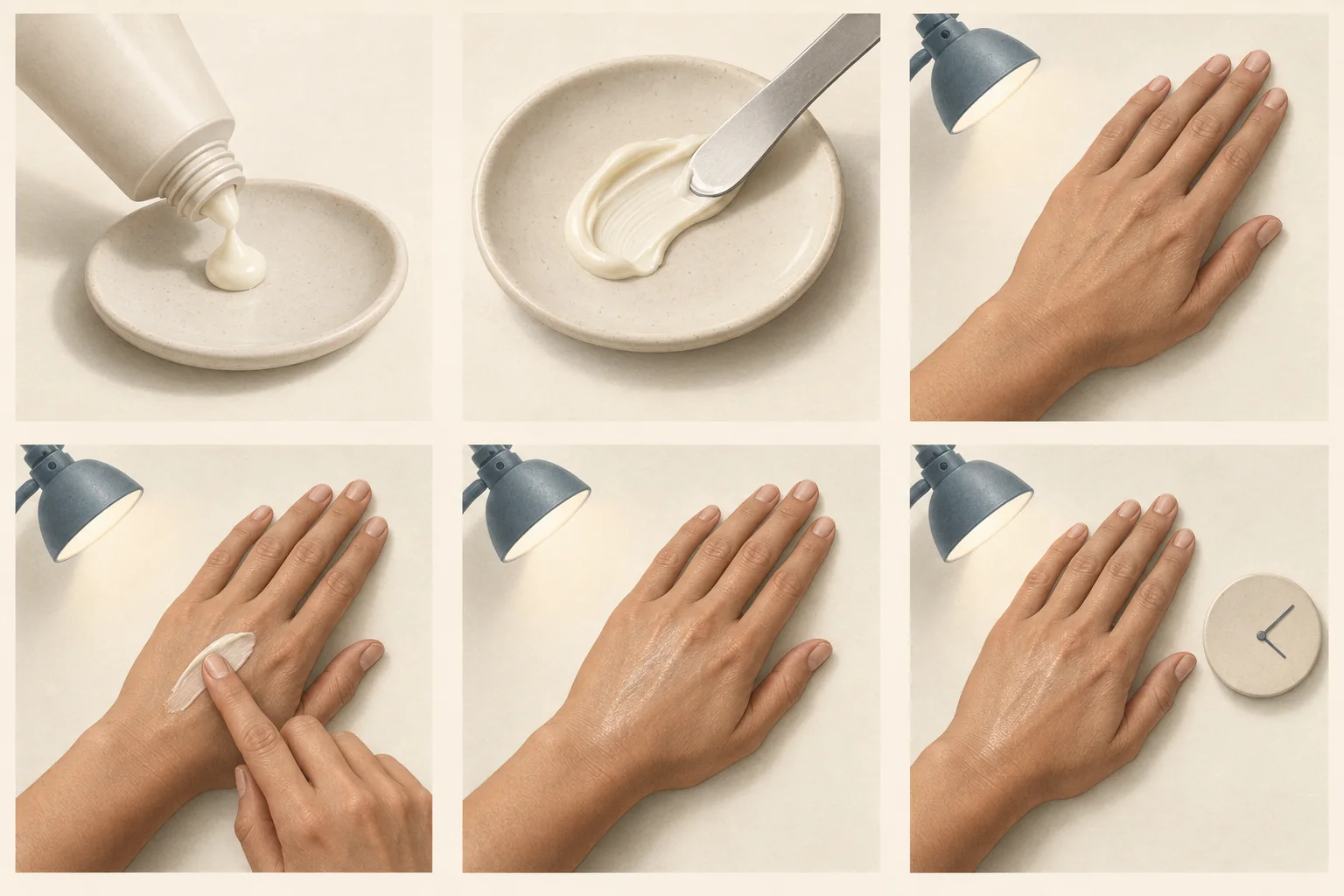
Show the product leaving its container, the amount used, the starting surface, the application, the immediate finish and any later observation. Keep lighting and application conditions visible or recorded. This six-shot beauty product demo shot list helps viewers judge what happened in one demonstration without suggesting that a close-up proves lasting performance.
The storyboard below is a production recommendation. The advertising boundaries have separate sources. In the US, the FTC requires evidence for advertising claims, including claims the imagery implies. UK CAP guidance on cosmetic production techniques says visual claims must not exaggerate what a product can achieve.
Decide what the camera can answer
Write one viewer question before choosing angles. For example, "How does this cream spread when applied as directed?" gives the creator an observable task. "Does this repair skin?" requires evidence beyond filming someone apply it.
Separate the brief into two lists:
- Visible actions: dispensing, spreading, blending, layering and the appearance at a stated time.
- Performance claims: duration, treatment effects, suitability for a group, or claims that a result occurs for most users.
A visible action can still imply a performance claim. A cut from textured skin to a softened image can suggest that the product removed texture, even without narration. Watch the sequence with the sound off before approving it.
For a real launch, attach the product's current directions, warnings, exact variant and approved claim wording. Attach the evidence supporting each objective claim. A claim missing from that file stays out of the script until the responsible reviewer clears it. Use the supportable beauty-claims planning guide to prepare that file before the shoot.
The six-shot texture-and-application storyboard
The example is a hypothetical hand-cream launch. It makes no claim about an existing formulation. Adapt the contact area and application method to the actual product's directions.
| Shot | What to film | What to record | What it can show |
|---|---|---|---|
| 1. Dispense | One continuous close-up from the tube opening to the product landing on a clean palette | Exact product, variant and whether the container was shaken or warmed | How the product exits this container |
| 2. Amount and texture | Hold on the dispensed amount, then spread it once with a clean tool | Amount by a suitable measure; note if it was only estimated | The sample's shape and movement on the palette |
| 3. Starting surface | Show the back of the hand before application | Whether it is dry or damp, and any products already present | The starting conditions for this demonstration |
| 4. Application | Film the amount applied and the spreading action in one continuous take | Tool, applied amount, added product and any pauses | The technique and visible spread on this hand |
| 5. Immediate finish | Return to the starting camera position and light | Time since application; any blotting or further blending | The appearance immediately after this application |
| 6. Later observation | Film the same area at a pre-agreed time if the brief needs it | Actual elapsed time, washing, touching and other intervening activity | The appearance at that time under the recorded conditions |
The palette sample and the applied amount may differ. Record both. Never let a small decorative smear stand in for a larger amount used off camera.
Shot six is optional when the question concerns dispensing or application alone. If you include it, a later close-up does not establish all-day wear or moisture retention. Those claims need their own support. Do not stretch a short observation into a longer promise in the caption.
Keep the conditions stable enough to interpret
Choose a camera position where viewers can see the area and the applicator. Use a fixed light position for the starting surface, application and finish. Keep exposure and white balance consistent where the equipment allows. Record the settings or take a setup photo so a pickup shot can match them.
These are production controls, not a regulator's prescribed test method. Their purpose is to stop an accidental change in the shoot from becoming the apparent product result.
A side light may help reveal the texture of the dispensed sample. Label that as a texture close-up if its lighting differs from the application sequence. Avoid cutting between those views as if they show a change caused by the product.
Record preparation too. Damp skin, an earlier layer, a different brush or extra blending can change what the audience sees. If a condition matters to interpreting the result, put it near the relevant shot in readable text or narration. A production log hidden from viewers cannot explain a misleading edit.
Leave the creator room to choose the introduction, pacing and delivery. The Modash beauty marketing article recommends giving creators creative freedom. For this brief, fix the demonstration conditions while letting the creator explain the steps in their own words. Never script a sensory reaction they did not experience.
Match the words to the footage
Consider these hypothetical editing decisions:
| Proposed line | Decision for this demo |
|---|---|
| "Here is the amount I applied." | Keep if the shot shows the full amount and there was no hidden top-up. |
| "This spreads over the back of my hand." | Keep if the uncut application supports that description. |
| "It feels slippery to me while I spread it." | Use only if this is the creator's genuine observation. |
| "It absorbs instantly." | Hold. A disappearing visible layer does not by itself establish absorption or an instant result. |
| "It keeps every skin type hydrated all day." | Remove unless the exact claim has suitable substantiation and qualified approval. This shoot cannot establish it. |
The FTC's endorsement guidance within its advertising FAQ requires endorsements to reflect the person's experience. It also prevents endorsements from making claims the advertiser could not substantiate directly. Adding "for me" does not automatically resolve an unsupported objective claim.
For TikTok ads, check the finished sequence against its misleading and false content policy. The policy prohibits exaggerated product effects and misleading result comparisons. It specifically names a cream making wrinkles disappear through a before-and-after comparison as an unacceptable example. This is an advertising rule, not a claim that every ordinary application video is prohibited.
Give the editor a reshoot rule
Keep the original application take, condition notes and selected edit together. Request a reshoot when the applied amount is missing, a product is added off camera, or changed lighting creates the apparent finish. Do not hide those gaps with an outcome caption.
Keep texture-altering filters out of this demonstration. If the edit becomes a before-and-after comparison, use the comparison review checklist before release. UK CAP guidance warns that a disclaimer cannot fix an inherently misleading image.
Send safety, treatment or other regulated-claim questions to a qualified reviewer for the target market. This storyboard is a production aid, not legal or medical advice.
Before booking the shoot, assign a viewer question to each shot and write down its amount, surface, light and timing conditions. Remove any shot whose intended claim has no supporting evidence.