



A useful fashion creator fit review names the garment, separates product measurements from the creator's observations, and explains the conditions of the try-on. Include the selected size and personal preferences only when the creator chooses to share them. Shoppers should be able to compare the garment with something they own without treating one person's fit as a promise about their own.
A creator can describe sleeves pulling when they reach forward, or a waistband feeling comfortable while seated. Neither observation proves how the garment will fit another shopper. Build the brief around the specific questions the creator can answer from wearing that item.
Separate the chart, the sample and the opinion
Keep three kinds of information distinct when editing a review.
| Information | What to record | How to label it |
|---|---|---|
| Brand specification | Exact product, variant, published size chart and measurement method | According to the product page |
| Sample observation | Measurement of the garment received, any alteration, and condition when tried | Measured on this sample |
| Personal experience | Movement, pressure, length and preferred silhouette | On me, or I prefer |
A size chart can describe bodies rather than clothes. For example, Patagonia's women's size guide explicitly uses body measurements and says the standard inseam may vary by product. A number taken from that chart should not become a claim about the waistband or inseam of a particular pair of trousers.
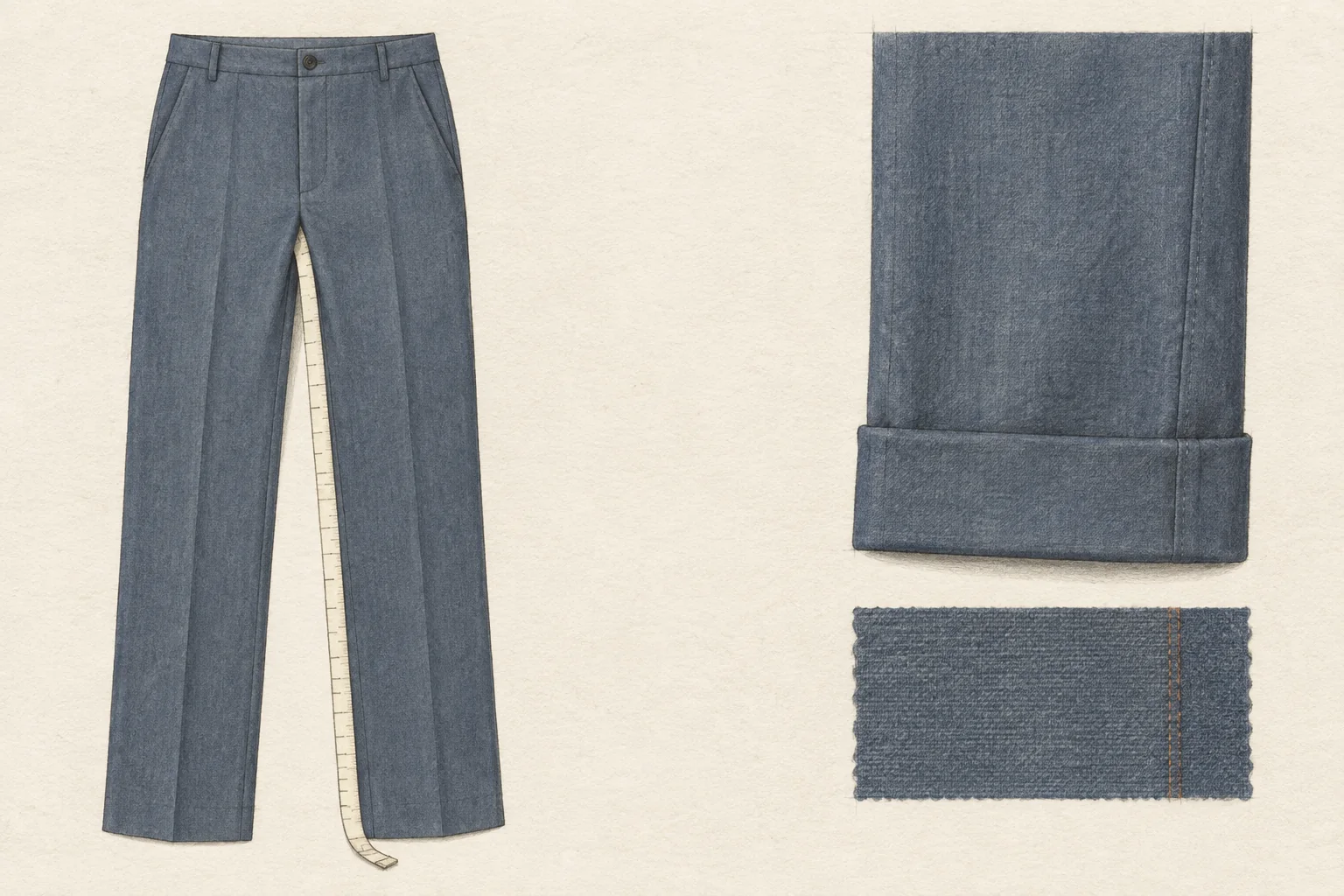
When using garment measurements, give the unit and method. A waistband measured straight across a flat garment differs from a measurement around a person's waist. Say whether the fabric was relaxed or stretched. Use the brand's method when comparing with its product specifications; otherwise, label the measurement as the creator's own method.
If the product page has no finished-garment measurements, ask the brand for them or omit the comparison. Do not silently convert a body-size chart into product dimensions.
Keep personal context optional
Before filming, ask which details the creator wants to publish. A private size choice made for shipping should stay out of the caption unless the creator agrees to include it. Height, body measurements and usual size are optional context. Do not estimate any of them from an image.
This is a recommended editorial policy. For UK operations, the ICO's data-minimisation guidance says personal data should relate to a stated purpose and be limited to what is necessary. The ICO flags that page as under review. That principle supports asking for less personal data; it does not prescribe this particular prompt sheet or settle every publication requirement.
If someone declines to share measurements, keep the review useful through garment details, movement and visible styling choices. Do not make body disclosure a condition of describing fit. Use the separate guide to collect clothing sizes for sample selection without making identity assumptions before sending the garment.
A fit-review prompt sheet
Send questions before filming and let the creator skip personal ones. The brand should supply product facts. The creator should supply their own experience.
| Prompt | Useful answer | Editing limit |
|---|---|---|
| Which item are you reviewing? | Product name, cut, colour and length variant | Do not link a similar-looking replacement |
| Which size did you choose, if you want to share it? | Label size and any relevant sizing system | Do not infer an undisclosed size |
| What fit were you aiming for? | Close fit, room for a layer, or loose drape | Preserve the creator's preference |
| What changed the appearance? | Hem turn-up, belt, tuck, clips or tailoring | Keep this context beside the result |
| Where does movement change the fit? | What happens when sitting, walking or reaching | Avoid scripted comfort claims |
| Which garment measurements are available? | Brand figures or a clearly described sample measurement | Keep the two sources separate |
| What have you tried so far? | First try-on, longer wear, or wear after washing | Do not imply a test that did not happen |
| What would you choose differently? | Another length or more room at a specific point | Do not turn this into advice for everyone |
Pick the movement that answers the garment's main question. Sitting may reveal waistband pressure. Reaching forward may reveal sleeve restriction. A standing front view alone cannot show those experiences.
Ask for an unaltered view before a styled view if the creator is comfortable showing both. A rolled hem can help explain a styling choice, but shoppers also need to know the original length. Avoid edits that remove the moment where the creator explains a limitation.
For material composition and care instructions, use a separate fabric-and-care fact brief. A soft feel during a try-on does not establish composition or wash performance.
An illustrative caption
The following caption is hypothetical. The garment name, dimensions, size and observations are invented to demonstrate the format. They describe no real product or creator.
Ad. The brand paid me for this try-on of its straight-leg trousers. I'm wearing the regular-length M and prefer some room through the leg. On my sample, the inseam measured 74 cm along the inside seam, from crotch seam to hem, before washing. That is my measurement of this pair.
The first view shows the full length; the second has the hem turned up once. I wore these indoors for this try-on. The waistband felt comfortable while standing, but pressed at the front when I sat down. I haven't washed them or tested a full day of wear. To choose a size, follow the brand's chart instructions privately if you want to use your body measurements. Compare only finished-garment measurements with trousers you own, using matching methods.
The caption includes no body measurements. It still identifies the version, method, styling change, wear conditions and one limitation. If the creator wants to omit their selected size too, remove that detail rather than guessing it.
For US-facing endorsements, the FTC's influencer disclosure guidance covers payment and free products as material connections. Put a clear disclosure with the endorsement. For video, include the disclosure in the video itself; a caption alone is insufficient under that guidance. Match the wording to the real relationship.
Modash's fashion marketing guide discusses both sponsored posts and product seeding. Either arrangement can lead to a try-on, but the brief should leave room for the creator's actual experience. The FTC also says endorsers cannot claim experiences they have not had.
Review the edit before it goes live
Read every fit statement and ask whose evidence supports it. Brand facts need the matching product documentation. Sample measurements need a method. Personal judgments need the creator's confirmation.
Remove universal phrases such as "fits everyone" or "everyone should size down." Replace them only with observations the creator supplied. If a statement needs an unperformed wash test, another size or another wear session, leave it out.
Send the creator the finished caption with personal details marked for confirmation. Resolve missing measurement context and preserve their fit criticism before scheduling the post.